NSAが初のMCPセキュリティガイダンスを公開しました。これが開発者の能力に何を意味するのかを解説します。
米国国家安全保障局(NSA)の人工知能セキュリティセンター(AISC)は、Model Context Protocol(MCP)に関する初の公式サイバーセキュリティガイダンスを公開しました:Model Context Protocol (MCP): Security Design Considerations for AI-Driven Automation。このガイダンスでは、アクセス制御、プロンプト処理、ツール実行、エージェントの権限、監査可能性、サードパーティ統合のガバナンスが網羅されています。これらは、MCPサーバーやツールを本番環境のサービスとして構築する際に不可欠な実装上の懸念事項です。
ソフトウェア開発が人間によるコーディングからAI支援型ワークフローや完全なエージェントシステムへと移行する中、エージェント通信プロトコルのセキュリティは極めて重要な課題となっています。Secure Code Warriorは、以前からこの分野に注力してきました。2025年11月、Secure Code Warriorは業界初となるMCPセキュリティ専用の学習パスを導入し、エージェント通信プロトコル、AIエージェント、MCP対応ワークフローに伴う新たなリスクに対して、組織が開発者を準備できるよう支援しています。
当時、公開されているOWASP MCP Top 10や、MCPセキュリティに特化した政府の公式ガイダンスは存在しませんでした。当社のコンテンツチームは、MCP実装を取り巻く新たなセキュリティ課題について広範な調査を行い、開発者が実世界のプロダクション環境でMCPを安全に構築・利用できるよう支援するカリキュラムを開発しました。
それ以来、私たちは常に最新の状態を維持しています。脅威の状況が変化する中で、NSAの新しいガイダンス、進化するOWASP MCPの研究、そして実際の攻撃事例がすべてカリキュラムに反映されています。
NSAによる公式ガイダンスの公開は、この取り組みの重要性を裏付け、正当性を証明するものです。NSAが指摘する23の個別セキュリティ課題のうち、Secure Code Warriorのカリキュラムは18項目を直接カバーしています。組織がエージェントシステムの実験段階から実際の運用段階へと移行するにつれ、ガバナンスポリシーと実装の現実とのギャップがリスクとなります。このギャップを埋めるには、開発者の能力が不可欠です。フレームワークだけでは不十分なのです。
開発者能力の役割
NSAガイダンスの技術的な詳細を読み解くと、一貫したテーマが浮かび上がります。それは、MCP対応システムのセキュリティは「どのように構築されるか」に帰結するということです。アクセス制御、信頼境界、出力検証、監査ログ。これらはどれ一つとして自動的に安全に構成されることはありません。
入力の検証、権限の制限、信頼境界の確立、アクティビティの監視。NSAの推奨事項は実装レベルのものです。ポリシーだけでこれらを実現することはできません。何を作っているのか、どのように悪用される可能性があるのか、そしてなぜそれが重要なのかを理解している開発者が必要なのです。
組織がAI支援型およびエージェント型の開発ワークフローを採用し続ける中で、開発者能力はエージェント時代に組織が正しく取り組むべき3つの要素のうちの1つです。残りの2つは、AIがコードベースで何を行っているかの可視化と、AIが触れる範囲に対するガバナンスのガードレールです。Secure Code Warriorは、開発者トレーニング、Trust Agentによるコミットレベルのリスク相関分析、そしてコンプライアンスチームが真に必要とするガードレールとトレーサビリティという、これら3つすべてに対応しています。
MCPセキュリティに対するSecure Code Warriorのカバー範囲
Secure Code WarriorのMCPおよびAIセキュリティカリキュラムは、まさにこのために構築されました。その対応状況は以下の通りです。
以下のコンテンツは現在利用可能であり、NSAが指摘する23の個別セキュリティ課題のうち18項目を直接カバーしています。これには、懸念事項、実際の事例、推奨事項が含まれます。これにより、組織はMCPセキュリティ、エージェント通信プロトコル、プロンプト処理、安全な実装プラクティス、AIを活用した開発ワークフローといった主要分野において、開発者の能力を構築できるようになります。
| NSA focus area | SCW coverage |
|---|---|
| Agent communication security |  Vulnerabilities in agents and their communication protocolsAgent communication protocolsBest practices for agent and communication protocol security Vulnerabilities in agents and their communication protocolsAgent communication protocolsBest practices for agent and communication protocol security |
| Prompt & output security | Direct prompt injectionIndirect prompt injectionImproper output handling |
| Agent behavior & control | Excessive agencyUnbounded consumptionInsecure plugin design |
| MCP secure coding | OS command injectionCode injectionMissing authenticationCredential expirationFunction level access controlSecurity misconfigurationSSRFInsufficient logging |
| Secure design & governance | LLM security design patternsSupply chain vulnerabilitiesVulnerable components from untrusted source (MCP variant)Improper assets management (MCP variant) |
これは、NSAの文書に合わせて後付けで構築されたものではありません。エージェント通信のセキュリティ、プロンプト処理、アクセス制御、ガバナンス、安全な実装に関する疑問は、もはや理論上の懸念ではなく、それらに対する当社のカバー範囲も同様です。当社のAIエージェントカリキュラムは、InvariantlabsによるWhatsApp MCPの脆弱性やツールポイズニングの研究など、NSAが文書化しているものと同じ実世界の攻撃事例を取り上げています。これらは、現在AI対応システムを導入しているチームにとって実践的な検討事項です。
ギャップに関する注記:この分析は、NSAが指摘する内容の大部分を直接カバーしていることを示しています。少数の項目(MCPメッセージレベルの暗号署名や実装間の動作の乖離など)については、基礎となる原則には対応していますが、NSAが推奨する詳細なレベルには達していません。これらは今後のカリキュラムのロードマップに含まれています。
ガバナンスや可視化の取り組みと並行して開発者教育に投資する組織は、新たなテクノロジーを安全かつ大規模に導入できる体制が整っていることが多いです。開発者能力は全体像の一部に過ぎません。Secure Code Warriorは、組織がAIエージェントがリポジトリ内で触れる範囲を管理し、開発ライフサイクル全体を通じてコンプライアンスやインシデント対応に必要なトレーサビリティを提供します。
チームがまず取り組むべきこと
NSAガイダンス全体で強調されている実装プラクティスに開発者教育を合わせたい組織は、まずSecure Code WarriorのPython-MCP QuestおよびTypeScript-MCP Questパスから始めることができます。
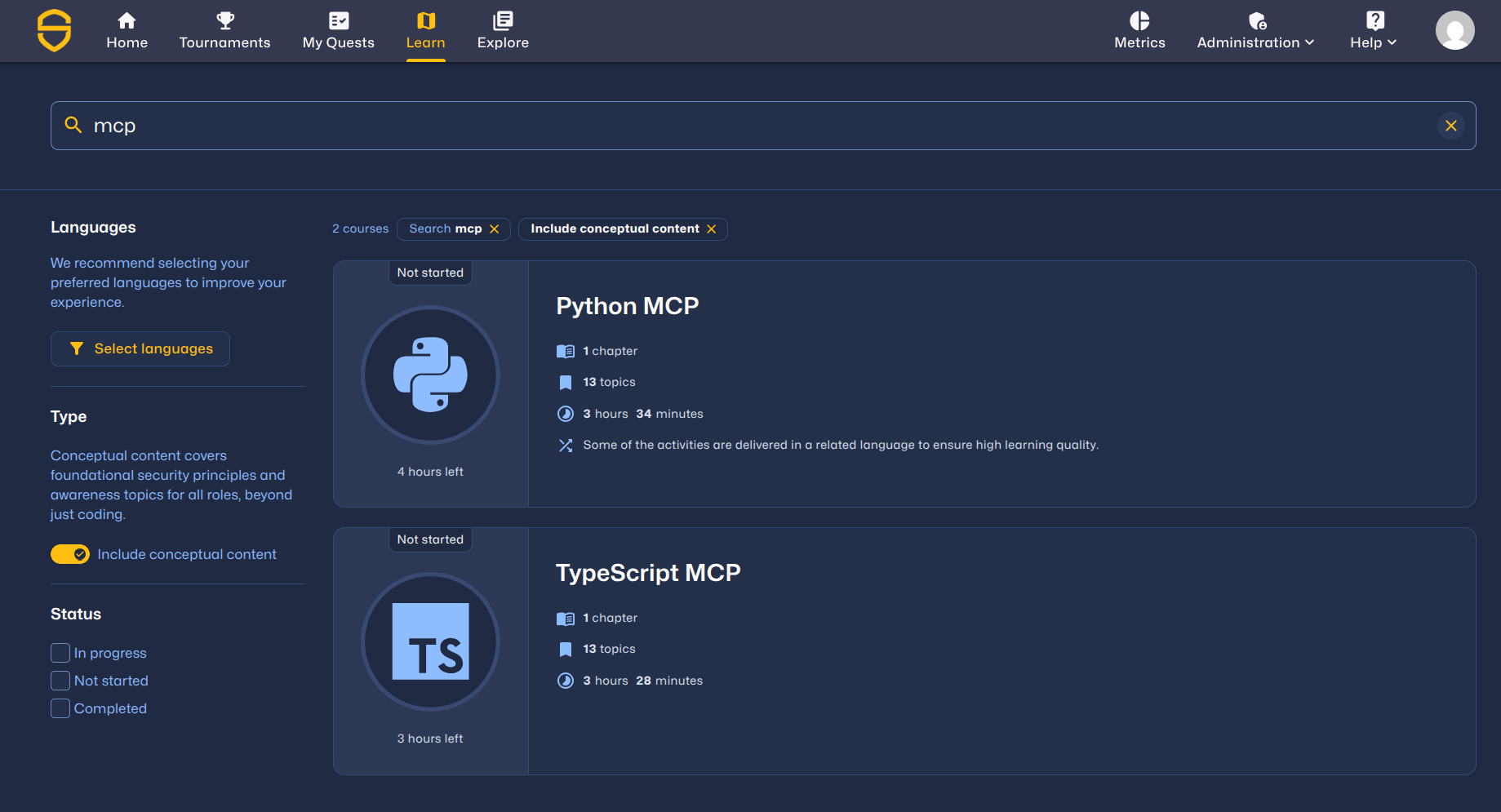
これらの学習パスは、ガイダンス全体に反映されている開発者向けの概念の大部分をカバーしており、MCP特有のセキュリティ上の考慮事項、エージェント通信プロトコル、安全な実装プラクティス、AIを活用した開発ワークフローに関する実践的な経験を提供します。
AIソフトウェアガバナンスをどのように運用するかを検討しているセキュリティリーダーにとって、開発者能力は利用可能な最も実践的かつ測定可能なコントロールの1つであり続けます。ガバナンスポリシーは期待値を設定し、可視化はリスクの特定を助け、開発者能力はリスクを根本から低減します。
まとめ
NSAが新興プロトコルに関するサイバーセキュリティガイダンスを公開することは、決して軽々しく行われるものではありません。MCPが専用の文書を必要としたという事実は、エージェント開発の向かう先と、それに伴う現実的なリスクを反映しています。
Secure Code WarriorのMCPおよびAIセキュリティカリキュラムは、このガイダンスで強調されている実装プラクティスやセキュリティ上の考慮事項の多くをすでに網羅しています。このガイダンスは、責任あるAI導入の基盤として、セキュアな実装、ガバナンス、そして開発者の能力向上が重要であることを改めて裏付けています。
MCPの導入は加速しており、それに伴うセキュリティ上の課題は理論上の話ではありません。MCP対応システムが本番環境へ移行するにつれ、セキュアな実装、可視性、ガバナンス、トレーサビリティが不可欠となります。Secure Code Warriorはその中心に立ち、ツールの進化に合わせた開発者トレーニング、AIエージェントがリポジトリにアクセスする範囲の管理、そしてコンプライアンスやインシデント対応に求められるトレーサビリティを提供します。
AI主導の開発をリリース前にガバナンスする
AIを活用したリスク測定、コミット時のセキュアコーディングポリシーの強制、そしてSDLC全体を通じたセキュアなデリバリーの加速を実現します。
他のブログ記事を見る
セキュアコーディング、AIガバナンス、ソフトウェアリスク管理に関する専門的なコンテンツをご覧ください。
%252520%252520(3).avif)
Supercharged Security Awareness: How Tournaments are Inspiring Developers at Erste Group
Lorem ipsum dolor sit amet, consectetur adipiscing elit. Suspendisse varius enim in eros elementum tristique. Duis cursus, mi quis viverra ornare, eros dolor interdum nulla, ut commodo diam libero vitae erat. Aenean faucibus nibh et justo cursus id rutrum lorem imperdiet. Nunc ut sem vitae risus tristique posuere.
Security as culture: How Blue Prism cultivates world-class secure developers
Learn how Blue Prism, the global leader in intelligent automation for the enterprise, used Secure Code Warrior's agile learning platform to create a security-first culture with their developers, achieve their business goals, and ship secure code at speed

.avif)
AIを活用した開発をリリース前にセキュアに
開発者のリスクを可視化し、ポリシーを適用することで、ソフトウェア開発ライフサイクル全体における脆弱性を未然に防ぎます。
