hero bg no divider
Blog

Train developers on the real risks in their code, whether human-written or AI-generated
Shannon Holt
Published Jun 01, 2026
Last updated on May 29, 2026

Adaptive Learning helps reduce recurring vulnerabilities through hyper-targeted training aligned to actual software risk.

Development teams are shipping code faster than ever, but many organizations still struggle to prevent  the same vulnerabilities from being introduced repeatedly over time.

Most security training programs remain disconnected from the risks developers actually create day to day. Learning is assigned broadly, vulnerabilities continue recurring, and organizations are often left addressing the same issues downstream after insecure code has already moved further through development workflows.

Adaptive Learning helps organizations align secure coding learning to real software development activity and risk signals, including AI-assisted development activity, vulnerability findings, and evolving developer behavior.

In this post, we’re focusing specifically on Adaptive Learning with Vulnerability Signals — automatically assigning targeted vulnerability training to the developers introducing those risks.

Adaptive Learning in practice

Adaptive Learning with Vulnerability Signals connects vulnerability findings with Trust Agent: Commits activity to identify which developers are actively contributing to repositories associated with elevated software risk. Targeted training is then automatically assigned based on the vulnerability patterns developers are actually introducing, helping align learning to the languages they use, the repositories they contribute to, and the real software risks tied to their day-to-day work.
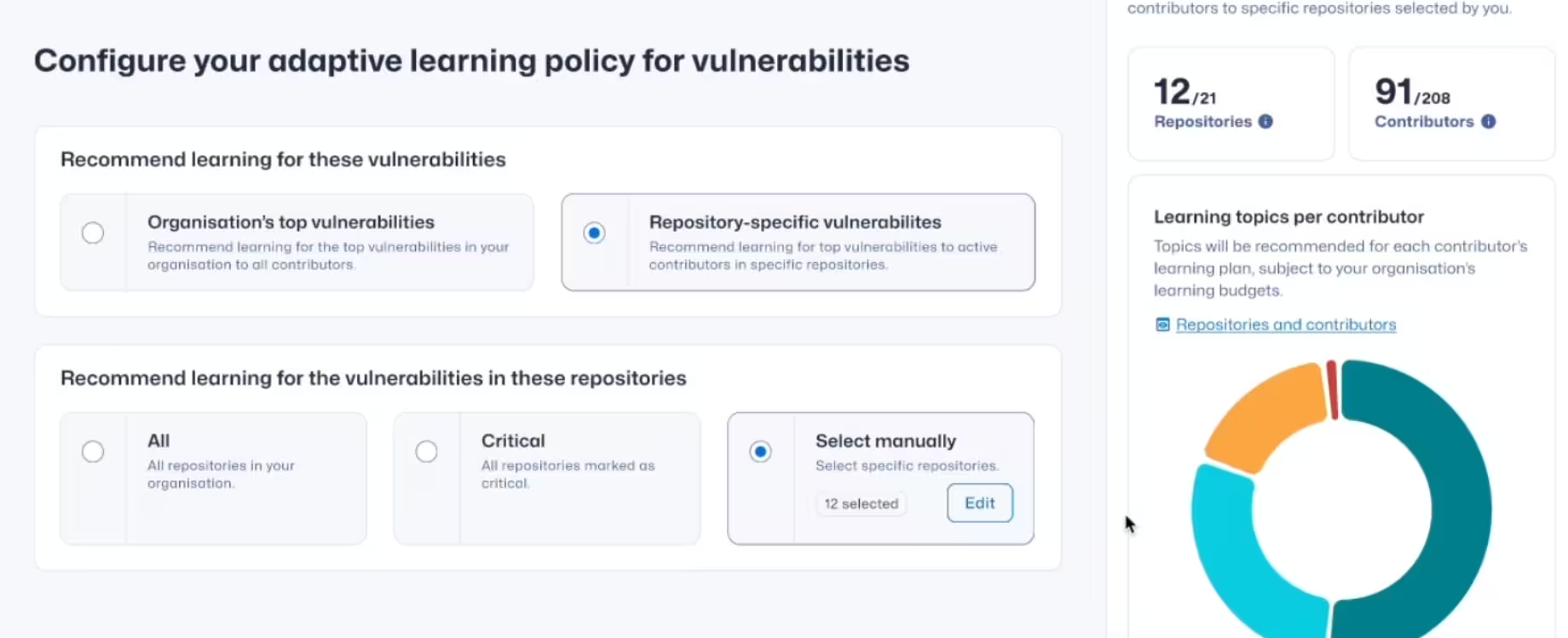
Because learning is aligned to the specific risks developers are actively contributing to, training becomes more relevant, timely, and easier to apply within day-to-day engineering workflows.

From completion metrics to real risk visibility

Adaptive Learning creates a stronger connection between secure coding learning and real engineering activity.

Once developers are assigned learning, commits to covered repositories can be scored against whether assigned vulnerability training has been completed at the time of the commit. This gives security leaders visibility into something traditional training metrics often cannot show: whether the developers actively writing code are equipped to handle the specific risks present in their environment.

That shifts the conversation from:

“Did developers complete their training?”

to:

“Are the developers contributing to high-risk repositories prepared to identify and prevent the vulnerabilities most relevant to the code they are shipping?”

Instead of relying only on generic completion reporting, organizations can begin measuring developer capability alongside real software risk and commit activity over time.

This helps move secure coding programs closer to preventative capability building at the source — reinforcing secure development practices before vulnerabilities reach production rather than relying entirely on downstream remediation workflows.

Building more preventative secure development practices

Adaptive Learning with Vulnerability Signals helps connect vulnerability findings, commit activity, developer attribution, secure coding learning, and commit scoring within a single workflow.

By aligning targeted learning to real software risk, organizations can reduce recurring vulnerabilities, strengthen developer capability, and reinforce more preventative secure development practices across engineering teams.

Learn More
Secure Code Warrior blog banner with a blue overlay over a developer working at a multi-monitor desk displaying code, alongside the headline 'Train developers on the real risks in their code.'
Afficher la ressource

Adaptive Learning auto-assigns targeted secure coding training to the developers introducing real vulnerabilities, reducing recurring risks at the source.Secure Code Warrior blog banner with a blue overlay over a developer working at a multi-monitor desk displaying code, alongside the headline 'Train developers on the real risks in their code.'l

Vous souhaitez en savoir plus ?

Shannon Holt est une spécialiste de la commercialisation de produits de cybersécurité avec une expérience dans les domaines de la sécurité des applications, des services de sécurité du cloud et des normes de conformité telles que PCI-DSS et HITRUST.

learn more

Secure Code Warrior est là pour aider votre organisation à sécuriser le code tout au long du cycle de développement logiciel et à créer une culture dans laquelle la cybersécurité est une priorité. Que vous soyez responsable de la sécurité des applications, développeur, responsable de la sécurité informatique ou toute autre personne impliquée dans la sécurité, nous pouvons aider votre organisation à réduire les risques associés à un code non sécurisé.

Réservez une démo
Partagez sur :
linkedin brandsSocialx logo
Auteur
Shannon Holt
Published Jun 01, 2026

Shannon Holt est une spécialiste de la commercialisation de produits de cybersécurité avec une expérience dans les domaines de la sécurité des applications, des services de sécurité du cloud et des normes de conformité telles que PCI-DSS et HITRUST.

Shannon Holt est une spécialiste de la commercialisation de produits de cybersécurité avec une expérience dans les domaines de la sécurité des applications, des services de sécurité du cloud et des normes de conformité telles que PCI-DSS et HITRUST. Elle tient à rendre le développement sécurisé et la conformité plus pratiques et plus accessibles pour les équipes techniques, en comblant le fossé entre les attentes en matière de sécurité et les réalités du développement logiciel moderne.

Partagez sur :
linkedin brandsSocialx logo
Secure Code Warrior blog banner with a blue overlay over a developer working at a multi-monitor desk displaying code, alongside the headline 'Train developers on the real risks in their code.'

Adaptive Learning helps reduce recurring vulnerabilities through hyper-targeted training aligned to actual software risk.

Development teams are shipping code faster than ever, but many organizations still struggle to prevent  the same vulnerabilities from being introduced repeatedly over time.

Most security training programs remain disconnected from the risks developers actually create day to day. Learning is assigned broadly, vulnerabilities continue recurring, and organizations are often left addressing the same issues downstream after insecure code has already moved further through development workflows.

Adaptive Learning helps organizations align secure coding learning to real software development activity and risk signals, including AI-assisted development activity, vulnerability findings, and evolving developer behavior.

In this post, we’re focusing specifically on Adaptive Learning with Vulnerability Signals — automatically assigning targeted vulnerability training to the developers introducing those risks.

Adaptive Learning in practice

Adaptive Learning with Vulnerability Signals connects vulnerability findings with Trust Agent: Commits activity to identify which developers are actively contributing to repositories associated with elevated software risk. Targeted training is then automatically assigned based on the vulnerability patterns developers are actually introducing, helping align learning to the languages they use, the repositories they contribute to, and the real software risks tied to their day-to-day work.

Because learning is aligned to the specific risks developers are actively contributing to, training becomes more relevant, timely, and easier to apply within day-to-day engineering workflows.

From completion metrics to real risk visibility

Adaptive Learning creates a stronger connection between secure coding learning and real engineering activity.

Once developers are assigned learning, commits to covered repositories can be scored against whether assigned vulnerability training has been completed at the time of the commit. This gives security leaders visibility into something traditional training metrics often cannot show: whether the developers actively writing code are equipped to handle the specific risks present in their environment.

That shifts the conversation from:

“Did developers complete their training?”

to:

“Are the developers contributing to high-risk repositories prepared to identify and prevent the vulnerabilities most relevant to the code they are shipping?”

Instead of relying only on generic completion reporting, organizations can begin measuring developer capability alongside real software risk and commit activity over time.

This helps move secure coding programs closer to preventative capability building at the source — reinforcing secure development practices before vulnerabilities reach production rather than relying entirely on downstream remediation workflows.

Building more preventative secure development practices

Adaptive Learning with Vulnerability Signals helps connect vulnerability findings, commit activity, developer attribution, secure coding learning, and commit scoring within a single workflow.

By aligning targeted learning to real software risk, organizations can reduce recurring vulnerabilities, strengthen developer capability, and reinforce more preventative secure development practices across engineering teams.

Learn More
Afficher la ressource

Remplissez le formulaire ci-dessous pour télécharger le rapport

Nous aimerions avoir votre autorisation pour vous envoyer des informations sur nos produits et/ou sur des sujets liés au codage sécurisé. Nous traiterons toujours vos données personnelles avec le plus grand soin et ne les vendrons jamais à d'autres entreprises à des fins de marketing.

Soumettre
SCW Icons
scw error icon
Pour soumettre le formulaire, veuillez activer les cookies « Analytics ». N'hésitez pas à les désactiver à nouveau une fois que vous aurez terminé.
Secure Code Warrior blog banner with a blue overlay over a developer working at a multi-monitor desk displaying code, alongside the headline 'Train developers on the real risks in their code.'

Adaptive Learning helps reduce recurring vulnerabilities through hyper-targeted training aligned to actual software risk.

Development teams are shipping code faster than ever, but many organizations still struggle to prevent  the same vulnerabilities from being introduced repeatedly over time.

Most security training programs remain disconnected from the risks developers actually create day to day. Learning is assigned broadly, vulnerabilities continue recurring, and organizations are often left addressing the same issues downstream after insecure code has already moved further through development workflows.

Adaptive Learning helps organizations align secure coding learning to real software development activity and risk signals, including AI-assisted development activity, vulnerability findings, and evolving developer behavior.

In this post, we’re focusing specifically on Adaptive Learning with Vulnerability Signals — automatically assigning targeted vulnerability training to the developers introducing those risks.

Adaptive Learning in practice

Adaptive Learning with Vulnerability Signals connects vulnerability findings with Trust Agent: Commits activity to identify which developers are actively contributing to repositories associated with elevated software risk. Targeted training is then automatically assigned based on the vulnerability patterns developers are actually introducing, helping align learning to the languages they use, the repositories they contribute to, and the real software risks tied to their day-to-day work.

Because learning is aligned to the specific risks developers are actively contributing to, training becomes more relevant, timely, and easier to apply within day-to-day engineering workflows.

From completion metrics to real risk visibility

Adaptive Learning creates a stronger connection between secure coding learning and real engineering activity.

Once developers are assigned learning, commits to covered repositories can be scored against whether assigned vulnerability training has been completed at the time of the commit. This gives security leaders visibility into something traditional training metrics often cannot show: whether the developers actively writing code are equipped to handle the specific risks present in their environment.

That shifts the conversation from:

“Did developers complete their training?”

to:

“Are the developers contributing to high-risk repositories prepared to identify and prevent the vulnerabilities most relevant to the code they are shipping?”

Instead of relying only on generic completion reporting, organizations can begin measuring developer capability alongside real software risk and commit activity over time.

This helps move secure coding programs closer to preventative capability building at the source — reinforcing secure development practices before vulnerabilities reach production rather than relying entirely on downstream remediation workflows.

Building more preventative secure development practices

Adaptive Learning with Vulnerability Signals helps connect vulnerability findings, commit activity, developer attribution, secure coding learning, and commit scoring within a single workflow.

By aligning targeted learning to real software risk, organizations can reduce recurring vulnerabilities, strengthen developer capability, and reinforce more preventative secure development practices across engineering teams.

Learn More
Afficher le webinaire
Commencez
learn more

Cliquez sur le lien ci-dessous et téléchargez le PDF de cette ressource.

Secure Code Warrior est là pour aider votre organisation à sécuriser le code tout au long du cycle de développement logiciel et à créer une culture dans laquelle la cybersécurité est une priorité. Que vous soyez responsable de la sécurité des applications, développeur, responsable de la sécurité informatique ou toute autre personne impliquée dans la sécurité, nous pouvons aider votre organisation à réduire les risques associés à un code non sécurisé.

Afficher le rapportRéservez une démo
Télécharger le PDF
Afficher la ressource
Partagez sur :
linkedin brandsSocialx logo
Vous souhaitez en savoir plus ?

Partagez sur :
linkedin brandsSocialx logo
Auteur
Shannon Holt
Published Jun 01, 2026

Shannon Holt est une spécialiste de la commercialisation de produits de cybersécurité avec une expérience dans les domaines de la sécurité des applications, des services de sécurité du cloud et des normes de conformité telles que PCI-DSS et HITRUST.

Shannon Holt est une spécialiste de la commercialisation de produits de cybersécurité avec une expérience dans les domaines de la sécurité des applications, des services de sécurité du cloud et des normes de conformité telles que PCI-DSS et HITRUST. Elle tient à rendre le développement sécurisé et la conformité plus pratiques et plus accessibles pour les équipes techniques, en comblant le fossé entre les attentes en matière de sécurité et les réalités du développement logiciel moderne.

Partagez sur :
linkedin brandsSocialx logo

Adaptive Learning helps reduce recurring vulnerabilities through hyper-targeted training aligned to actual software risk.

Development teams are shipping code faster than ever, but many organizations still struggle to prevent  the same vulnerabilities from being introduced repeatedly over time.

Most security training programs remain disconnected from the risks developers actually create day to day. Learning is assigned broadly, vulnerabilities continue recurring, and organizations are often left addressing the same issues downstream after insecure code has already moved further through development workflows.

Adaptive Learning helps organizations align secure coding learning to real software development activity and risk signals, including AI-assisted development activity, vulnerability findings, and evolving developer behavior.

In this post, we’re focusing specifically on Adaptive Learning with Vulnerability Signals — automatically assigning targeted vulnerability training to the developers introducing those risks.

Adaptive Learning in practice

Adaptive Learning with Vulnerability Signals connects vulnerability findings with Trust Agent: Commits activity to identify which developers are actively contributing to repositories associated with elevated software risk. Targeted training is then automatically assigned based on the vulnerability patterns developers are actually introducing, helping align learning to the languages they use, the repositories they contribute to, and the real software risks tied to their day-to-day work.

Because learning is aligned to the specific risks developers are actively contributing to, training becomes more relevant, timely, and easier to apply within day-to-day engineering workflows.

From completion metrics to real risk visibility

Adaptive Learning creates a stronger connection between secure coding learning and real engineering activity.

Once developers are assigned learning, commits to covered repositories can be scored against whether assigned vulnerability training has been completed at the time of the commit. This gives security leaders visibility into something traditional training metrics often cannot show: whether the developers actively writing code are equipped to handle the specific risks present in their environment.

That shifts the conversation from:

“Did developers complete their training?”

to:

“Are the developers contributing to high-risk repositories prepared to identify and prevent the vulnerabilities most relevant to the code they are shipping?”

Instead of relying only on generic completion reporting, organizations can begin measuring developer capability alongside real software risk and commit activity over time.

This helps move secure coding programs closer to preventative capability building at the source — reinforcing secure development practices before vulnerabilities reach production rather than relying entirely on downstream remediation workflows.

Building more preventative secure development practices

Adaptive Learning with Vulnerability Signals helps connect vulnerability findings, commit activity, developer attribution, secure coding learning, and commit scoring within a single workflow.

By aligning targeted learning to real software risk, organizations can reduce recurring vulnerabilities, strengthen developer capability, and reinforce more preventative secure development practices across engineering teams.

Learn More

Table des matières

Afficher la ressource
Vous souhaitez en savoir plus ?

Shannon Holt est une spécialiste de la commercialisation de produits de cybersécurité avec une expérience dans les domaines de la sécurité des applications, des services de sécurité du cloud et des normes de conformité telles que PCI-DSS et HITRUST.

learn more

Secure Code Warrior est là pour aider votre organisation à sécuriser le code tout au long du cycle de développement logiciel et à créer une culture dans laquelle la cybersécurité est une priorité. Que vous soyez responsable de la sécurité des applications, développeur, responsable de la sécurité informatique ou toute autre personne impliquée dans la sécurité, nous pouvons aider votre organisation à réduire les risques associés à un code non sécurisé.

Réservez une démoTélécharger
Partagez sur :
linkedin brandsSocialx logo
Centre de ressources

Ressources pour vous aider à démarrer

Plus de posts
Centre de ressources

Ressources pour vous aider à démarrer

Plus de posts