Train developers on the real risks in their code, whether human-written or AI-generated

Adaptive Learning helps reduce recurring vulnerabilities through hyper-targeted training aligned to actual software risk.
Development teams are shipping code faster than ever, but many organizations still struggle to prevent the same vulnerabilities from being introduced repeatedly over time.
Most security training programs remain disconnected from the risks developers actually create day to day. Learning is assigned broadly, vulnerabilities continue recurring, and organizations are often left addressing the same issues downstream after insecure code has already moved further through development workflows.
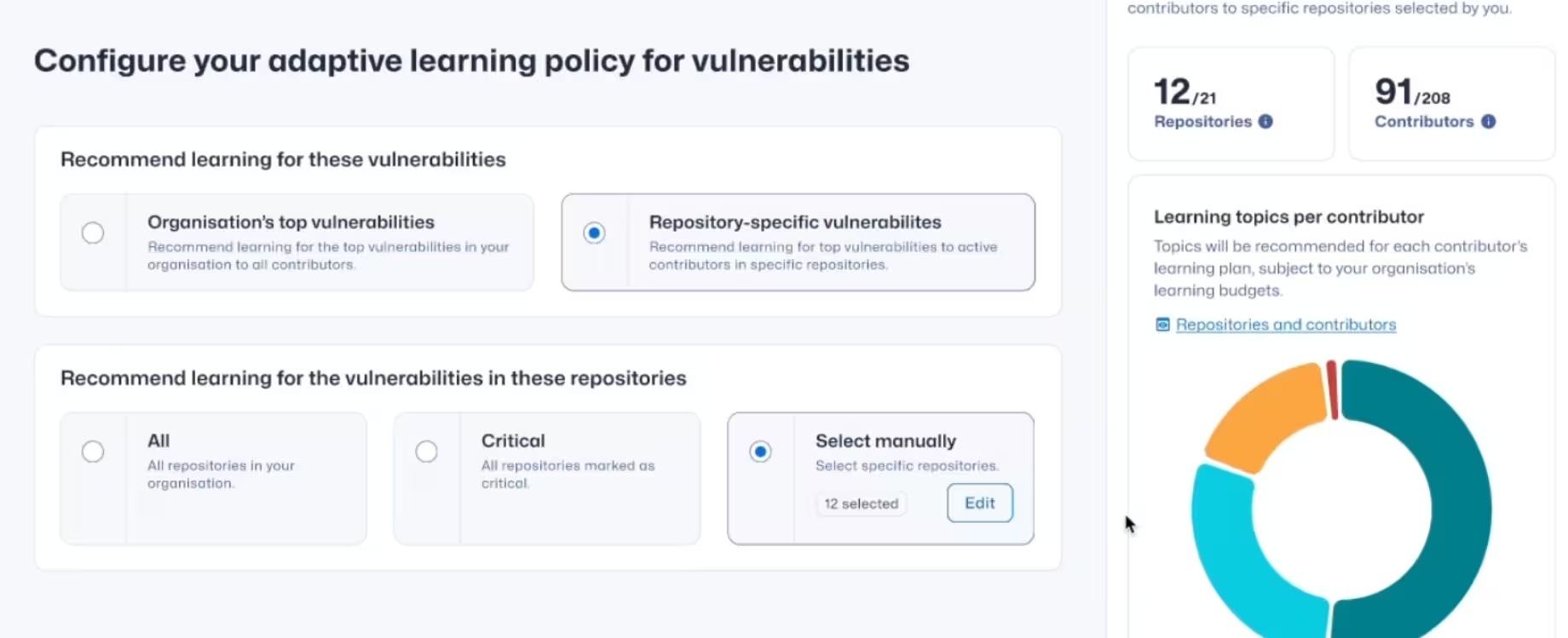
Adaptive Learning helps organizations align secure coding learning to real software development activity and risk signals, including AI-assisted development activity, vulnerability findings, and evolving developer behavior.
In this post, we’re focusing specifically on Adaptive Learning with Vulnerability Signals — automatically assigning targeted vulnerability training to the developers introducing those risks.
Adaptive Learning in practice
Adaptive Learning with Vulnerability Signals connects vulnerability findings with Trust Agent: Commits activity to identify which developers are actively contributing to repositories associated with elevated software risk. Targeted training is then automatically assigned based on the vulnerability patterns developers are actually introducing, helping align learning to the languages they use, the repositories they contribute to, and the real software risks tied to their day-to-day work.

Because learning is aligned to the specific risks developers are actively contributing to, training becomes more relevant, timely, and easier to apply within day-to-day engineering workflows.
From completion metrics to real risk visibility
Adaptive Learning creates a stronger connection between secure coding learning and real engineering activity.
Once developers are assigned learning, commits to covered repositories can be scored against whether assigned vulnerability training has been completed at the time of the commit. This gives security leaders visibility into something traditional training metrics often cannot show: whether the developers actively writing code are equipped to handle the specific risks present in their environment.
That shifts the conversation from:
“Did developers complete their training?”
to:
“Are the developers contributing to high-risk repositories prepared to identify and prevent the vulnerabilities most relevant to the code they are shipping?”
Instead of relying only on generic completion reporting, organizations can begin measuring developer capability alongside real software risk and commit activity over time.
This helps move secure coding programs closer to preventative capability building at the source — reinforcing secure development practices before vulnerabilities reach production rather than relying entirely on downstream remediation workflows.
Building more preventative secure development practices
Adaptive Learning with Vulnerability Signals helps connect vulnerability findings, commit activity, developer attribution, secure coding learning, and commit scoring within a single workflow.
By aligning targeted learning to real software risk, organizations can reduce recurring vulnerabilities, strengthen developer capability, and reinforce more preventative secure development practices across engineering teams.
Govern AI-driven development before it ships
Measure AI-assisted risk, enforce secure coding policy at commit, and accelerate secure delivery across your SDLC.
Explore more blogs
これは、オーラが射手と鼻の穴を広げることによって、腸管を熱的に発芽させ、臭いを帯びていることを防ぐためのものです。
%252520%252520(3).avif)
Supercharged Security Awareness: How Tournaments are Inspiring Developers at Erste Group
Lorem ipsum dolor sit amet, consectetur adipiscing elit. Suspendisse varius enim in eros elementum tristique. Duis cursus, mi quis viverra ornare, eros dolor interdum nulla, ut commodo diam libero vitae erat. Aenean faucibus nibh et justo cursus id rutrum lorem imperdiet. Nunc ut sem vitae risus tristique posuere.

Security as culture: How Blue Prism cultivates world-class secure developers
Learn how Blue Prism, the global leader in intelligent automation for the enterprise, used Secure Code Warrior's agile learning platform to create a security-first culture with their developers, achieve their business goals, and ship secure code at speed

One Culture of Security: How Sage built their security champions program with agile secure code learning
Discover how Sage enhanced security with a flexible, relationship-focused approach, creating 200+ security champions and achieving measurable risk reduction.
.webp)
Why most CISOs are navigating AI adoption blindfolded (and how they can remove it)
Today, Secure Code Warrior issued an all-new white paper covering a prescriptive, directional AI adoption model that security leaders can use to identify their adoption stage and make real progress in bringing the AI security risks within their organization under control.
Secure AI-driven development before it ships
See developer risk, enforce policy, and prevent vulnerabilities across your software development lifecycle.