Train developers on the real risks in their code, whether human-written or AI-generated
Adaptive Learning helps reduce recurring vulnerabilities through hyper-targeted training aligned to actual software risk.
Development teams are shipping code faster than ever, but many organizations still struggle to prevent the same vulnerabilities from being introduced repeatedly over time.
Most security training programs remain disconnected from the risks developers actually create day to day. Learning is assigned broadly, vulnerabilities continue recurring, and organizations are often left addressing the same issues downstream after insecure code has already moved further through development workflows.
Adaptive Learning helps organizations align secure coding learning to real software development activity and risk signals, including AI-assisted development activity, vulnerability findings, and evolving developer behavior.
In this post, we’re focusing specifically on Adaptive Learning with Vulnerability Signals — automatically assigning targeted vulnerability training to the developers introducing those risks.
Adaptive Learning in practice
Adaptive Learning with Vulnerability Signals connects vulnerability findings with Trust Agent: Commits activity to identify which developers are actively contributing to repositories associated with elevated software risk. Targeted training is then automatically assigned based on the vulnerability patterns developers are actually introducing, helping align learning to the languages they use, the repositories they contribute to, and the real software risks tied to their day-to-day work.
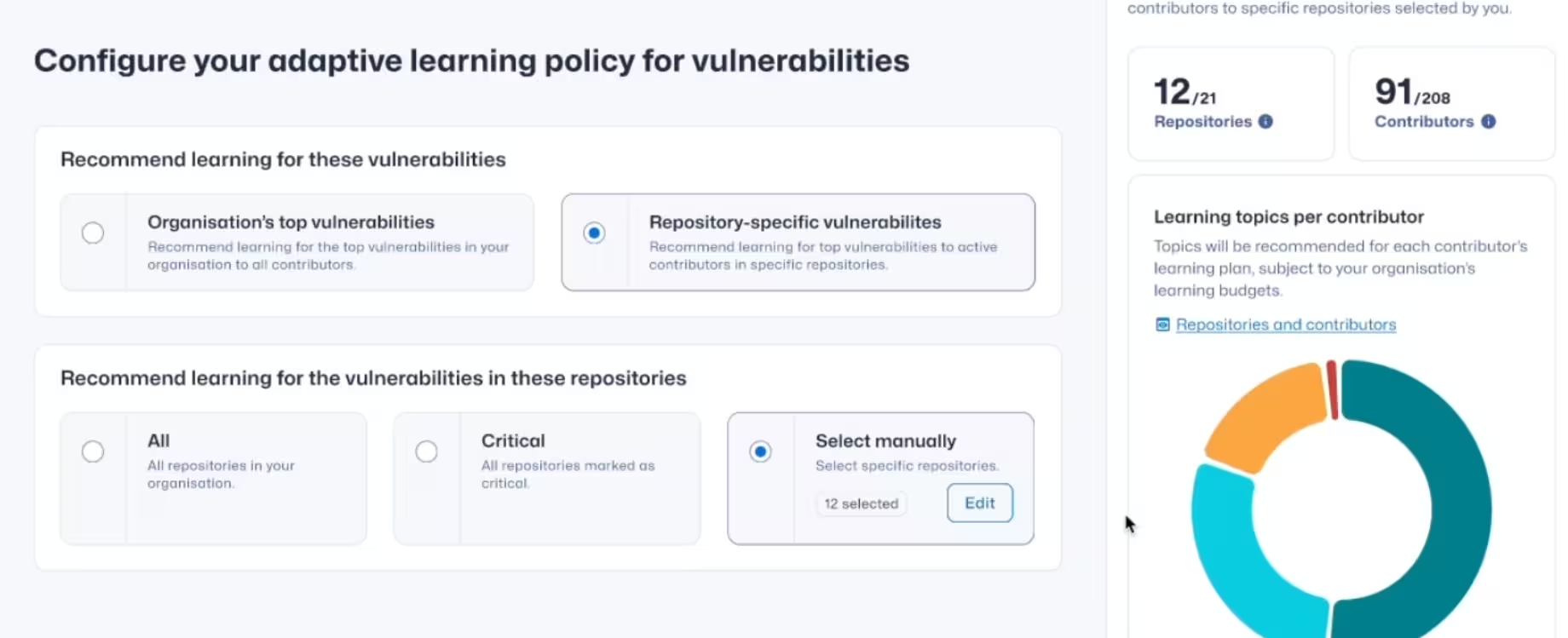
Because learning is aligned to the specific risks developers are actively contributing to, training becomes more relevant, timely, and easier to apply within day-to-day engineering workflows.
From completion metrics to real risk visibility
Adaptive Learning creates a stronger connection between secure coding learning and real engineering activity.
Once developers are assigned learning, commits to covered repositories can be scored against whether assigned vulnerability training has been completed at the time of the commit. This gives security leaders visibility into something traditional training metrics often cannot show: whether the developers actively writing code are equipped to handle the specific risks present in their environment.
That shifts the conversation from:
“Did developers complete their training?”
to:
“Are the developers contributing to high-risk repositories prepared to identify and prevent the vulnerabilities most relevant to the code they are shipping?”
Instead of relying only on generic completion reporting, organizations can begin measuring developer capability alongside real software risk and commit activity over time.
This helps move secure coding programs closer to preventative capability building at the source — reinforcing secure development practices before vulnerabilities reach production rather than relying entirely on downstream remediation workflows.
Building more preventative secure development practices
Adaptive Learning with Vulnerability Signals helps connect vulnerability findings, commit activity, developer attribution, secure coding learning, and commit scoring within a single workflow.
By aligning targeted learning to real software risk, organizations can reduce recurring vulnerabilities, strengthen developer capability, and reinforce more preventative secure development practices across engineering teams.

Adaptive Learning auto-assigns targeted secure coding training to the developers introducing real vulnerabilities, reducing recurring risks at the source.Secure Code Warrior blog banner with a blue overlay over a developer working at a multi-monitor desk displaying code, alongside the headline 'Train developers on the real risks in their code.'l
Shannon Holt ist eine Marketingfachfrau für Cybersicherheitsprodukte mit einem Hintergrund in den Bereichen Anwendungssicherheit, Cloud-Sicherheitsdienste und Compliance-Standards wie PCI-DSS und HITRUST.

Secure Code Warrior ist für Ihr Unternehmen da, um Ihnen zu helfen, Code während des gesamten Softwareentwicklungszyklus zu sichern und eine Kultur zu schaffen, in der Cybersicherheit an erster Stelle steht. Ganz gleich, ob Sie AppSec-Manager, Entwickler, CISO oder jemand anderes sind, der sich mit Sicherheit befasst, wir können Ihrem Unternehmen helfen, die mit unsicherem Code verbundenen Risiken zu reduzieren.
Eine Demo buchenShannon Holt ist eine Marketingfachfrau für Cybersicherheitsprodukte mit einem Hintergrund in den Bereichen Anwendungssicherheit, Cloud-Sicherheitsdienste und Compliance-Standards wie PCI-DSS und HITRUST.
Shannon Holt ist eine Marketingfachfrau für Cybersicherheitsprodukte mit einem Hintergrund in den Bereichen Anwendungssicherheit, Cloud-Sicherheitsdienste und Compliance-Standards wie PCI-DSS und HITRUST. Ihre Leidenschaft ist es, sichere Entwicklung und Compliance für technische Teams praktischer und zugänglicher zu machen und so die Lücke zwischen Sicherheitserwartungen und den Realitäten der modernen Softwareentwicklung zu überbrücken.

Adaptive Learning helps reduce recurring vulnerabilities through hyper-targeted training aligned to actual software risk.
Development teams are shipping code faster than ever, but many organizations still struggle to prevent the same vulnerabilities from being introduced repeatedly over time.
Most security training programs remain disconnected from the risks developers actually create day to day. Learning is assigned broadly, vulnerabilities continue recurring, and organizations are often left addressing the same issues downstream after insecure code has already moved further through development workflows.
Adaptive Learning helps organizations align secure coding learning to real software development activity and risk signals, including AI-assisted development activity, vulnerability findings, and evolving developer behavior.
In this post, we’re focusing specifically on Adaptive Learning with Vulnerability Signals — automatically assigning targeted vulnerability training to the developers introducing those risks.
Adaptive Learning in practice
Adaptive Learning with Vulnerability Signals connects vulnerability findings with Trust Agent: Commits activity to identify which developers are actively contributing to repositories associated with elevated software risk. Targeted training is then automatically assigned based on the vulnerability patterns developers are actually introducing, helping align learning to the languages they use, the repositories they contribute to, and the real software risks tied to their day-to-day work.

Because learning is aligned to the specific risks developers are actively contributing to, training becomes more relevant, timely, and easier to apply within day-to-day engineering workflows.
From completion metrics to real risk visibility
Adaptive Learning creates a stronger connection between secure coding learning and real engineering activity.
Once developers are assigned learning, commits to covered repositories can be scored against whether assigned vulnerability training has been completed at the time of the commit. This gives security leaders visibility into something traditional training metrics often cannot show: whether the developers actively writing code are equipped to handle the specific risks present in their environment.
That shifts the conversation from:
“Did developers complete their training?”
to:
“Are the developers contributing to high-risk repositories prepared to identify and prevent the vulnerabilities most relevant to the code they are shipping?”
Instead of relying only on generic completion reporting, organizations can begin measuring developer capability alongside real software risk and commit activity over time.
This helps move secure coding programs closer to preventative capability building at the source — reinforcing secure development practices before vulnerabilities reach production rather than relying entirely on downstream remediation workflows.
Building more preventative secure development practices
Adaptive Learning with Vulnerability Signals helps connect vulnerability findings, commit activity, developer attribution, secure coding learning, and commit scoring within a single workflow.
By aligning targeted learning to real software risk, organizations can reduce recurring vulnerabilities, strengthen developer capability, and reinforce more preventative secure development practices across engineering teams.

Adaptive Learning helps reduce recurring vulnerabilities through hyper-targeted training aligned to actual software risk.
Development teams are shipping code faster than ever, but many organizations still struggle to prevent the same vulnerabilities from being introduced repeatedly over time.
Most security training programs remain disconnected from the risks developers actually create day to day. Learning is assigned broadly, vulnerabilities continue recurring, and organizations are often left addressing the same issues downstream after insecure code has already moved further through development workflows.
Adaptive Learning helps organizations align secure coding learning to real software development activity and risk signals, including AI-assisted development activity, vulnerability findings, and evolving developer behavior.
In this post, we’re focusing specifically on Adaptive Learning with Vulnerability Signals — automatically assigning targeted vulnerability training to the developers introducing those risks.
Adaptive Learning in practice
Adaptive Learning with Vulnerability Signals connects vulnerability findings with Trust Agent: Commits activity to identify which developers are actively contributing to repositories associated with elevated software risk. Targeted training is then automatically assigned based on the vulnerability patterns developers are actually introducing, helping align learning to the languages they use, the repositories they contribute to, and the real software risks tied to their day-to-day work.

Because learning is aligned to the specific risks developers are actively contributing to, training becomes more relevant, timely, and easier to apply within day-to-day engineering workflows.
From completion metrics to real risk visibility
Adaptive Learning creates a stronger connection between secure coding learning and real engineering activity.
Once developers are assigned learning, commits to covered repositories can be scored against whether assigned vulnerability training has been completed at the time of the commit. This gives security leaders visibility into something traditional training metrics often cannot show: whether the developers actively writing code are equipped to handle the specific risks present in their environment.
That shifts the conversation from:
“Did developers complete their training?”
to:
“Are the developers contributing to high-risk repositories prepared to identify and prevent the vulnerabilities most relevant to the code they are shipping?”
Instead of relying only on generic completion reporting, organizations can begin measuring developer capability alongside real software risk and commit activity over time.
This helps move secure coding programs closer to preventative capability building at the source — reinforcing secure development practices before vulnerabilities reach production rather than relying entirely on downstream remediation workflows.
Building more preventative secure development practices
Adaptive Learning with Vulnerability Signals helps connect vulnerability findings, commit activity, developer attribution, secure coding learning, and commit scoring within a single workflow.
By aligning targeted learning to real software risk, organizations can reduce recurring vulnerabilities, strengthen developer capability, and reinforce more preventative secure development practices across engineering teams.

Klicken Sie auf den Link unten und laden Sie das PDF dieser Ressource herunter.
Secure Code Warrior ist für Ihr Unternehmen da, um Ihnen zu helfen, Code während des gesamten Softwareentwicklungszyklus zu sichern und eine Kultur zu schaffen, in der Cybersicherheit an erster Stelle steht. Ganz gleich, ob Sie AppSec-Manager, Entwickler, CISO oder jemand anderes sind, der sich mit Sicherheit befasst, wir können Ihrem Unternehmen helfen, die mit unsicherem Code verbundenen Risiken zu reduzieren.
Bericht ansehenEine Demo buchenShannon Holt ist eine Marketingfachfrau für Cybersicherheitsprodukte mit einem Hintergrund in den Bereichen Anwendungssicherheit, Cloud-Sicherheitsdienste und Compliance-Standards wie PCI-DSS und HITRUST.
Shannon Holt ist eine Marketingfachfrau für Cybersicherheitsprodukte mit einem Hintergrund in den Bereichen Anwendungssicherheit, Cloud-Sicherheitsdienste und Compliance-Standards wie PCI-DSS und HITRUST. Ihre Leidenschaft ist es, sichere Entwicklung und Compliance für technische Teams praktischer und zugänglicher zu machen und so die Lücke zwischen Sicherheitserwartungen und den Realitäten der modernen Softwareentwicklung zu überbrücken.
Adaptive Learning helps reduce recurring vulnerabilities through hyper-targeted training aligned to actual software risk.
Development teams are shipping code faster than ever, but many organizations still struggle to prevent the same vulnerabilities from being introduced repeatedly over time.
Most security training programs remain disconnected from the risks developers actually create day to day. Learning is assigned broadly, vulnerabilities continue recurring, and organizations are often left addressing the same issues downstream after insecure code has already moved further through development workflows.
Adaptive Learning helps organizations align secure coding learning to real software development activity and risk signals, including AI-assisted development activity, vulnerability findings, and evolving developer behavior.
In this post, we’re focusing specifically on Adaptive Learning with Vulnerability Signals — automatically assigning targeted vulnerability training to the developers introducing those risks.
Adaptive Learning in practice
Adaptive Learning with Vulnerability Signals connects vulnerability findings with Trust Agent: Commits activity to identify which developers are actively contributing to repositories associated with elevated software risk. Targeted training is then automatically assigned based on the vulnerability patterns developers are actually introducing, helping align learning to the languages they use, the repositories they contribute to, and the real software risks tied to their day-to-day work.

Because learning is aligned to the specific risks developers are actively contributing to, training becomes more relevant, timely, and easier to apply within day-to-day engineering workflows.
From completion metrics to real risk visibility
Adaptive Learning creates a stronger connection between secure coding learning and real engineering activity.
Once developers are assigned learning, commits to covered repositories can be scored against whether assigned vulnerability training has been completed at the time of the commit. This gives security leaders visibility into something traditional training metrics often cannot show: whether the developers actively writing code are equipped to handle the specific risks present in their environment.
That shifts the conversation from:
“Did developers complete their training?”
to:
“Are the developers contributing to high-risk repositories prepared to identify and prevent the vulnerabilities most relevant to the code they are shipping?”
Instead of relying only on generic completion reporting, organizations can begin measuring developer capability alongside real software risk and commit activity over time.
This helps move secure coding programs closer to preventative capability building at the source — reinforcing secure development practices before vulnerabilities reach production rather than relying entirely on downstream remediation workflows.
Building more preventative secure development practices
Adaptive Learning with Vulnerability Signals helps connect vulnerability findings, commit activity, developer attribution, secure coding learning, and commit scoring within a single workflow.
By aligning targeted learning to real software risk, organizations can reduce recurring vulnerabilities, strengthen developer capability, and reinforce more preventative secure development practices across engineering teams.
Inhaltsverzeichniss
Shannon Holt ist eine Marketingfachfrau für Cybersicherheitsprodukte mit einem Hintergrund in den Bereichen Anwendungssicherheit, Cloud-Sicherheitsdienste und Compliance-Standards wie PCI-DSS und HITRUST.

Secure Code Warrior ist für Ihr Unternehmen da, um Ihnen zu helfen, Code während des gesamten Softwareentwicklungszyklus zu sichern und eine Kultur zu schaffen, in der Cybersicherheit an erster Stelle steht. Ganz gleich, ob Sie AppSec-Manager, Entwickler, CISO oder jemand anderes sind, der sich mit Sicherheit befasst, wir können Ihrem Unternehmen helfen, die mit unsicherem Code verbundenen Risiken zu reduzieren.
Eine Demo buchenHerunterladenRessourcen für den Einstieg
SCW Learning Content for KnowBe4
Secure Code Warrior content available through KnowBe4 helps technical teams build secure coding and AI governance awareness through structured learning covering OWASP Top 10 risks, AI-assisted development, and modern secure coding practices.
Trust Agent:AI - Secure and scale AI-Drive development
AI is writing code. Who’s governing it? With up to 50% of AI-generated code containing security weaknesses, managing AI risk is critical. Discover how SCW's Trust Agent: AI provides the real-time visibility, proactive governance, and targeted upskilling needed to scale AI-driven development securely.
Ressourcen für den Einstieg
Secure coding learning that reflects real AI usage
Align secure coding training to real AI development activity — automatically assigning guidance to developers using AI tools, without manual intervention.Align secure coding training to real AI development activity — automatically assigning guidance to developers using AI tools, without manual intervention.
Securing the Future of Software: Why Secure Code Warrior and KnowBe4 Are Joining Forces
I am thrilled to announce today an upcoming strategic partnership between Secure Code Warrior and KnowBe4. KnowBe4 is a world-renowned leader in comprehensively managing human and agentic AI risk, making them the perfect partner to help us distribute foundational security awareness to organizations across the globe.
Post-Quantum Cryptography: Quantum Computers Will Break Today’s Encryption – Are You Ready?
Post-quantum cryptography (PQC) is critical for protecting data from quantum computing threats. Learn how “harvest now, decrypt later” exposes risk and how developers can prepare for quantum-safe security.