Go deeper
The AI adoption model whitepaper
A detailed breakdown of all eight stages, proprietary benchmarking research across 660 AI-generated codebases, risk inflection point analysis, and governance recommendations for every phase of adoption.
A practical framework for governing secure AI development — at every stage, for every team.


.svg)

















AI is reshaping how software is created across entire organizations. But most enterprises lack visibility into how AI contributes to production code, who is using it, and whether it is secure. Gartner's 2026 Hype Cycle for Secure Software Engineering warns that AI-augmented development is expanding the attack surface faster than traditional controls can scale — and that AI coding tools are making secure coding skills more important than ever.

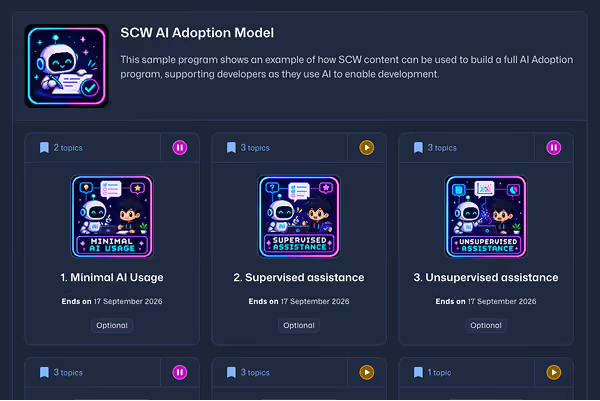
The SCW AI adoption model maps the full progression of AI use in software development across eight stages and three phases — from minimal AI assistance to fully autonomous agentic orchestration. It gives CISOs a practical framework to identify where their organization sits today, what training developers need at each stage, and which governance controls are required as autonomy increases.

AI supports development but humans remain the primary authors. Developers write code, review AI suggestions, and retain full oversight of output. This is the ideal time to build a governance foundation before oversight degrades.

Deliver advanced AppSec expertise, tailored governance design, and transformation planning for secure development programs.
Autonomous agents direct other agents across the full development lifecycle. Human involvement is reserved for high-risk escalation points. Governance must be entirely policy-driven. The SDLC is giving way to the Agentic Development Lifecycle.
Explore the eight stages of AI adoption and the security capabilities required to build secure software at each stage — with 200+ security concepts and vulnerability categories mapped across the journey.
Build the governance foundation now. Everything after this stage builds on it.
Write secure code from the start; apply secure patterns in every implementation.
Your developers review AI output all day. No one trained them to.
Review AI-generated code at the same standard as human-authored code.
The trust gap — you are now accountable for code no human has read.
Stay security-aware without reading every line; escalate on risk.
The most common flaw at this stage is one no scanner can see.
Prove AI-generated architecture meets security requirements through design review and threat modeling.
Your agents hold production credentials. Who rotates them?
Set constraints in agent config, tooling and CI/CD gates; manage agent credentials.
The velocity barrier — three to five agents writing, zero humans reading.
Define agent boundaries, authorization policy and automated gates.
If you can’t say which agent did it, you can’t run an incident response.
Own the governance framework: authorization, audit and escalation.
When policy is the only control, a bad policy is a breach at scale.
Define and evolve machine-readable policy; keep governance at the pace of capability.
Risk increases at every stage of the adoption curve — but two inflection points change the game entirely. These are the moments where CISOs need to act.
This is where AI moves from supervised to unsupervised activity. Developers grant broad permissions and stop carefully reviewing AI output. As trust in the tool increases, oversight decreases — and invisible security debt begins accumulating.
Source: Secure Code Warrior proprietary benchmarking research, 660 AI-generated codebases
This is where AI moves from supervised to unsupervised activity. Developers grant broad permissions and stop carefully reviewing AI output. As trust in the tool increases, oversight decreases — and invisible security debt begins accumulating.
SCW addresses the three problems that emerge at every stage of the AI development transition: building secure development capability, governing what AI touches, and providing the traceability compliance and incident response demands.
Secure Code Warrior Learning builds the security capability developers need at every stage of the AI adoption curve — from secure coding fundamentals at Stage 1 to governing fully autonomous agents at Stage 8. As the tooling evolves, so does the training. Developers get the specific AI security skills that apply to how they actually work — not a generic program built for a world that no longer exists.
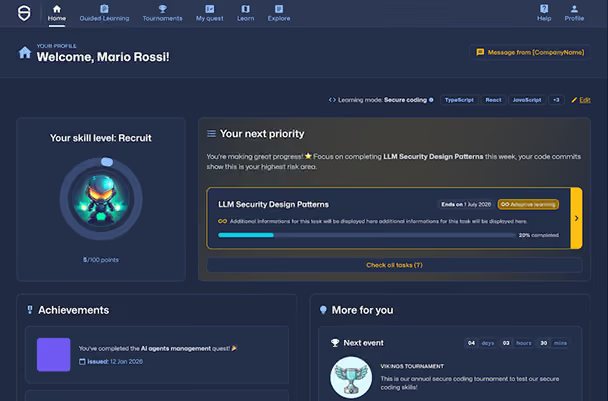
SCW automatically classifies where each developer sits on the adoption curve based on real signals from their tools, repositories, and behavior — then delivers the right content at the right time. No manual assessments. No one-size-fits-all programs. Every developer gets a clear entry point that matches where they actually are, and learning paths that evolve as they move up the curve.
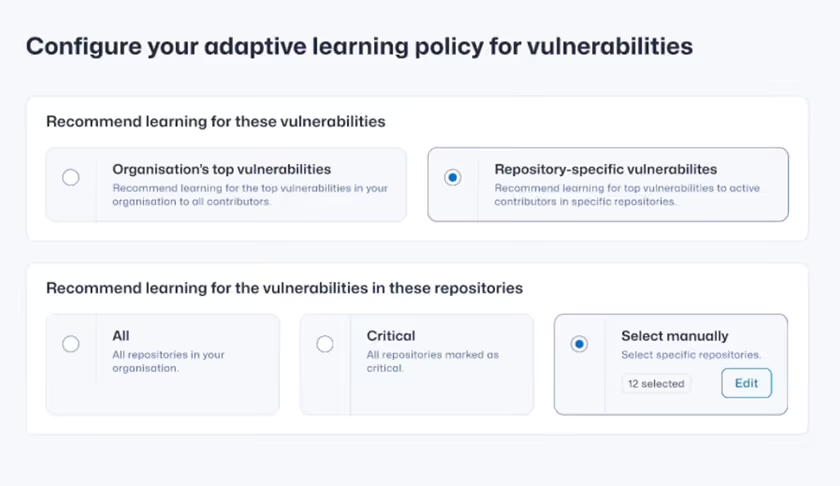
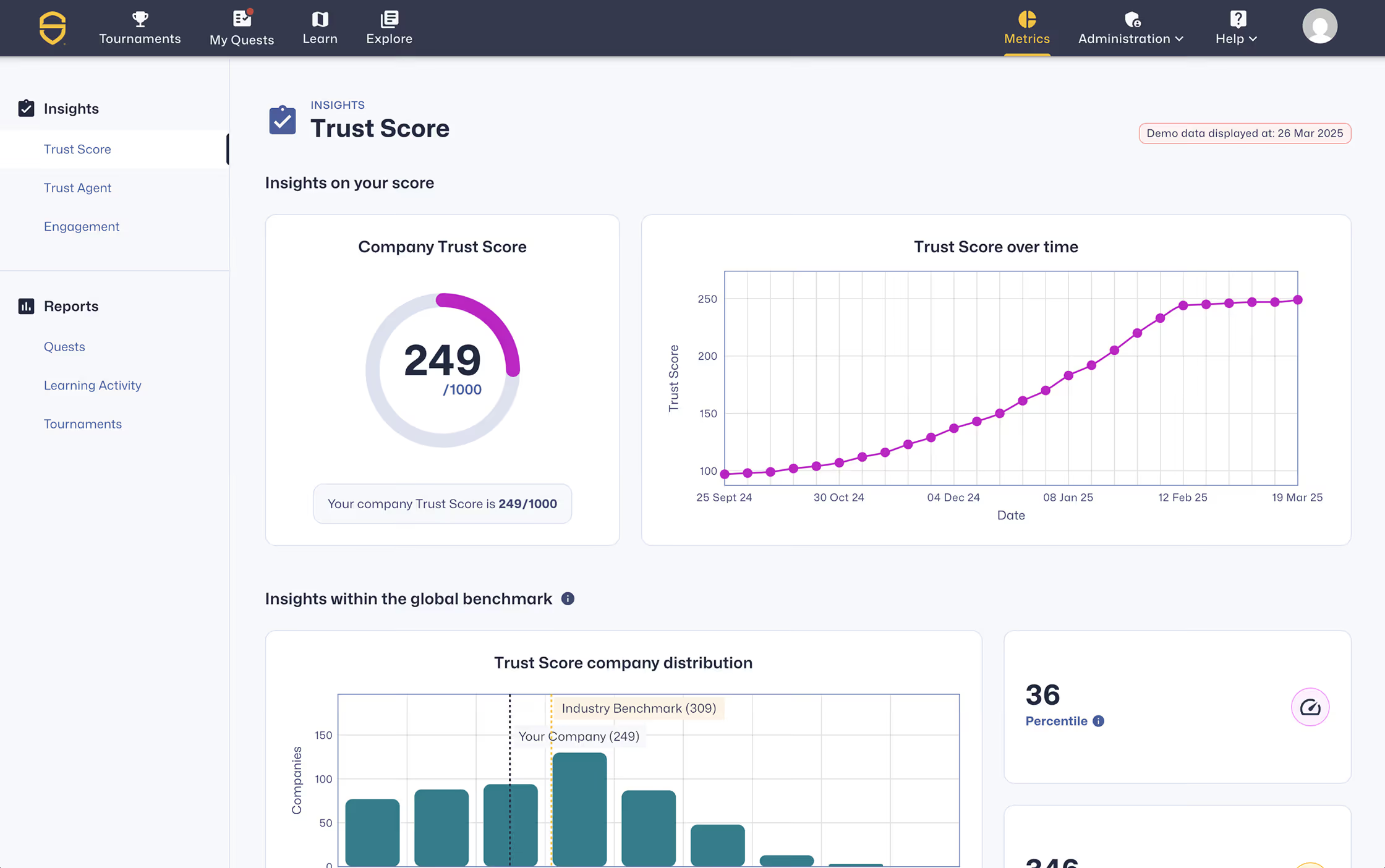
SCW Trust Agent provides commit-level visibility into AI's contribution to production code. It detects over-trust patterns, triggers adaptive learning automatically when risk signals spike, and gives CISOs the governance reporting they need to demonstrate progress — to boards, auditors, and regulators.
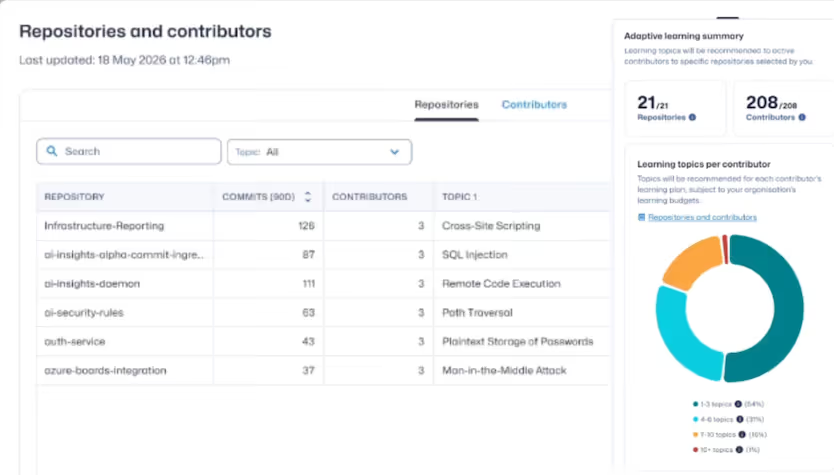
A detailed breakdown of all eight stages, proprietary benchmarking research across 660 AI-generated codebases, risk inflection point analysis, and governance recommendations for every phase of adoption.
Learn how Secure Code Warrior helps teams adopt AI safely, reduce risk, and build measurable developer capability.
See developer risk, enforce policy, and prevent vulnerabilities across your software development lifecycle.