Govern AI-driven software development

Gain visibility into AI-generated code, correlate risk at commit, and govern AI-assisted development — so organizations can adopt AI coding with confidence.

request a demo
correlate risk animation heading negativecorrelate risk stats gridcorrelate risk cta grid
correlate risk animation headingcorrelate risk stats gridcorrelate risk cta grid
Contributors using AI / tools installs
57
/90
Commits written
by AI
60
%
Code using approved models
55
%
Code using unapproved models
13
%
0%
graph
From the #1 secure coding training company
The AI software supply chain problem

AI has expanded your software supply chain

AI coding assistants, LLMs, and MCP-connected agents now generate production code across the SDLC. Development velocity has accelerated — but governance has not kept pace. AI has become an ungoverned contributor to your software supply chain.

Most organizations cannot clearly answer:

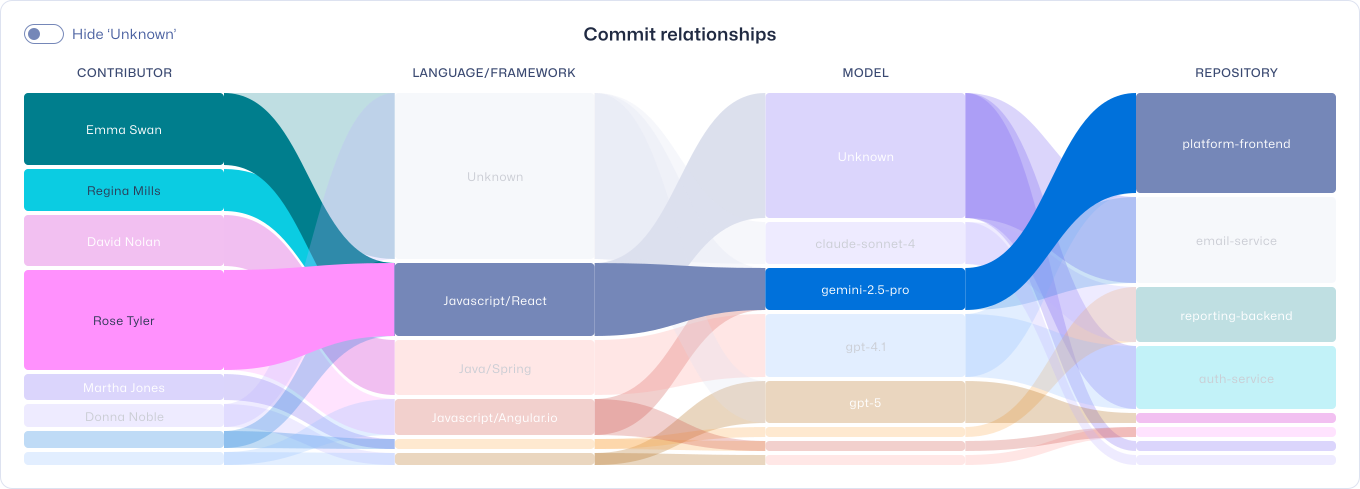
  • Which AI models generated specific commits
  • Whether those models consistently produce secure code
  • Which MCP servers are active and what they access
  • Whether AI-assisted commits meet secure coding standards
  • How AI usage impacts overall software risk
Effective AI software governance requires:
Visibility into AI tool and model usage across repositories
Commit-level risk correlation and policy guidance
Measure secure coding capability across human and AI-assisted SDLC

Without structured AI software governance, organizations face fragmented ownership, limited visibility, and growing exposure.

AI-assisted development increases code velocity — but without enforceable oversight, it also increases introduced vulnerability risk and model supply chain exposure.

What is AI software governance?

Oversight over AI-driven development

AI software governance makes AI-generated code visible, correlates commit-level risk, and aligns AI-driven development with security policy. It connects AI usage visibility, risk intelligence, and developer capability insights across the software development lifecycle.

It enables organizations to:

  • Gain visibility into where and how AI is used to generate code
  • Correlate AI-assisted commits with software risk
  • Define AI usage policy and governance standards
  • Create accountability across human and AI-generated code
Why AI software governance for the SDLC matters:
AI Governance
AI accelerates development
AI expands your software supply chain
AI introduces model risk and new threats
AI creates potential accountability gaps
Core capabilities

Govern and securely scale AI-driven software development

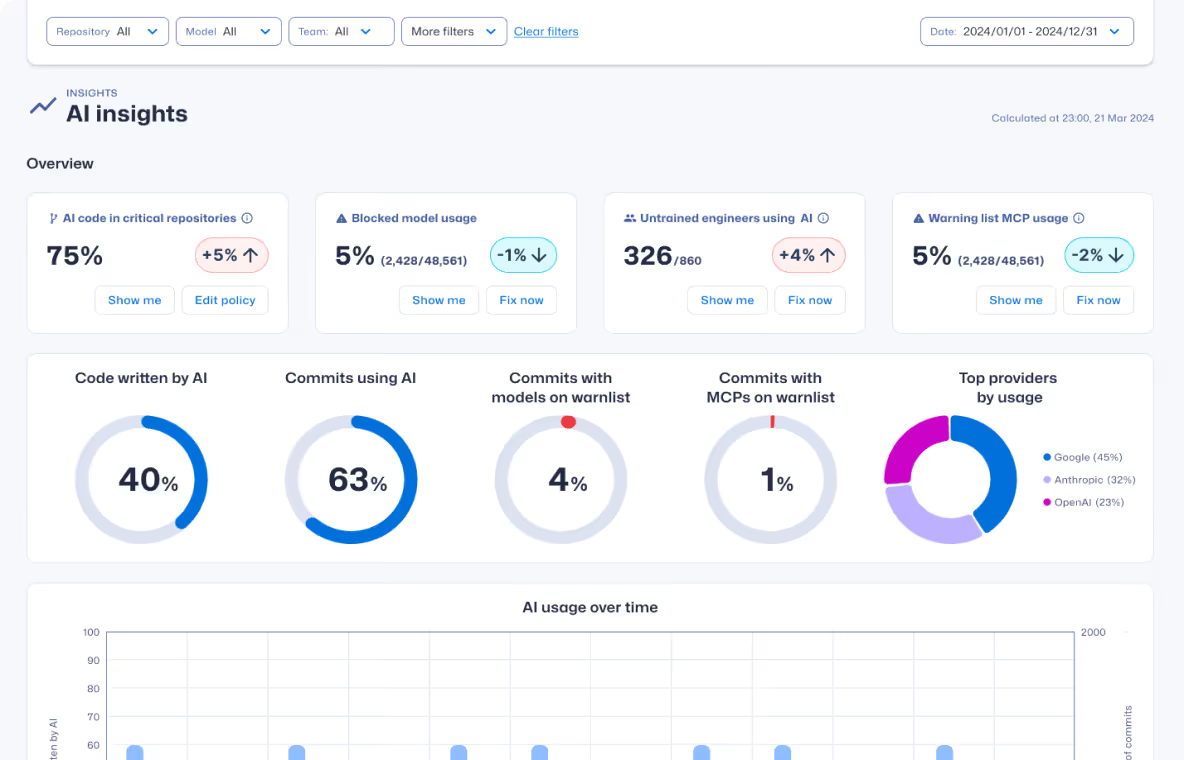
Traditional application security tools detect vulnerabilities after code is written. AI software governance provides visibility into AI model usage, correlates risk signals at commit, and helps organizations align development with secure coding policies.
book a demo
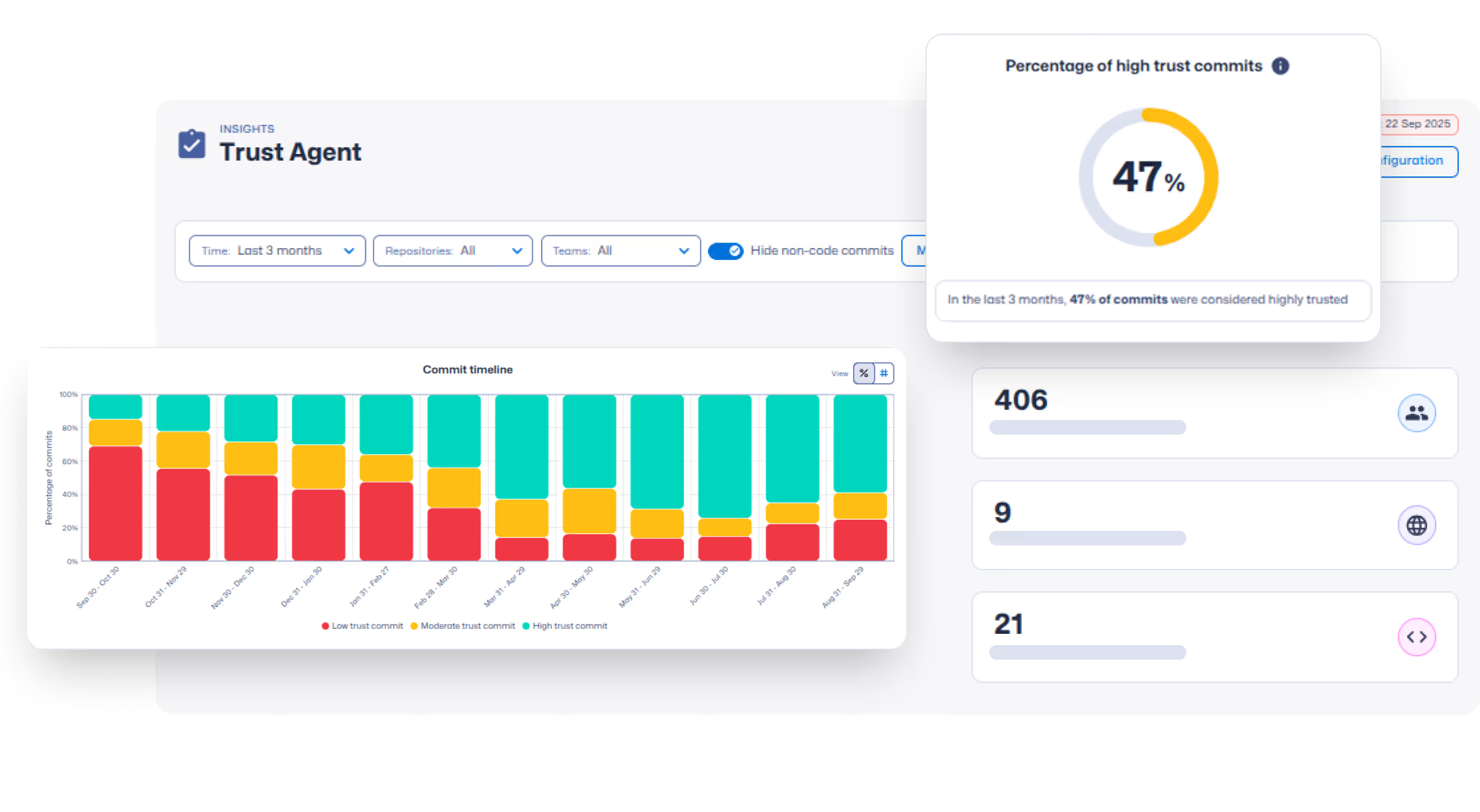
AI tool & model traceability

AI tool & model traceability

See where AI generates code

Gain visibility into which AI tools contribute code — creating a verifiable AI SBOM.

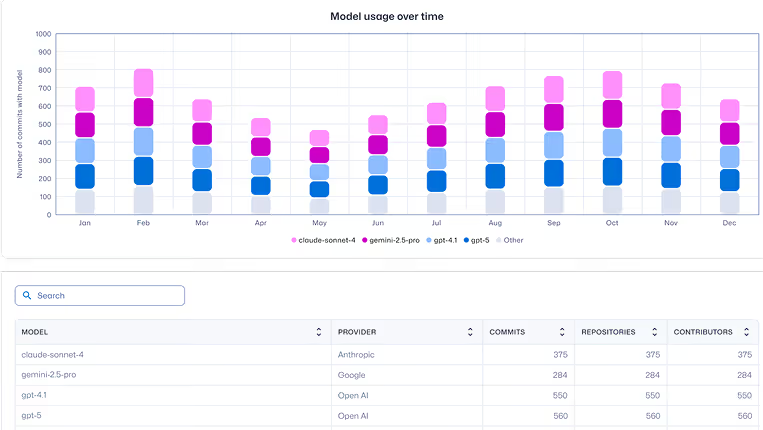
Shadow AI detection

Shadow AI detection

Expose unauthorized AI usage

Identify unsanctioned AI tools operating outside approved governance policies.
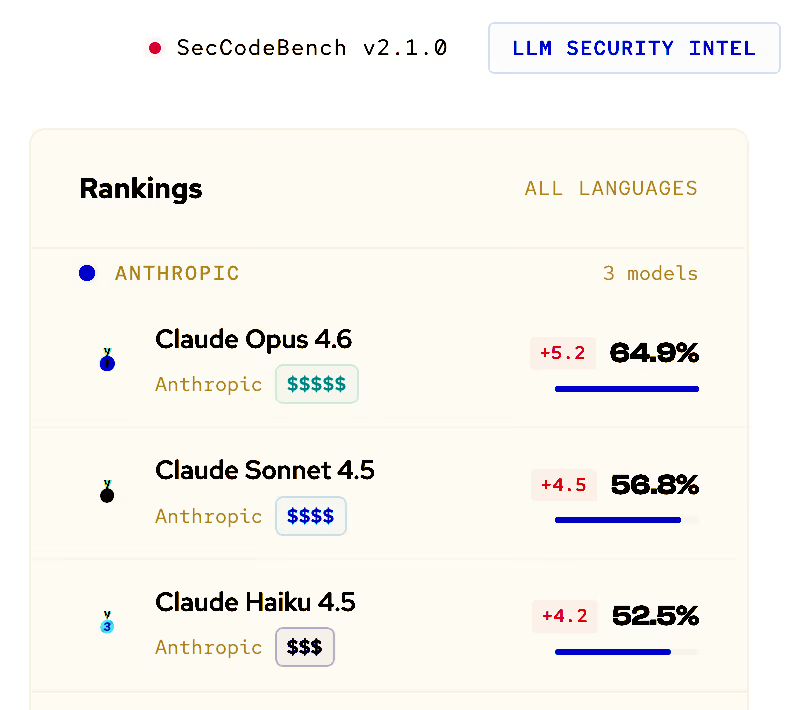
LLM security benchmarking

LLM security benchmarking

Security-first model selection

Get real world AI performance metrics to guide approved model usage.
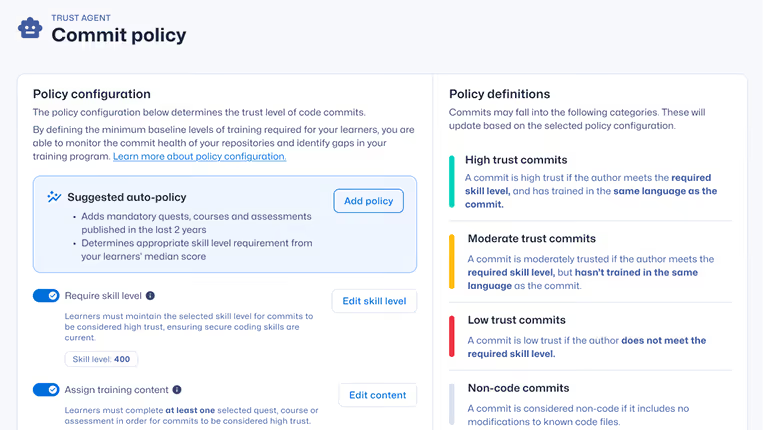
Risk scoring

Risk scoring

Understand risk before production

Correlate AI-assisted commits with risk signals and trigger targeted learning to reduce vulnerabilities.
MCP server visibility

MCP server visibility

Track AI agent supply chains

Identify Model Context Protocol servers and understand how AI agents interact with internal systems.
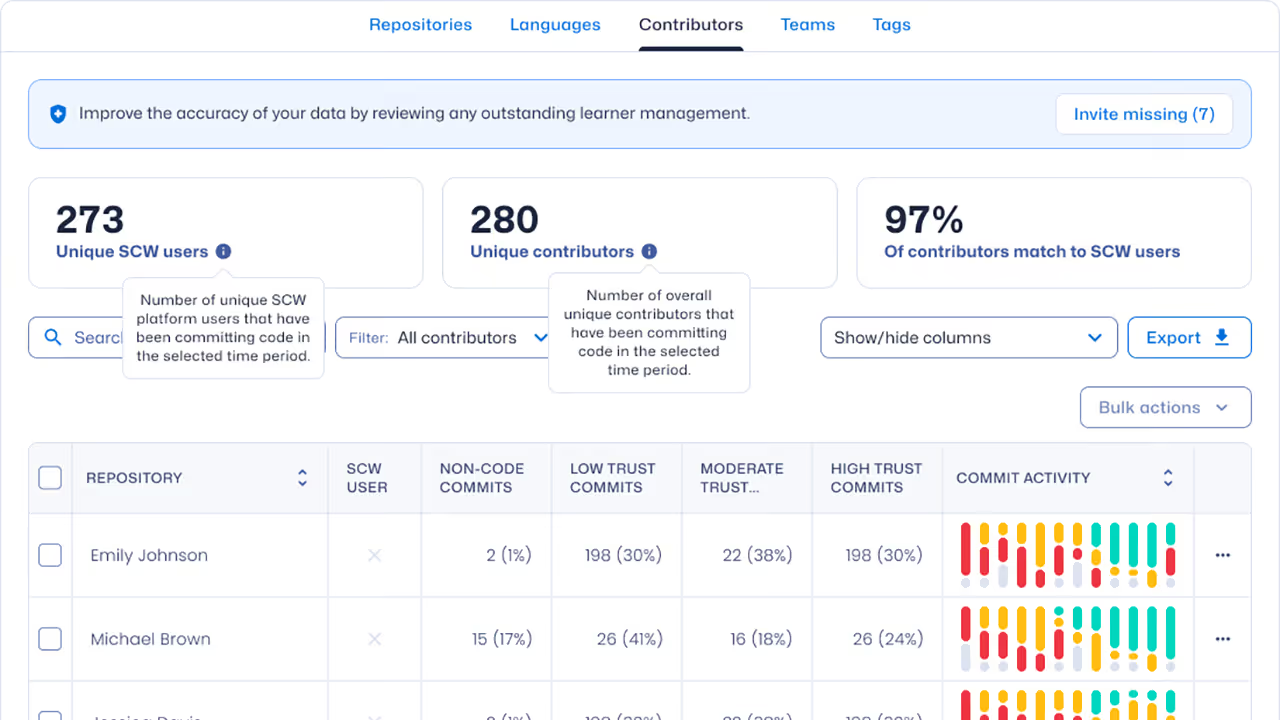
Developer discovery

Developer discovery

Identify shadow contributors

Continuously identify developers and commit patterns to strengthen accountability and risk visibility.

How it works

Govern AI-assisted development in four steps

1
2
3
4
1

Connect & observe

Integrate with repositories and CI pipelines to monitor commit metadata, AI model usage, and contributor activity.

2

Benchmark & score

Evaluate AI-assisted commits against vulnerability benchmarks and developer Trust Score® metrics.

3

Analyze & guide

Highlight elevated risk patterns and provide governance insights aligned with secure coding policies.

4

Audit & respond

Maintain a verifiable AI SBOM and quickly assess exposure if a model is compromised.

Who it’s for

Purpose-built for AI governance teams

Designed for the leaders responsible for securing software development as AI becomes a core contributor to production code.

Book a demo

For AI governance leaders

Establish enterprise-wide oversight aligned to defined risk thresholds and governance standards.

For CISOs

Demonstrate measurable AI cybersecurity governance and maintain audit-ready traceability across the SDLC.

For AppSec leaders

Prioritize high-risk commits and reduce recurring vulnerabilities without expanding review headcount.

For engineering leaders

Adopt AI-assisted development with guardrails that protect velocity without increasing review bottlenecks.

Govern AI-driven development
before it ships

See where AI tools generate code, correlate commits with risk signals, and maintain visibility across your AI software supply chain.
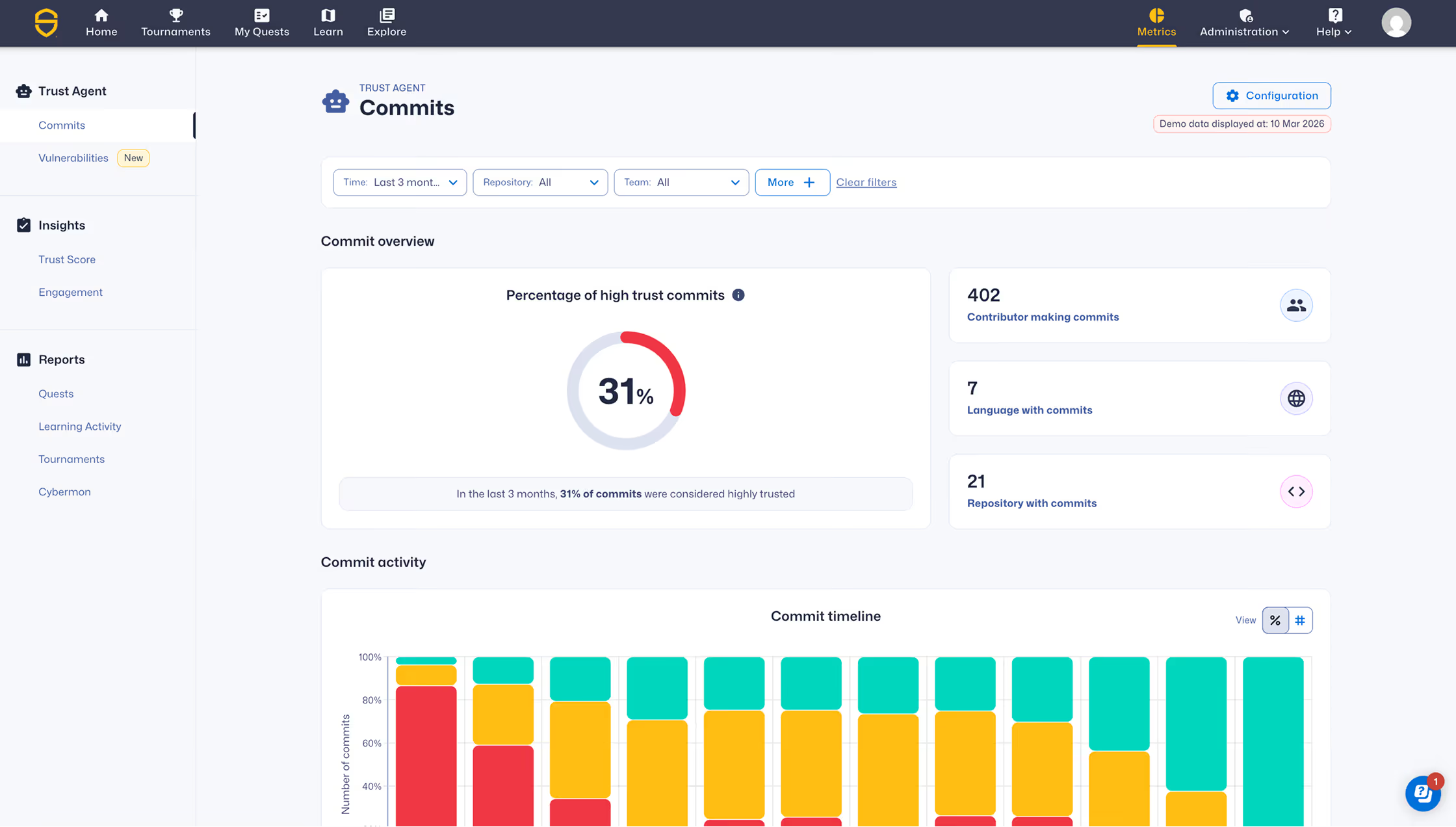
schedule a demo
commits
AI software governance platform FAQs

Control, measure, and secure AI-assisted software development

Learn how Secure Code Warrior provides AI observability, policy enforcement, and governance across AI-assisted development workflows.

Can you see which AI tools and models developers are using?

Yes. Secure Code Warrior provides full AI tool traceability, including which LLMs and MCP-connected agents generated specific commits—maintaining a verifiable AI SBOM across repositories.

How do you detect shadow AI in software development?

Shadow AI refers to unapproved AI tools or models used without oversight. The platform detects shadow AI through commit-level model traceability, repository monitoring, and enforceable policy controls that flag unauthorized AI usage.

How do you benchmark AI models for security?

Secure Code Warrior conducts independent research in partnership with universities to evaluate how leading LLMs perform against real-world vulnerability patterns. Organizations can mandate approved models and restrict high-risk LLMs at commit based on research-backed security performance.

How do you prevent vulnerabilities introduced by AI coding assistants?

Preventing AI-introduced vulnerabilities requires visibility into AI usage, validation against secure coding standards, enforceable model policies, and measurable developer capability across human and AI-assisted workflows.

How do you secure AI-generated code?

Securing AI-generated code requires visibility into AI tool usage, commit-level risk analysis, and governance oversight across development workflows. Secure Code Warrior provides AI observability, vulnerability correlation, and developer capability insights within a unified AI software governance platform.

What is the difference between AI software governance and AI code scanning?

AI code scanning analyzes output after it is written. AI software governance controls AI model usage, enforces policy at commit, correlates risk signals, and maintains continuous oversight across the AI software supply chain.

Still have questions?

Support details to capture customers that might be on the fence.

Contact