



























The first control layer for AI-assisted software development

Trust Agent: AI enables AI cybersecurity governance at the point of code creation.

book a demo
correlate risk animation heading negativecorrelate risk stats gridcorrelate risk cta grid
correlate risk animation headingcorrelate risk stats gridcorrelate risk cta grid
Contributors using AI / tools installs
57
/90
Commits written
by AI
60
%
Code using approved models
55
%
Code using unapproved models
13
%
0%
graph
From the #1 secure coding training company

In most organizations, these answers rely on assumptions — not data. That gap creates exposure at AI speed. Trust Agent: AI provides the visibility, risk correlation, and governance controls required to answer these questions with evidence.

What is Trust Agent: AI?

The governance layer that enables safe AI adoption across the software lifecycle.

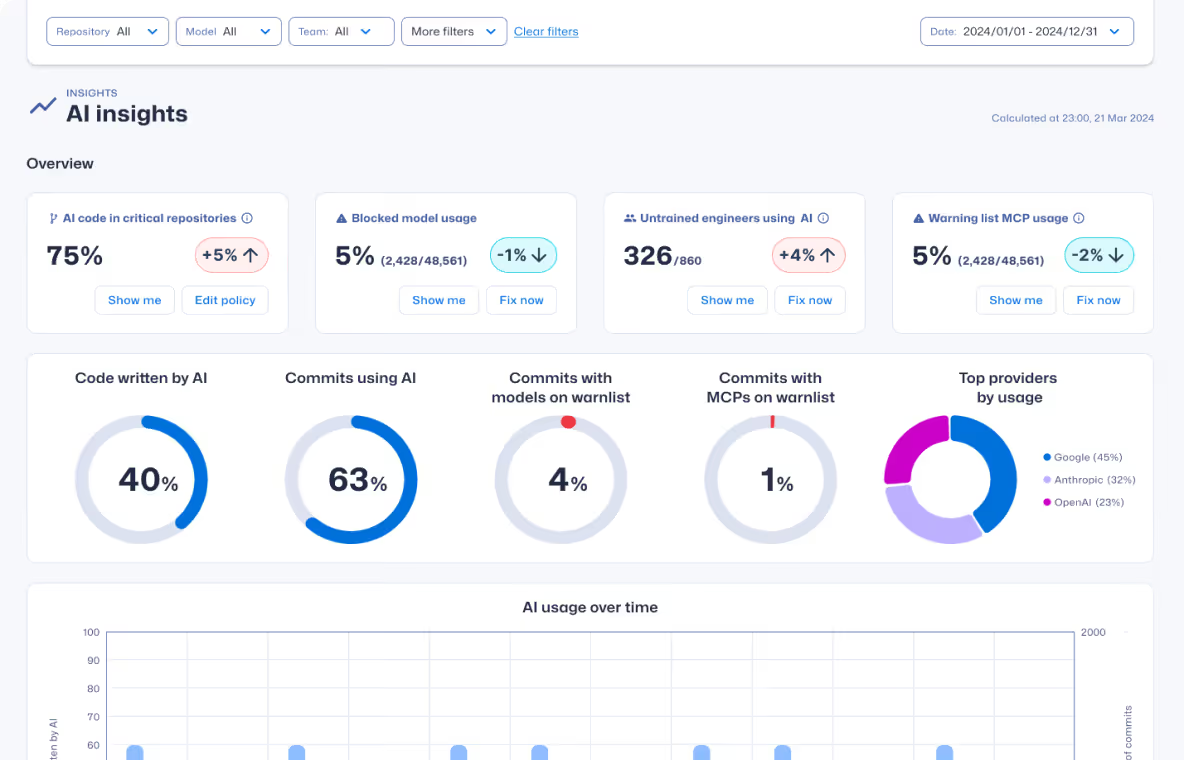
Trust Agent: AI brings AI software governance into the software development lifecycle. It provides visibility into AI-assisted development, correlates risk at commit, and enables organizations to scale AI coding securely.

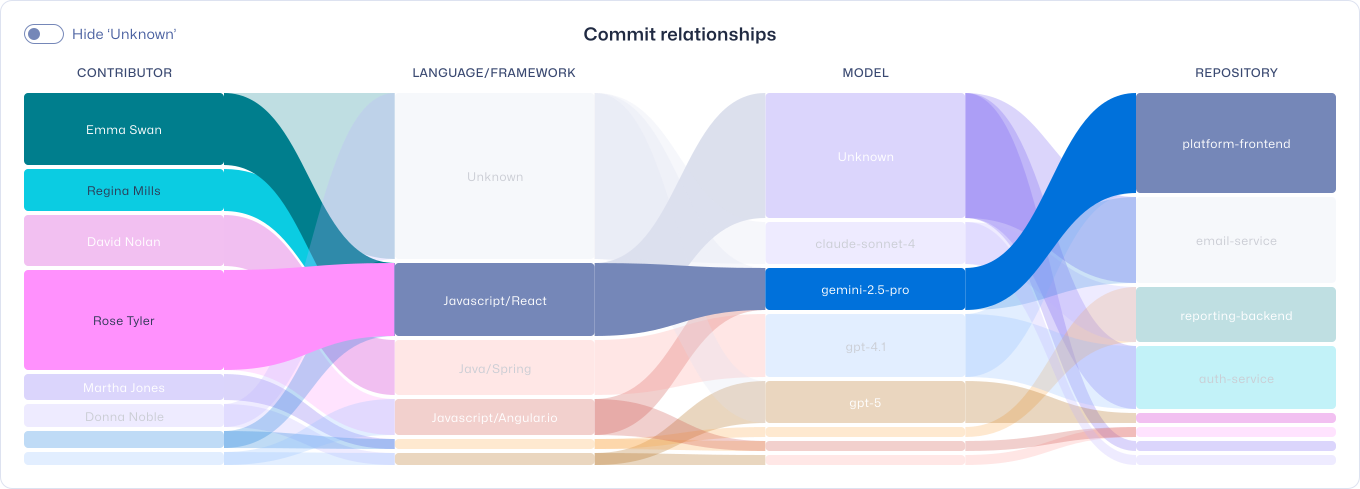
By correlating AI tool and model usage, MCP activity, commit metadata, developer Trust Score®, and vulnerability benchmarks, Trust Agent: AI helps organizations:

Book a demo

Establish enterprise-wide AI observability

Correlate AI-assisted development to measurable software risk

Apply governance with minimal developer disruption

Demonstrate sustained risk reduction over time

Trust Agent: AI captures AI usage signals and commit metadata — not source code or prompts — preserving developer privacy while enabling governance at scale.

It makes AI-assisted development visible, auditable, and manageable across the secure SDLC, helping organizations identify and reduce developer risk before code reaches production.
Core capabilities

Real-time AI governance at commit

Traditional application security tools detect vulnerabilities after code is written. Trust Agent enforces AI model restrictions and secure coding policies at commit — preventing introduced vulnerabilities before they enter production.

Book a demo
AI usage visibility

AI usage visibility

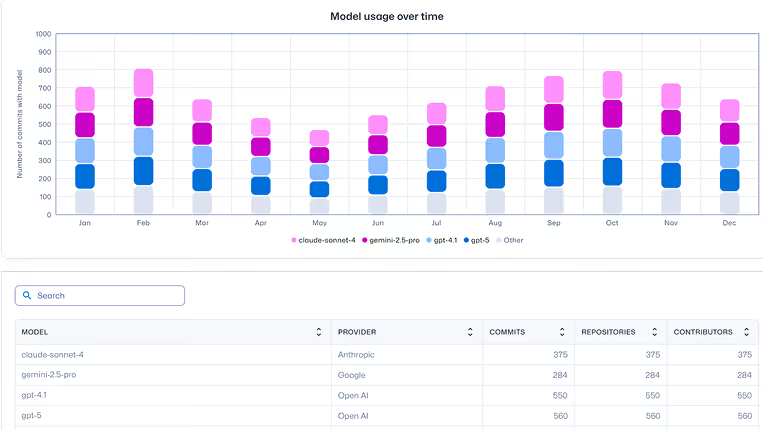
See how AI influences production code

Capture observable AI tool and model usage across developer workflows, correlating activity to repositories, contributors, and governance posture.

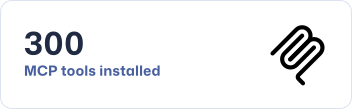
MCP supply chain insight

MCP supply chain insight

Bring AI tool supply chain governance under control

Surface actively used MCP providers, impacted users, and repository exposure — establishing a governance baseline for AI tool supply chains.

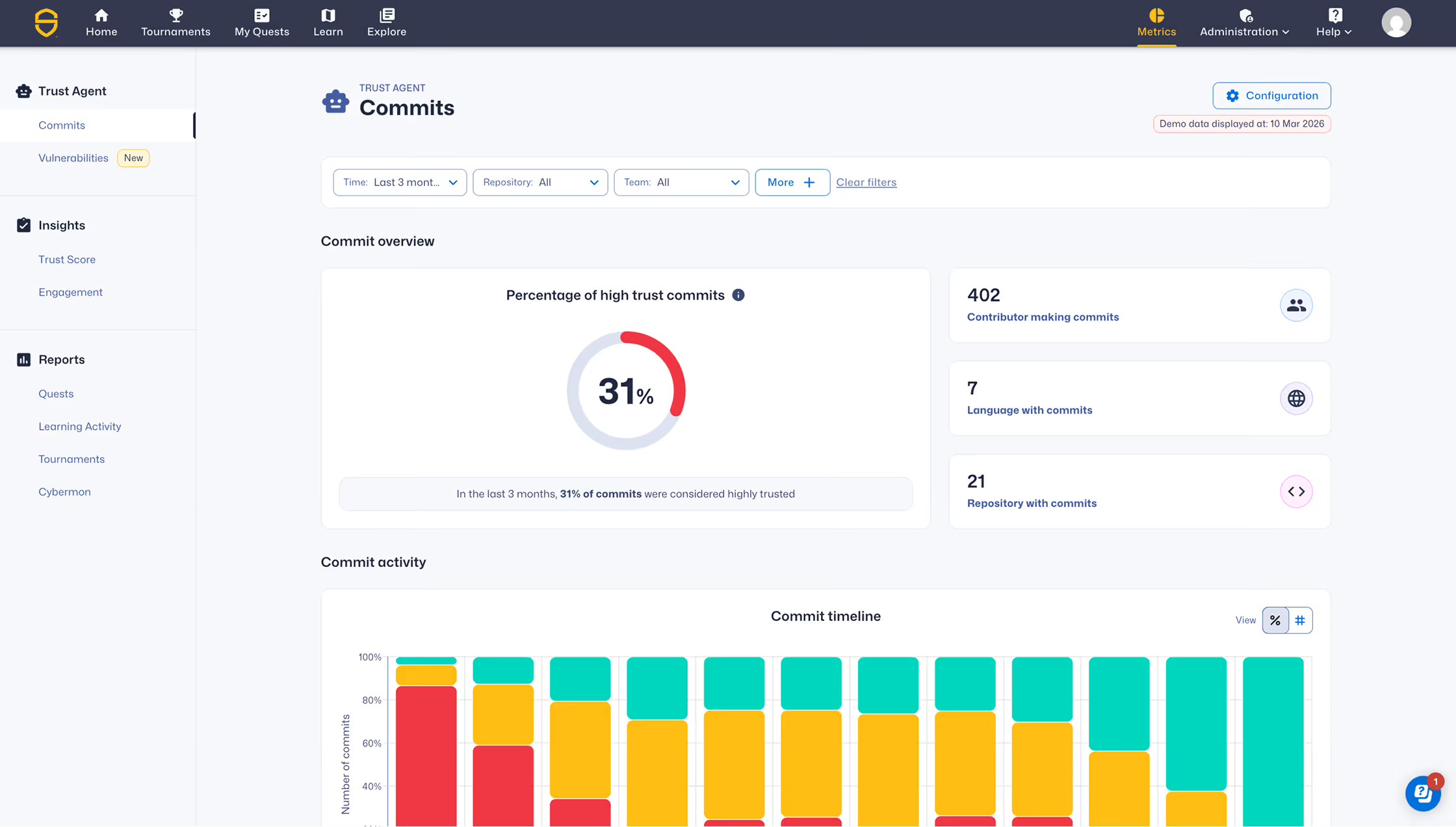
Commit-level risk correlation

Commit-level risk correlation

Connect AI development to measurable risk

Correlate AI usage signals, commit metadata, developer Trust Score®, and vulnerability benchmarks to identify elevated exposure before code reaches production.

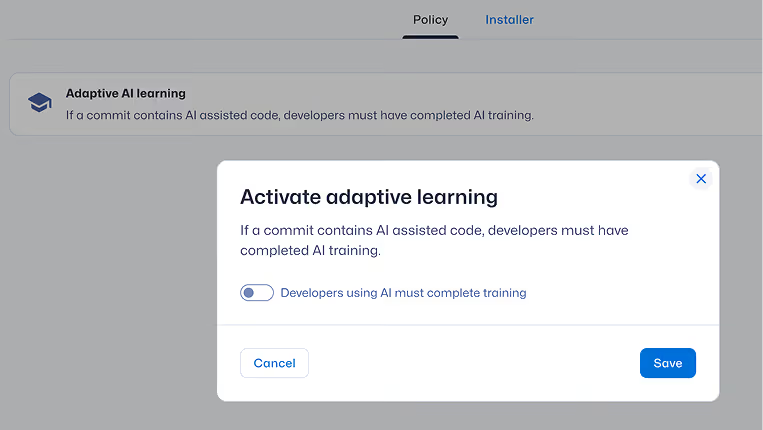
Adaptive risk-based learning

Adaptive risk-based learning

Close skill gaps behind the commit

Trigger targeted learning based on commit risk, AI influence, and developer Trust Score® — reducing recurring vulnerabilities.

Enterprise reporting & audit visibility

Enterprise reporting & audit visibility

Deliver evidence-based oversight

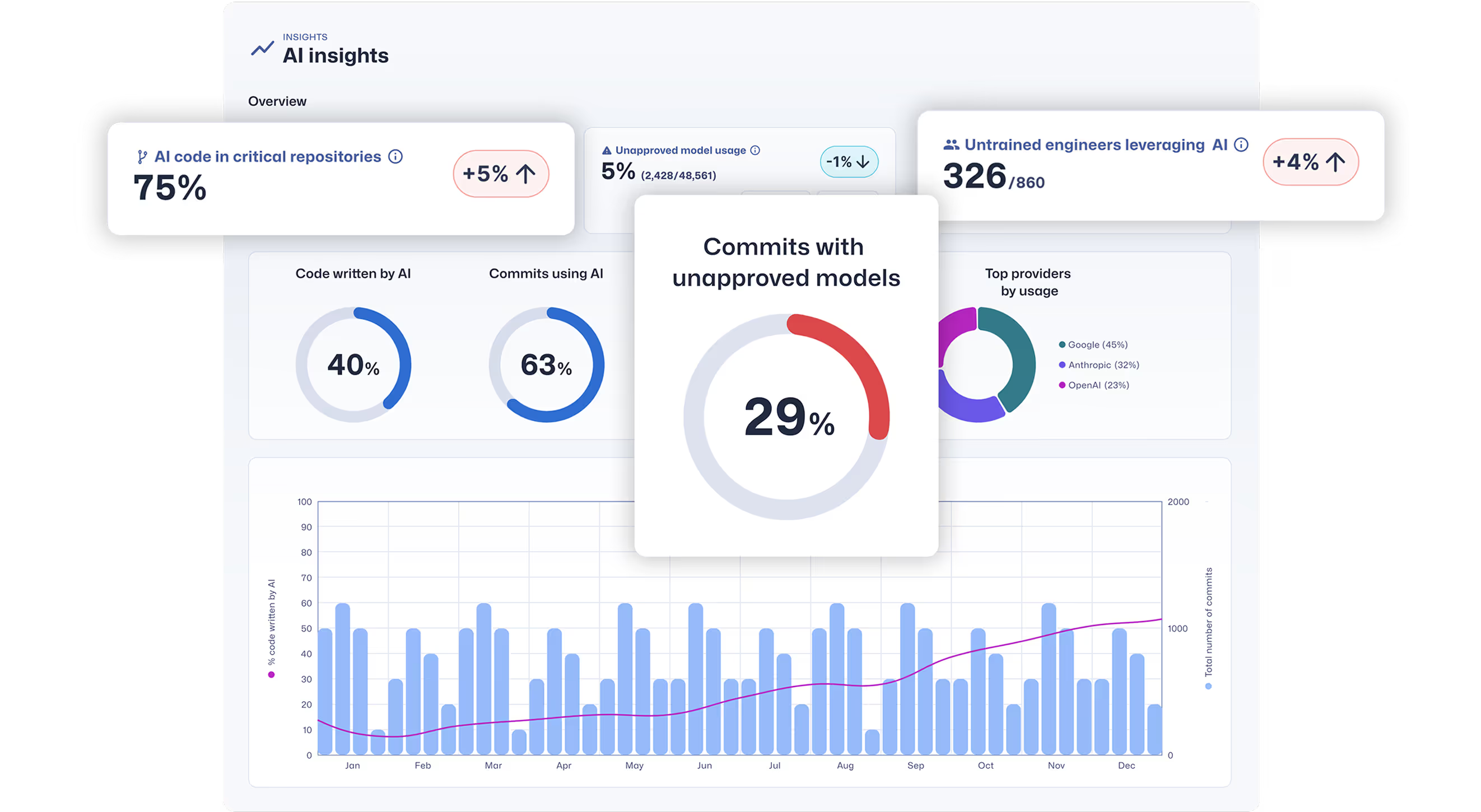
Provide executive-ready dashboards with AI usage trends, MCP visibility, and introduced vulnerability metrics — without storing source code or prompts.

Integrations

Supported AI development environments

Trust Agent: AI integrates into modern AI-assisted development workflows — supporting both established and emerging tools across the ecosystem.

IDE & agent workflows

Supported environments include:

Supported LLM APIs

Trust Agent: AI supports major LLM providers, including:

How Trust Agent: AI Works

Govern AI-assisted development in five steps

1
2
3
4
5
1

Capture

Collect AI tool and model usage signals, commit metadata, and MCP activity across IDE and endpoint environments.

2

Attribute

Link AI influence to developers, repositories, and model sources.

3

Correlate

Evaluate AI-assisted commits against vulnerability benchmarks and developer Trust Score® insights.

4

Govern

Trigger governance workflows and adaptive remediation based on defined risk thresholds.

5

Demonstrate

Deliver executive-ready visibility into AI adoption, policy alignment, and measurable risk trends.

Outcomes & Impact

Enforce AI cybersecurity governance at commit

Trust Agent: AI reduces AI-introduced risk, strengthens commit-level accountability, and delivers enforceable governance across AI-assisted development. It transforms AI governance from static policy into measurable, commit-level control — turning AI adoption into evidence-based security outcomes.

image 15
image 16
image 17
image 18
*In progress
Reduction in introduced vulnerabilities
53%+
Faster mean time
to remediate
82+%
AI model
traceability
100%
MCP model
traceability
100%
Who it’s for

Purpose-built for AI governance teams

Book a demo

For AI governance leaders

Operationalize AI governance at commit with model traceability, benchmark-informed policy enforcement, and risk visibility.

For CISOs

Demonstrate measurable governance over AI-assisted development and reduce enterprise software risk before code reaches production.
For AppSec leaders

Prioritize high-risk commits and reduce recurring vulnerabilities without expanding review headcount.

For engineering leaders

Adopt AI-assisted development with guardrails that protect velocity while reducing rework.

Be the first to govern AI-assisted development at commit

See how Trust Agent: AI delivers visibility, correlation, and policy control across AI-assisted development.

schedule a demo
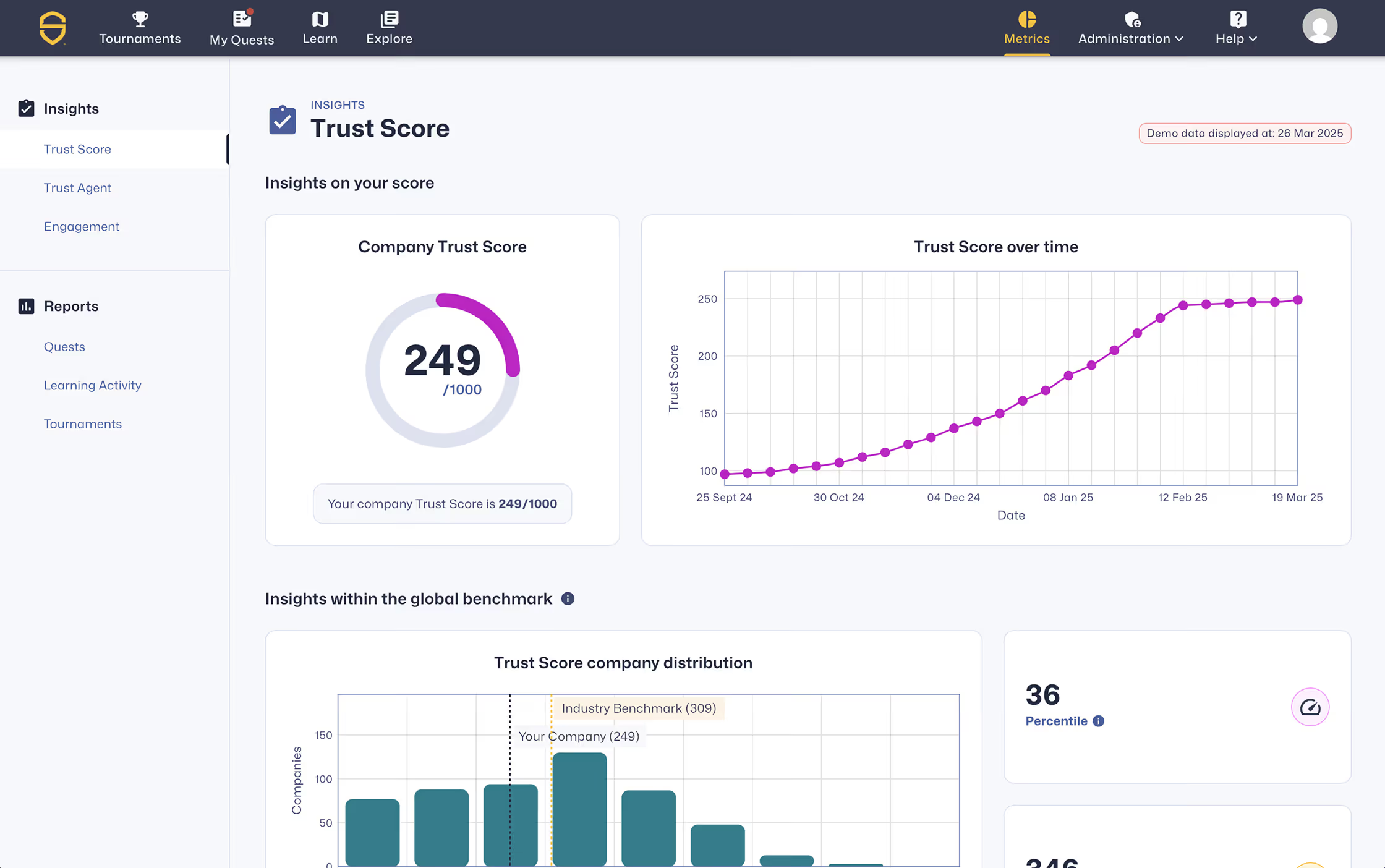
trust score
Trust Agent: AI FAQ

AI software governance and commit-level control

Learn how Trust Agent: AI makes AI-assisted development visible, measurable, and enforceable across your secure SDLC.

What is Trust Agent: AI?

Trust Agent: AI is a commit-level governance layer for AI-assisted software development. It makes AI tool and model usage visible, correlates AI-assisted commits with software risk, and enforces security policies before code reaches production.

What is AI software governance?

AI software governance is the ability to see, measure, and control how artificial intelligence tools influence software development. It includes AI usage visibility, commit-level risk analysis, model traceability, and enforceable security policies across the software development lifecycle (SDLC).

How does Trust Agent: AI govern AI-assisted development?

Trust Agent: AI captures observable AI usage signals, links them to developers and repositories, correlates commits with vulnerability benchmarks and developer Trust Score® metrics, and applies governance controls or adaptive remediation based on risk thresholds.

Can you see which AI coding tools developers are using?

Yes. Trust Agent: AI provides visibility into supported AI coding assistants, LLM APIs, CLI agents, and MCP-connected tools. It links model influence to commits and repositories without storing source code or prompts.

What is commit-level risk scoring in AI-assisted development?

Commit-level risk scoring evaluates individual commits influenced by AI tools against vulnerability benchmarks, developer secure coding proficiency, and model usage signals to identify elevated security risk before code moves downstream.

How is Trust Agent: AI different from traditional AppSec tools?

Traditional AppSec tools detect vulnerabilities after code is written. Trust Agent: AI governs AI-assisted development at commit by correlating AI usage, developer competency, and risk signals to prevent vulnerabilities earlier in the SDLC.

Does Trust Agent: AI store source code or prompts?

No. Trust Agent: AI captures observable AI usage signals and commit metadata without storing source code or prompts, preserving developer privacy while enabling enterprise governance.

What is MCP visibility in AI governance?

MCP visibility provides insight into which Model Context Protocol (MCP) providers and tools are installed and actively used across development workflows. This establishes a baseline inventory for AI tool supply chain governance and reduces shadow AI risk.

How does Trust Agent: AI reduce AI-introduced vulnerabilities?

Trust Agent: AI correlates AI usage with vulnerability benchmarks and developer skill data, enforces governance controls at commit, and triggers targeted adaptive learning to reduce recurring AI-introduced vulnerabilities over time.

Who should use Trust Agent: AI?

Trust Agent: AI is designed for CISOs, AI governance leaders, AppSec teams, and engineering organizations that need measurable, enforceable control over AI-assisted software development.

Still have questions?

Support details to capture customers that might be on the fence.

Contact