




Insights from experts shaping secure development
Access expert content on secure coding, AI governance, and software risk management.


Post-Quantum Cryptography: Quantum Computers Will Break Today’s Encryption – Are You Ready?
Post-quantum cryptography (PQC) is critical for protecting data from quantum computing threats. Learn how “harvest now, decrypt later” exposes risk and how developers can prepare for quantum-safe security.

Enabler 2: Senior Leadership Sponsorship
Explore Enabler 2: Senior Leadership Sponsorship. Learn why active buy-in from the CIO, CTO, and CISO is vital to drive developer adoption and program credibility.
Observe and Secure the ADLC: A Four-Point Framework for CISOs and Development Teams Using AI
While development teams look to make the most of GenAI’s undeniable benefits, we’d like to propose a four-point foundational framework that will allow security leaders to deploy AI coding tools and agents with a higher, more relevant standard of security best practices. It details exactly what enterprises can do to ensure safe, secure code development right now, and as agentic AI becomes an even bigger factor in the future.
Kamer van Koophandel Sets the Standard for Developer-Driven Security at Scale
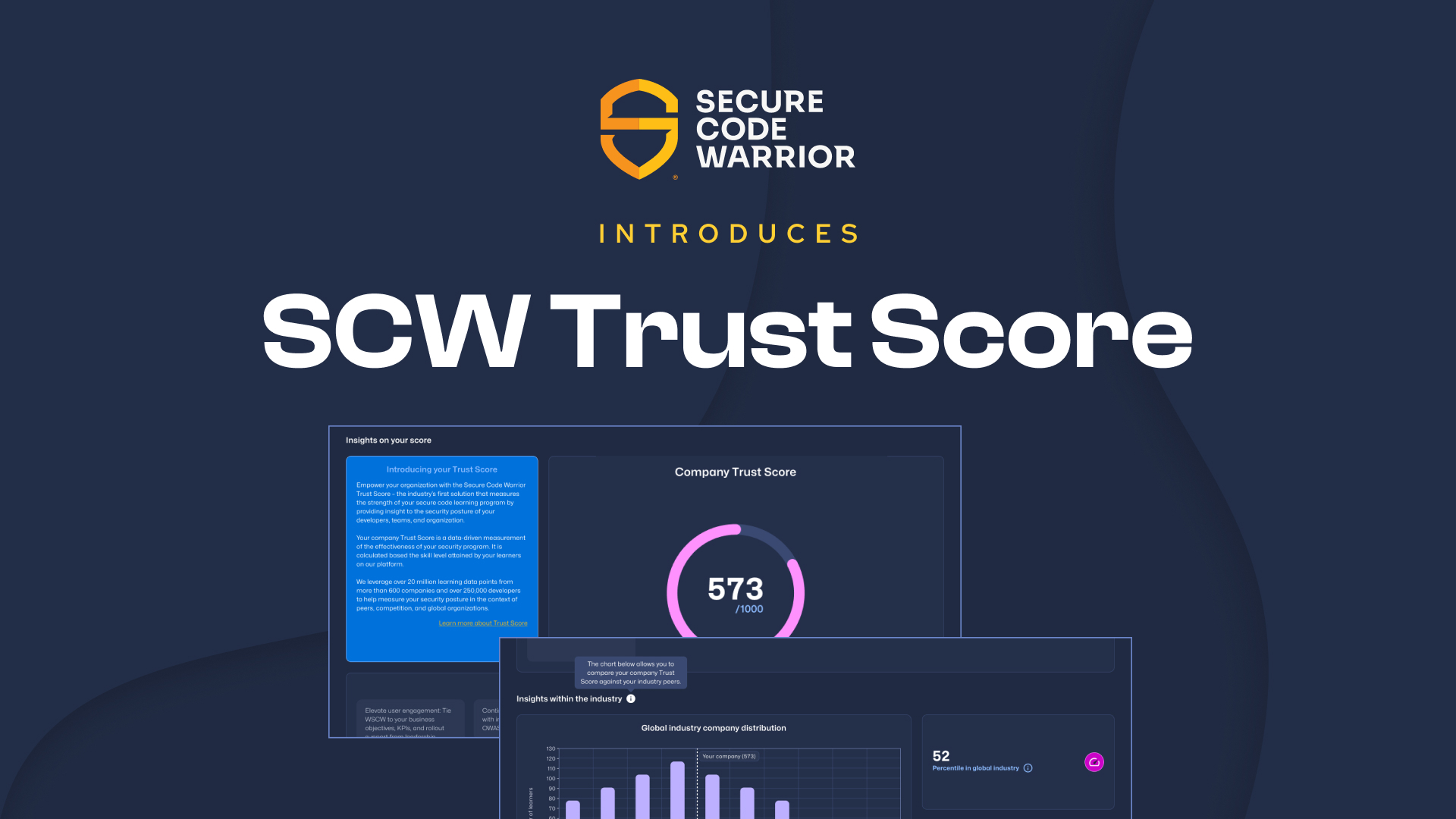
Kamer van Koophandel shares how it embedded secure coding into everyday development through role-based certifications, Trust Score benchmarking, and a culture of shared security ownership.
Going for Gold: Soaring Secure Code Standards at Paysafe
See how Paysafe's partnership with Secure Code Warrior led to a 45% boost in developer productivity and a major reduction in code vulnerabilities.
DigitalOcean Decreases Security Debt with Secure Code Warrior
DigitalOcean's use of Secure Code Warrior training has significantly reduced security debt, allowing teams to focus more on innovation and productivity. The improved security has strengthened their product quality and competitive edge. Looking ahead, the SCW Trust Score will help them further enhance security practices and continue driving innovation.

KBI Media: Eliminating the Technical Debt Caused by AI-Assisted Software Development
According to research company Forrester[1], the tech debt for 75% of organisations will increase to a moderate or high level during this year, due to the rapid expansion of AI usage across a range of areas including software development.

Forbes: Security Self-Governance: Addressing The Regulatory Gap In AI-Assisted Software Development
While it’s early into 2026, we’re seeing new research that reveals the extent of cyber risks caused by artificial intelligence (AI)-assisted software development: Nearly 7 in 10 organizations have discovered vulnerabilities introduced by AI-generated code, and 1 in 5 have suffered a serious incident tied directly to the vulnerabilities.

ITWire: Why AI Is Dulling Cybersecurity’s Most Important Edge
Artificial intelligence (AI) has rapidly become indispensable to modern software development. From large language models that generate code on demand to agentic systems that automate entire workflows, AI tools promise dramatic gains in productivity and efficiency.

Trust Agent:AI - Secure and scale AI-Drive development
AI is writing code. Who’s governing it? With up to 50% of AI-generated code containing security weaknesses, managing AI risk is critical. Discover how SCW's Trust Agent: AI provides the real-time visibility, proactive governance, and targeted upskilling needed to scale AI-driven development securely.
The Power of OpenText Application Security + Secure Code Warrior
OpenText Application Security and Secure Code Warrior combine vulnerability detection with AI Software Governance and developer capability. Together, they help organizations reduce risk, strengthen secure coding practices, and confidently adopt AI-driven development.

Secure Code Warrior corporate overview
Secure Code Warrior is an AI Software Governance platform designed to enable organizations to safely adopt AI-driven development by bridging the gap between development velocity and enterprise security. The platform addresses the "Visibility Gap," where security teams often lack insights into shadow AI coding tools and the origins of production code.