今日AI生成のPythonコードを試しているエンジニアが、来月にはTerraformでInfrastructure as Codeをレビューしたり、AIを使ってフロントエンドのテストワークフローを加速させたりするかもしれません。AIコーディングアシスタントを多用する開発者もいれば、ほとんど触れない開発者もいます。
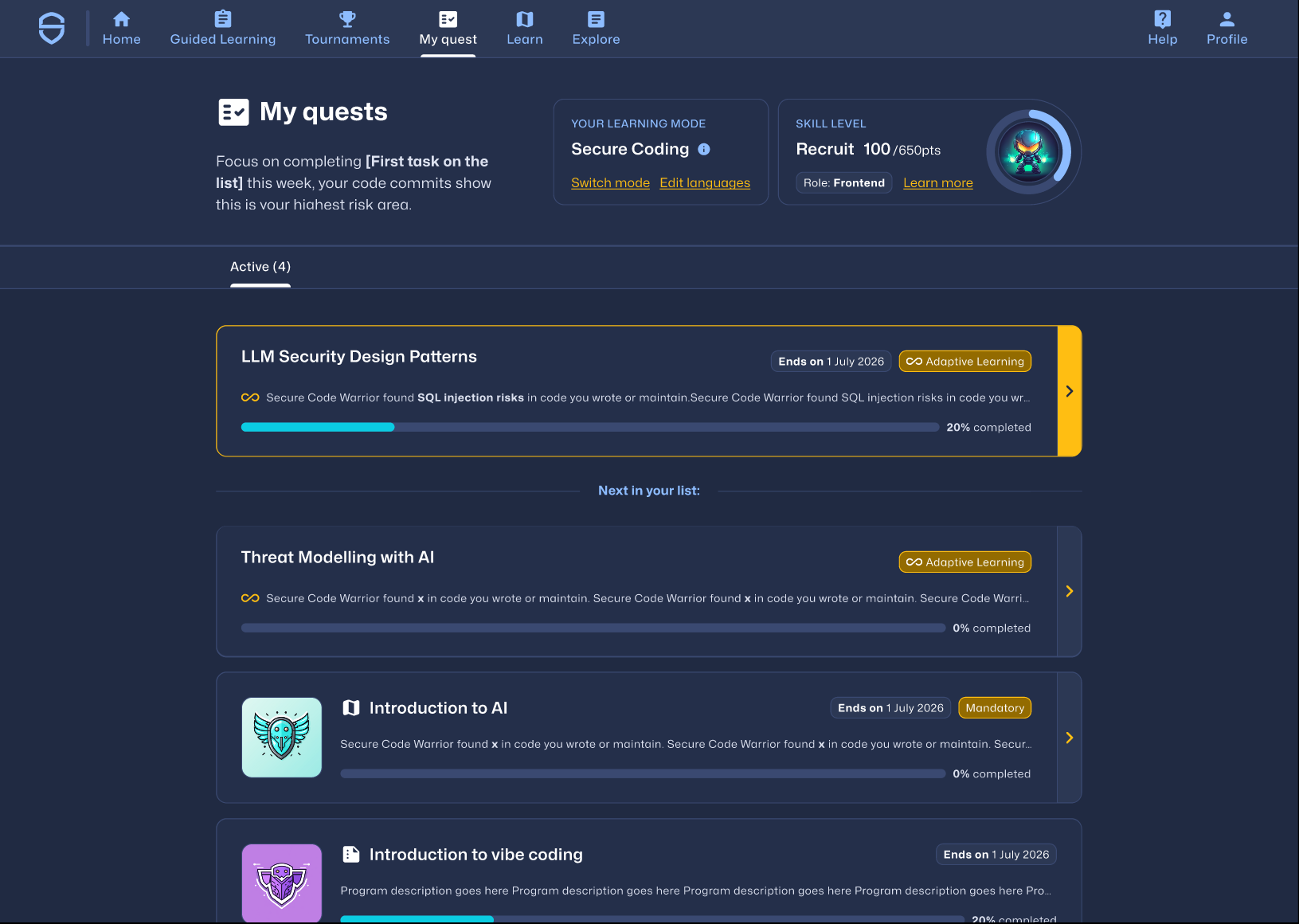
So now we can detect the AI usage, we can understand where it's happening, and we can trigger that targeted training for the right developers. And that's what I'm gonna show you today, how we take that AI signal and turn it into adaptive learning. So there are a few parts of the process which I'll walk through today. The first piece is in the policy setup on TA, then we can go to the Quest side to trigger the training. For the policy, it's super simple and straightforward. So if you want to ensure that developers who use AI need a training, you can head over to this policy section within configuration. And what you wanna do is ensure that the adaptive AI learning is toggled on. Once that's set up, that's all you need to do on the Trust Agent AI side. In this demo itself, we've already gone ahead and set up the installer and all that piece over here. We have various internal external documentation on how to locally install it or use various scripts like Jamf, there'll be other documentation on that. But in this, like I say, in this demo, I'm just gonna head on with the actual policy setup and the adaptive learning creation. Okay. So now this is set up. I'm over into quests, and what I'm gonna do is create a quest to target the specific learners who have used AI. So So once you're in the quest, if you scroll down and you look at the participant section, what we have now is a new participant type, which is trust agent detection. And what this will do is automatically pull the developers who have been flagged in that TA AI report. So what we're gonna do is select this, and we can start to fill out the rest of the quest like normal. So we give it a title, a badge, we'll scroll down to the objectives. And what's really nice about this is the flexibility that the admins have to define the criteria for the training needed. For example, they can go in and they can select the specific content. So they could just go with Coding With AI. They could go with the AI agents and the protocols as well. For this demo, I'm gonna select both of these and keep them as part of the criteria. I can also then decide the schedule, so I'm gonna use fixed dates, and then I can go ahead and configure some of the quest settings as well. One important area to note is the count pass completions. This again is flexible based on customer's needs where we can define if they want learners to complete the training regardless if they've done any of the content before, or they can set a specific time period like three or six months where they have done it recently. So for this demo, I'm gonna set it to redo all content. Once that's filled out, you can then go ahead and save and publish. Now that's set up. That's gonna be available for them developers that were flagged for the Trust Agent AI, and the two steps are complete from an admin's perspective. So we've gone in and we've set up the policy and made sure that's enabled. And we've gone over to Quest and ensure we've created a Quest that's using the new participation type, the trust agent detection. So what I can do now is quickly log in as a learner just so we can see if they have received that training. So just to quickly show you what it's like from the learner perspective, here I am logged in as a learner. I was one of the learners who flagged up based on AI usage, and therefore, I have now received the quest, which you can see here on the screen. And in the normal process, I would then go through and then go through the topics within the quest. Once I have completed this, then I've completed the quest. And that concludes the demo today. So what I've gone through is really just an overview of the importance of Trust Agent AI and adaptive learning, and then gone through to the demo of the admin experience and then quickly briefly through to the learning experience as well. As always, any questions on adaptive learning, please feel free to reach out. Always happy to help. Thank you very much.
今年初め、当社は「SCW AI Trust Index」を公開しました。RMIT大学との共同調査において、OpenAI、Anthropic、Googleをはじめとする主要な16のAIモデルを評価し、生成された1,760のコードベースから、1件あたり平均15件の脆弱性を特定しました。独自の測定手法に基づくこのデータにより、セキュリティリスクはモデルやフレームワークごとに予測可能であることを突き止めるに至りました。