

コーダーがセキュリティインフラストラクチャを征服するコードシリーズ-ビジネスロジック


Well, this is it (for now). We have reached the end of our Infrastructure as Code series. We hope you've had fun conquering security issues in Docker, Ansible, Kubernetes, Terraform, and CloudFormation. Before we sign off, though, we've got one more vulnerability for you to master: business logic bugs.
Think you're ready to test your skills now? Try the final gamified challenge:
If you're still unclear on a few things, keep reading:
The vulnerabilities we want to focus on today are business logic flaws. These can occur when coders fail to properly implement business logic rules which could leave their applications vulnerable to different kinds of attacks should a malicious user choose to exploit them. Depending on the purpose and functionality implemented within each application, a business logic flaw may allow privilege escalation, improper resource usage or any number of unintended business processes to be performed.
Unlike many vulnerabilities, incorrect implementation of business logic rules can be surprisingly subtle. They require special vigilance to ensure that they don't sneak into applications and code.
What are some examples of business logic flaws?
As an example of how easy it can be to induce business logic flaws, consider the following example from a Docker environment defined with a Docker Compose file. To prepare containers to perform functions, a developer might use a standard resource policy, defined in the Docker Compose file, like the following example:
deploy:
resources:
limits:
cpus: "0.5"
reservations:
cpus: "0.5"
While that looks fine on the surface, this resource policy for containers isn't properly limiting resource usage. An attacker could take advantage of the business logic flaw to implement a denial of service (DoS) attack.
To try and limit users from taking up too many resources, a developer might try to better define what each container can support. So the new code might include a placement constraint:
deploy:
resources:
limits:
cpus: "0.5"
reservations:
cpus: "0.5"
placement:
constraints:
- "node.labels.limit_cpu == 100M"
- "node.labels.limit_memory == 0.5"
At first glance, this looks like it would resolve the business logic flaw. However, the new placement constraint does not affect the resource usage limit for the Docker container service. It's only used to select a node to schedule the container. In this case, a DoS attack is still possible. The attacker would need to compromise a Docker container first, but would be able to drain resources without limits after that.
As you can see, thinking about business logic flaws and programming to eliminate them can be a tricky endeavor.
Eliminating business logic flaws
With business logic flaws, the key is knowing that they exist. You need to be vigilant about keeping them out of your environment while new code is being written. Business rules and best practices should be clearly defined and checked at all phases of the application development process including design, implementation and testing.
For example, to prevent a business logic flaw from enabling a DoS attack like in the above example, a best practice is to limit the amount of resources that every Docker container you create can use. Specifically, the limits section must specify the number of CPUs and the amount of memory a Docker container can use. An example would be:
deploy:
resources:
limits:
cpus: "0.5"
memory: 100M
reservations:
cpus: "0.5"
memory: 50M
Using code like the example above as a policy would remove a major business logic flaw from the environment and prevent DoS attacks. This would work even if an attacker compromised one of the Docker containers. In that case, the attacker would still not be able to use their foothold to deplete resources.
Threat modeling can be helpful by defining how different attacks take place and ensuring that business logic rules are used to prevent and restrict them. Testing based on compliance rules and known abuse cases could also be helpful in catching business logic flaws that slip through the cracks.
Business logic flaws are some of the most subtle vulnerabilities that can sneak into applications, but are no less dangerous than other more high-profile risks. Knowing how they can occur and using best practices can keep them out of your environment during application development, ensuring that they never reach a production environment where they can be abused by attackers who are very familiar with how to exploit them.
Check out the Secure Code Warrior blog pages for more insight about this vulnerability and how to protect your organization and customers from the ravages of other security flaws. You can also try a demo of this IaC challenge in the Secure Code Warrior training platform to keep all your cybersecurity skills honed and up-to-date.

この脆弱性は、コーダーがビジネスロジックルールを適切に実装できない場合に発生する可能性があり、悪意のあるユーザーがそれらを悪用した場合、アプリケーションがさまざまな種類の攻撃に対して脆弱になる可能性があります。
マティアス・マドゥ博士は、セキュリティ専門家、研究者、CTO、セキュア・コード・ウォリアーの共同創設者です。Matias はゲント大学で静的分析ソリューションを中心にアプリケーションセキュリティの博士号を取得しました。その後、米国のFortifyに入社し、開発者が安全なコードを書くのを手伝わずに、コードの問題を検出するだけでは不十分であることに気づきました。これがきっかけで、開発者を支援し、セキュリティの負担を軽減し、顧客の期待を超える製品を開発するようになりました。Team Awesome の一員としてデスクにいないときは、RSA カンファレンス、BlackHat、DefCon などのカンファレンスでプレゼンテーションを行うステージでのプレゼンテーションを楽しんでいます。
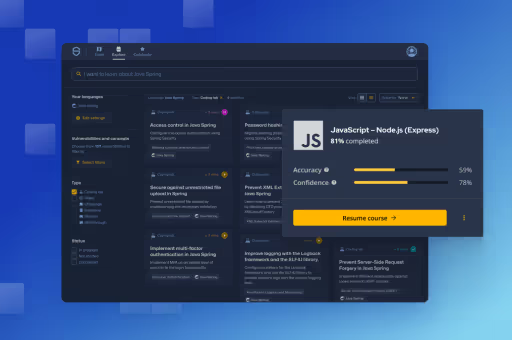
Secure Code Warriorは、ソフトウェア開発ライフサイクル全体にわたってコードを保護し、サイバーセキュリティを最優先とする文化を築くお手伝いをします。アプリケーションセキュリティマネージャ、開発者、CISO、またはセキュリティ関係者のいずれであっても、安全でないコードに関連するリスクを軽減するお手伝いをします。
デモを予約


マティアス・マドゥ博士は、セキュリティ専門家、研究者、CTO、セキュア・コード・ウォリアーの共同創設者です。Matias はゲント大学で静的分析ソリューションを中心にアプリケーションセキュリティの博士号を取得しました。その後、米国のFortifyに入社し、開発者が安全なコードを書くのを手伝わずに、コードの問題を検出するだけでは不十分であることに気づきました。これがきっかけで、開発者を支援し、セキュリティの負担を軽減し、顧客の期待を超える製品を開発するようになりました。Team Awesome の一員としてデスクにいないときは、RSA カンファレンス、BlackHat、DefCon などのカンファレンスでプレゼンテーションを行うステージでのプレゼンテーションを楽しんでいます。
Matiasは、15年以上のソフトウェアセキュリティの実務経験を持つ研究者および開発者です。フォーティファイ・ソフトウェアや自身の会社であるセンセイ・セキュリティなどの企業向けにソリューションを開発してきました。マティアスはキャリアを通じて、複数のアプリケーションセキュリティ研究プロジェクトを主導し、それが商用製品につながり、10件以上の特許を取得しています。デスクから離れているときには、マティアスは上級アプリケーション・セキュリティ・トレーニング・コースの講師を務め、RSA Conference、Black Hat、DefCon、BSIMM、OWASP AppSec、BruConなどのグローバルカンファレンスで定期的に講演を行っています。
マティアスはゲント大学でコンピューター工学の博士号を取得し、そこでアプリケーションの内部動作を隠すためのプログラムの難読化によるアプリケーションセキュリティを学びました。
Well, this is it (for now). We have reached the end of our Infrastructure as Code series. We hope you've had fun conquering security issues in Docker, Ansible, Kubernetes, Terraform, and CloudFormation. Before we sign off, though, we've got one more vulnerability for you to master: business logic bugs.
Think you're ready to test your skills now? Try the final gamified challenge:
If you're still unclear on a few things, keep reading:
The vulnerabilities we want to focus on today are business logic flaws. These can occur when coders fail to properly implement business logic rules which could leave their applications vulnerable to different kinds of attacks should a malicious user choose to exploit them. Depending on the purpose and functionality implemented within each application, a business logic flaw may allow privilege escalation, improper resource usage or any number of unintended business processes to be performed.
Unlike many vulnerabilities, incorrect implementation of business logic rules can be surprisingly subtle. They require special vigilance to ensure that they don't sneak into applications and code.
What are some examples of business logic flaws?
As an example of how easy it can be to induce business logic flaws, consider the following example from a Docker environment defined with a Docker Compose file. To prepare containers to perform functions, a developer might use a standard resource policy, defined in the Docker Compose file, like the following example:
deploy:
resources:
limits:
cpus: "0.5"
reservations:
cpus: "0.5"
While that looks fine on the surface, this resource policy for containers isn't properly limiting resource usage. An attacker could take advantage of the business logic flaw to implement a denial of service (DoS) attack.
To try and limit users from taking up too many resources, a developer might try to better define what each container can support. So the new code might include a placement constraint:
deploy:
resources:
limits:
cpus: "0.5"
reservations:
cpus: "0.5"
placement:
constraints:
- "node.labels.limit_cpu == 100M"
- "node.labels.limit_memory == 0.5"
At first glance, this looks like it would resolve the business logic flaw. However, the new placement constraint does not affect the resource usage limit for the Docker container service. It's only used to select a node to schedule the container. In this case, a DoS attack is still possible. The attacker would need to compromise a Docker container first, but would be able to drain resources without limits after that.
As you can see, thinking about business logic flaws and programming to eliminate them can be a tricky endeavor.
Eliminating business logic flaws
With business logic flaws, the key is knowing that they exist. You need to be vigilant about keeping them out of your environment while new code is being written. Business rules and best practices should be clearly defined and checked at all phases of the application development process including design, implementation and testing.
For example, to prevent a business logic flaw from enabling a DoS attack like in the above example, a best practice is to limit the amount of resources that every Docker container you create can use. Specifically, the limits section must specify the number of CPUs and the amount of memory a Docker container can use. An example would be:
deploy:
resources:
limits:
cpus: "0.5"
memory: 100M
reservations:
cpus: "0.5"
memory: 50M
Using code like the example above as a policy would remove a major business logic flaw from the environment and prevent DoS attacks. This would work even if an attacker compromised one of the Docker containers. In that case, the attacker would still not be able to use their foothold to deplete resources.
Threat modeling can be helpful by defining how different attacks take place and ensuring that business logic rules are used to prevent and restrict them. Testing based on compliance rules and known abuse cases could also be helpful in catching business logic flaws that slip through the cracks.
Business logic flaws are some of the most subtle vulnerabilities that can sneak into applications, but are no less dangerous than other more high-profile risks. Knowing how they can occur and using best practices can keep them out of your environment during application development, ensuring that they never reach a production environment where they can be abused by attackers who are very familiar with how to exploit them.
Check out the Secure Code Warrior blog pages for more insight about this vulnerability and how to protect your organization and customers from the ravages of other security flaws. You can also try a demo of this IaC challenge in the Secure Code Warrior training platform to keep all your cybersecurity skills honed and up-to-date.


Well, this is it (for now). We have reached the end of our Infrastructure as Code series. We hope you've had fun conquering security issues in Docker, Ansible, Kubernetes, Terraform, and CloudFormation. Before we sign off, though, we've got one more vulnerability for you to master: business logic bugs.
Think you're ready to test your skills now? Try the final gamified challenge:
If you're still unclear on a few things, keep reading:
The vulnerabilities we want to focus on today are business logic flaws. These can occur when coders fail to properly implement business logic rules which could leave their applications vulnerable to different kinds of attacks should a malicious user choose to exploit them. Depending on the purpose and functionality implemented within each application, a business logic flaw may allow privilege escalation, improper resource usage or any number of unintended business processes to be performed.
Unlike many vulnerabilities, incorrect implementation of business logic rules can be surprisingly subtle. They require special vigilance to ensure that they don't sneak into applications and code.
What are some examples of business logic flaws?
As an example of how easy it can be to induce business logic flaws, consider the following example from a Docker environment defined with a Docker Compose file. To prepare containers to perform functions, a developer might use a standard resource policy, defined in the Docker Compose file, like the following example:
deploy:
resources:
limits:
cpus: "0.5"
reservations:
cpus: "0.5"
While that looks fine on the surface, this resource policy for containers isn't properly limiting resource usage. An attacker could take advantage of the business logic flaw to implement a denial of service (DoS) attack.
To try and limit users from taking up too many resources, a developer might try to better define what each container can support. So the new code might include a placement constraint:
deploy:
resources:
limits:
cpus: "0.5"
reservations:
cpus: "0.5"
placement:
constraints:
- "node.labels.limit_cpu == 100M"
- "node.labels.limit_memory == 0.5"
At first glance, this looks like it would resolve the business logic flaw. However, the new placement constraint does not affect the resource usage limit for the Docker container service. It's only used to select a node to schedule the container. In this case, a DoS attack is still possible. The attacker would need to compromise a Docker container first, but would be able to drain resources without limits after that.
As you can see, thinking about business logic flaws and programming to eliminate them can be a tricky endeavor.
Eliminating business logic flaws
With business logic flaws, the key is knowing that they exist. You need to be vigilant about keeping them out of your environment while new code is being written. Business rules and best practices should be clearly defined and checked at all phases of the application development process including design, implementation and testing.
For example, to prevent a business logic flaw from enabling a DoS attack like in the above example, a best practice is to limit the amount of resources that every Docker container you create can use. Specifically, the limits section must specify the number of CPUs and the amount of memory a Docker container can use. An example would be:
deploy:
resources:
limits:
cpus: "0.5"
memory: 100M
reservations:
cpus: "0.5"
memory: 50M
Using code like the example above as a policy would remove a major business logic flaw from the environment and prevent DoS attacks. This would work even if an attacker compromised one of the Docker containers. In that case, the attacker would still not be able to use their foothold to deplete resources.
Threat modeling can be helpful by defining how different attacks take place and ensuring that business logic rules are used to prevent and restrict them. Testing based on compliance rules and known abuse cases could also be helpful in catching business logic flaws that slip through the cracks.
Business logic flaws are some of the most subtle vulnerabilities that can sneak into applications, but are no less dangerous than other more high-profile risks. Knowing how they can occur and using best practices can keep them out of your environment during application development, ensuring that they never reach a production environment where they can be abused by attackers who are very familiar with how to exploit them.
Check out the Secure Code Warrior blog pages for more insight about this vulnerability and how to protect your organization and customers from the ravages of other security flaws. You can also try a demo of this IaC challenge in the Secure Code Warrior training platform to keep all your cybersecurity skills honed and up-to-date.
以下のリンクをクリックして、このリソースのPDFをダウンロードしてください。
Secure Code Warriorは、ソフトウェア開発ライフサイクル全体にわたってコードを保護し、サイバーセキュリティを最優先とする文化を築くお手伝いをします。アプリケーションセキュリティマネージャ、開発者、CISO、またはセキュリティ関係者のいずれであっても、安全でないコードに関連するリスクを軽減するお手伝いをします。
レポートを表示デモを予約
マティアス・マドゥ博士は、セキュリティ専門家、研究者、CTO、セキュア・コード・ウォリアーの共同創設者です。Matias はゲント大学で静的分析ソリューションを中心にアプリケーションセキュリティの博士号を取得しました。その後、米国のFortifyに入社し、開発者が安全なコードを書くのを手伝わずに、コードの問題を検出するだけでは不十分であることに気づきました。これがきっかけで、開発者を支援し、セキュリティの負担を軽減し、顧客の期待を超える製品を開発するようになりました。Team Awesome の一員としてデスクにいないときは、RSA カンファレンス、BlackHat、DefCon などのカンファレンスでプレゼンテーションを行うステージでのプレゼンテーションを楽しんでいます。
Matiasは、15年以上のソフトウェアセキュリティの実務経験を持つ研究者および開発者です。フォーティファイ・ソフトウェアや自身の会社であるセンセイ・セキュリティなどの企業向けにソリューションを開発してきました。マティアスはキャリアを通じて、複数のアプリケーションセキュリティ研究プロジェクトを主導し、それが商用製品につながり、10件以上の特許を取得しています。デスクから離れているときには、マティアスは上級アプリケーション・セキュリティ・トレーニング・コースの講師を務め、RSA Conference、Black Hat、DefCon、BSIMM、OWASP AppSec、BruConなどのグローバルカンファレンスで定期的に講演を行っています。
マティアスはゲント大学でコンピューター工学の博士号を取得し、そこでアプリケーションの内部動作を隠すためのプログラムの難読化によるアプリケーションセキュリティを学びました。
Well, this is it (for now). We have reached the end of our Infrastructure as Code series. We hope you've had fun conquering security issues in Docker, Ansible, Kubernetes, Terraform, and CloudFormation. Before we sign off, though, we've got one more vulnerability for you to master: business logic bugs.
Think you're ready to test your skills now? Try the final gamified challenge:
If you're still unclear on a few things, keep reading:
The vulnerabilities we want to focus on today are business logic flaws. These can occur when coders fail to properly implement business logic rules which could leave their applications vulnerable to different kinds of attacks should a malicious user choose to exploit them. Depending on the purpose and functionality implemented within each application, a business logic flaw may allow privilege escalation, improper resource usage or any number of unintended business processes to be performed.
Unlike many vulnerabilities, incorrect implementation of business logic rules can be surprisingly subtle. They require special vigilance to ensure that they don't sneak into applications and code.
What are some examples of business logic flaws?
As an example of how easy it can be to induce business logic flaws, consider the following example from a Docker environment defined with a Docker Compose file. To prepare containers to perform functions, a developer might use a standard resource policy, defined in the Docker Compose file, like the following example:
deploy:
resources:
limits:
cpus: "0.5"
reservations:
cpus: "0.5"
While that looks fine on the surface, this resource policy for containers isn't properly limiting resource usage. An attacker could take advantage of the business logic flaw to implement a denial of service (DoS) attack.
To try and limit users from taking up too many resources, a developer might try to better define what each container can support. So the new code might include a placement constraint:
deploy:
resources:
limits:
cpus: "0.5"
reservations:
cpus: "0.5"
placement:
constraints:
- "node.labels.limit_cpu == 100M"
- "node.labels.limit_memory == 0.5"
At first glance, this looks like it would resolve the business logic flaw. However, the new placement constraint does not affect the resource usage limit for the Docker container service. It's only used to select a node to schedule the container. In this case, a DoS attack is still possible. The attacker would need to compromise a Docker container first, but would be able to drain resources without limits after that.
As you can see, thinking about business logic flaws and programming to eliminate them can be a tricky endeavor.
Eliminating business logic flaws
With business logic flaws, the key is knowing that they exist. You need to be vigilant about keeping them out of your environment while new code is being written. Business rules and best practices should be clearly defined and checked at all phases of the application development process including design, implementation and testing.
For example, to prevent a business logic flaw from enabling a DoS attack like in the above example, a best practice is to limit the amount of resources that every Docker container you create can use. Specifically, the limits section must specify the number of CPUs and the amount of memory a Docker container can use. An example would be:
deploy:
resources:
limits:
cpus: "0.5"
memory: 100M
reservations:
cpus: "0.5"
memory: 50M
Using code like the example above as a policy would remove a major business logic flaw from the environment and prevent DoS attacks. This would work even if an attacker compromised one of the Docker containers. In that case, the attacker would still not be able to use their foothold to deplete resources.
Threat modeling can be helpful by defining how different attacks take place and ensuring that business logic rules are used to prevent and restrict them. Testing based on compliance rules and known abuse cases could also be helpful in catching business logic flaws that slip through the cracks.
Business logic flaws are some of the most subtle vulnerabilities that can sneak into applications, but are no less dangerous than other more high-profile risks. Knowing how they can occur and using best practices can keep them out of your environment during application development, ensuring that they never reach a production environment where they can be abused by attackers who are very familiar with how to exploit them.
Check out the Secure Code Warrior blog pages for more insight about this vulnerability and how to protect your organization and customers from the ravages of other security flaws. You can also try a demo of this IaC challenge in the Secure Code Warrior training platform to keep all your cybersecurity skills honed and up-to-date.
目次
マティアス・マドゥ博士は、セキュリティ専門家、研究者、CTO、セキュア・コード・ウォリアーの共同創設者です。Matias はゲント大学で静的分析ソリューションを中心にアプリケーションセキュリティの博士号を取得しました。その後、米国のFortifyに入社し、開発者が安全なコードを書くのを手伝わずに、コードの問題を検出するだけでは不十分であることに気づきました。これがきっかけで、開発者を支援し、セキュリティの負担を軽減し、顧客の期待を超える製品を開発するようになりました。Team Awesome の一員としてデスクにいないときは、RSA カンファレンス、BlackHat、DefCon などのカンファレンスでプレゼンテーションを行うステージでのプレゼンテーションを楽しんでいます。
Secure Code Warriorは、ソフトウェア開発ライフサイクル全体にわたってコードを保護し、サイバーセキュリティを最優先とする文化を築くお手伝いをします。アプリケーションセキュリティマネージャ、開発者、CISO、またはセキュリティ関係者のいずれであっても、安全でないコードに関連するリスクを軽減するお手伝いをします。
デモを予約[ダウンロード]始めるためのリソース




始めるためのリソース


Secure coding learning that reflects real AI usage
Align secure coding training to real AI development activity — automatically assigning guidance to developers using AI tools, without manual intervention.Align secure coding training to real AI development activity — automatically assigning guidance to developers using AI tools, without manual intervention.

Train developers on the real risks in their code, whether human-written or AI-generated
Adaptive Learning auto-assigns targeted secure coding training to the developers introducing real vulnerabilities, reducing recurring risks at the source.Secure Code Warrior blog banner with a blue overlay over a developer working at a multi-monitor desk displaying code, alongside the headline 'Train developers on the real risks in their code.'l