Favoriser la réussite des initiatives de conception sécurisée en entreprise
Il est encourageant de voir le mouvement Secure-By-Design (SBD) de la CISA prendre de l'ampleur à l'échelle mondiale, alors que les États-Unis, l'Australie, la Nouvelle-Zélande, le Canada, Singapour, le Japon, l'Allemagne et le Royaume-Uni s'engagent à intégrer des directives similaires dans leurs stratégies de cybersécurité, nombre de ces nations ayant également contribué aux recommandations initiales.
Depuis avril 2024, plus de 200 entreprises, dont Secure Code Warrior, ont signé l'engagement Secure-by-Design, témoignant d'un engagement industriel plus large en faveur de normes de qualité et de sécurité logicielles supérieures. Nous considérons ces directives comme un moment charnière pour les responsables de la cybersécurité qui, pour la première fois, bénéficient d'un soutien gouvernemental mondial pour opérer un changement culturel significatif dans le développement logiciel. Bien que ces recommandations ne soient pas encore obligatoires en dehors des fournisseurs vendant directement au gouvernement américain, j'y vois non seulement l'avenir, mais aussi une occasion en or de riposter contre les acteurs malveillants. L'essentiel de ces directives consiste à s'efforcer d'éliminer des catégories entières de vulnérabilités, et une concentration de l'industrie sur cet objectif pourrait nous permettre d'avoir l'impact positif le plus significatif sur la sécurité numérique depuis des décennies.
Nous pensons que ce mouvement est crucial, et notre dernier livre blanc, Benchmarking Security Skills: Streamlining Secure-by-Design in the Enterprise est le fruit d'une analyse approfondie d'initiatives réelles de conception sécurisée en entreprise, permettant d'établir des bonnes pratiques fondées sur des données probantes.
Mesurer le retour sur investissement des efforts de conception sécurisée en entreprise
La refonte de pratiques de développement logiciel bien établies n'est pas une mince affaire. Les RSSI sont souvent mis au défi lorsqu'ils tentent de prouver le retour sur investissement (ROI) et la valeur commerciale des activités de sécurité, tant au niveau des équipes que de l'entreprise, beaucoup exprimant une frustration croissante face aux réductions budgétaires et au manque d'adhésion de la direction aux nouvelles initiatives cyber. Cependant, une proposition étayée par des données fera toute la différence.
Ces dernières années, l'absence de référentiel de compétences permettant aux organisations d'évaluer leur positionnement par rapport aux normes du secteur a constitué un défi majeur. Il est ainsi devenu extrêmement difficile de concevoir et de mettre en œuvre des programmes de sécurité qui ciblent les bons domaines et favorisent l'amélioration continue des développeurs, un élément crucial de toute stratégie de sécurité logicielle réussie.
La clé du succès des initiatives Secure-by-Design ne réside pas seulement dans l'acquisition de compétences en code sécurisé par les développeurs, mais aussi dans la capacité à rassurer les régulateurs sur la maîtrise de ces compétences. Nous avons donc décidé d'analyser l'état de préparation des équipes de développement, et les résultats pourraient vous surprendre.
Comment les entreprises cherchant à accélérer leurs initiatives SBD peuvent tirer parti du Trust Score
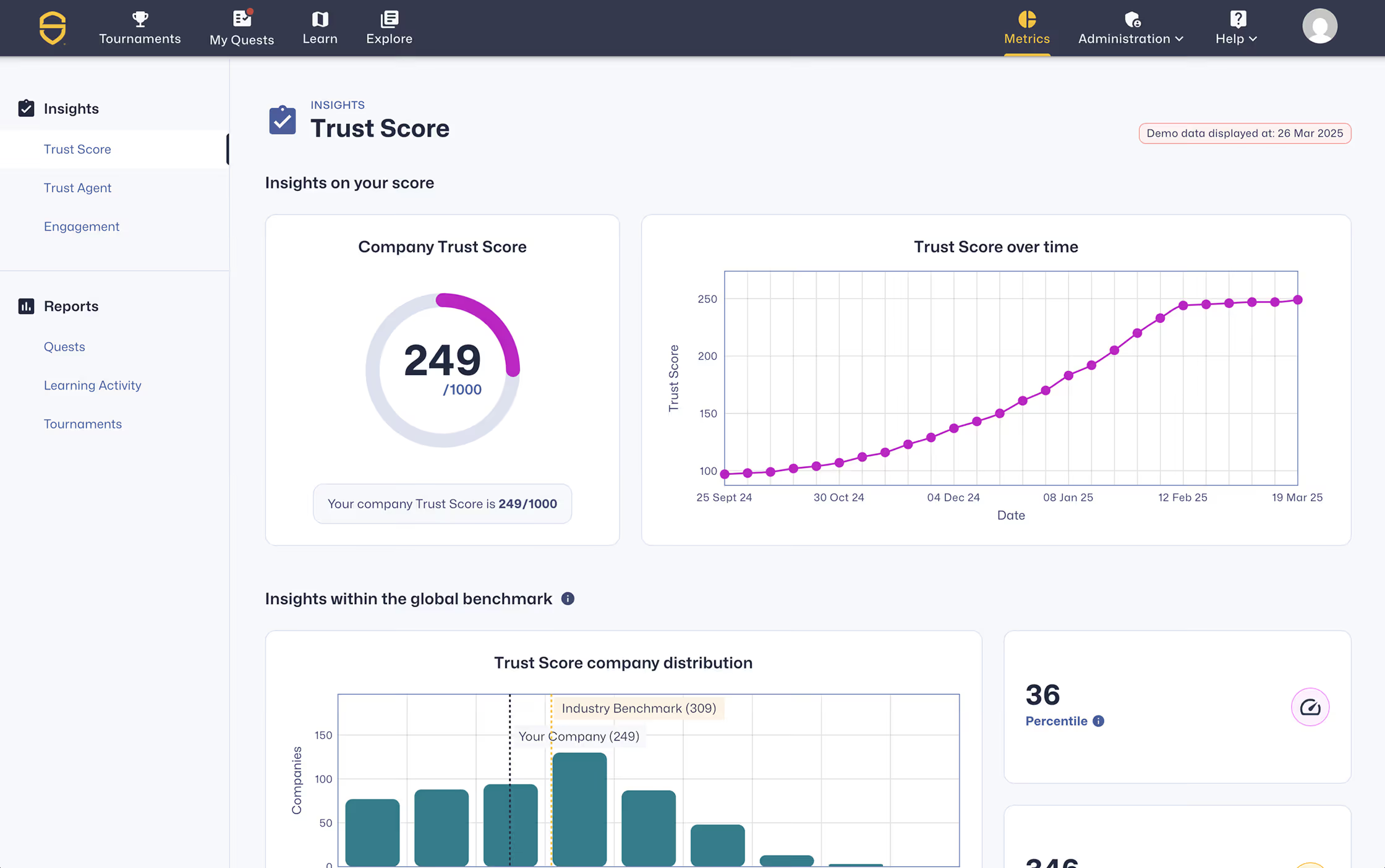
Il est pratiquement impossible de s'améliorer efficacement sans savoir précisément d'où l'on part et où l'on va. Pourtant, des centaines d'entreprises clientes utilisent efficacement le SCW Trust Score — un référentiel mondial qui quantifie les compétences en sécurité des équipes de développement — pour obtenir ces données granulaires et utiles. Ces informations permettent de façonner des programmes de sécurité axés sur les développeurs, propices à la réussite des initiatives Secure-by-Design.
L'analyse révélée dans notre livre blanc montre que les organisations des secteurs d'infrastructures critiques progressent dans la préparation de leurs développeurs à faire avancer leurs initiatives SBD. Nous avons également constaté que les équipes de développement de ces secteurs possèdent une posture de sécurité moyenne.
L'analyse de Secure Code Warrior sur la montée en compétences des développeurs dans les secteurs d'infrastructures critiques repose sur plus de 20 millions de points de données, couvrant 600 entreprises clientes et plus de 250 000 développeurs actifs dans le monde. L'analyse a révélé que :
- Le nombre total de développeurs actuellement impliqués dans des initiatives de montée en compétences SBD représente moins de 4 % de l'ensemble des développeurs dans le monde ;
- Le secteur des services financiers affiche le Trust Score le plus élevé, avec 336 ;
- La plupart des initiatives de montée en compétences Secure-by-Design à grande échelle sont couronnées de succès, tandis que les initiatives plus modestes ont tendance à être dispersées. Cependant, lorsqu'elles font l'objet d'un mandat clair, elles permettent d'obtenir un retour sur investissement (ROI) mesurable plus rapidement ;
- Lorsque les initiatives de montée en compétences sont solidement établies, les risques introduits par les développeurs dans les applications sont considérablement réduits. L'analyse a révélé que les développeurs au sein de grandes initiatives (plus de 7 000 développeurs dans une même entreprise) peuvent réduire les vulnérabilités de 47 à 53 % de manière prévisible.
La solution | Conclusion
Le SCW Trust Score est un outil puissant dans l'arsenal de tout responsable de la sécurité, permettant une analyse approfondie de domaines spécifiques au sein d'une organisation. Les rapports peuvent être filtrés par langages, équipes ou catégories, produisant des analyses personnalisées qui permettent aux entreprises de répondre aux besoins spécifiques des développeurs et d'identifier les domaines nécessitant une formation ou un coaching supplémentaire. Après tout, la sécurité est un effort continu ; l'évaluation efficace des performances aidera à identifier les opportunités d'amélioration constante.
L'accélération du développement et du déploiement de logiciels, associée à un paysage de menaces cyber de plus en plus menaçant et à des régulateurs de plus en plus vigilants, a placé la cybersécurité au premier plan. Les organisations doivent, si ce n'est déjà fait, donner la priorité au développement d'une culture de sécurité à l'échelle de l'entreprise.
Gouvernez le développement assisté par IA avant la mise en production
Évaluez les risques liés à l'IA, appliquez des politiques de codage sécurisé dès le commit et accélérez la livraison sécurisée tout au long de votre cycle de développement.
Explorer plus d'articles
Accédez à du contenu expert sur le codage sécurisé, la gouvernance de l'IA et la gestion des risques logiciels.
%252520%252520(3).avif)
Supercharged Security Awareness: How Tournaments are Inspiring Developers at Erste Group
Lorem ipsum dolor sit amet, consectetur adipiscing elit. Suspendisse varius enim in eros elementum tristique. Duis cursus, mi quis viverra ornare, eros dolor interdum nulla, ut commodo diam libero vitae erat. Aenean faucibus nibh et justo cursus id rutrum lorem imperdiet. Nunc ut sem vitae risus tristique posuere.

Security as culture: How Blue Prism cultivates world-class secure developers
Learn how Blue Prism, the global leader in intelligent automation for the enterprise, used Secure Code Warrior's agile learning platform to create a security-first culture with their developers, achieve their business goals, and ship secure code at speed

Une culture de la sécurité : comment Sage a bâti son programme de champions
Découvrez comment Sage a renforcé sa sécurité grâce à une approche flexible axée sur les relations humaines, formant plus de 200 champions de la sécurité et obtenant une réduction mesurable des risques.
Mois de la sensibilisation à la cybersécurité 2026 : comprendre la sécurité de l'IA est essentiel à la défense de l'entreprise
Nous avons atteint un point où la plupart des grandes entreprises d'IA ont publiquement appelé à un ralentissement mondial du développement de l'IA afin de permettre aux garde-fous de sécurité de rattraper leur retard. Pourtant, la réalité est que de graves problèmes de sécurité se sont déjà concrétisés. Cela place d'innombrables responsables de la sécurité et équipes de direction dans une situation d'urgence, alors que les coûts financiers et les risques liés à la mise en œuvre de l'IA ne cessent de s'accumuler.
Levier 8 : Valoriser votre programme
Un programme de codage sécurisé a besoin de plus qu'un contenu de qualité pour réussir. Le levier 8 montre comment l'image de marque transforme la participation en une expérience convoitée, axée sur le statut.
.avif)
Chaque employé est désormais en première ligne de la cybersécurité IA
Le paysage technologique des entreprises évolue à une vitesse que peu avaient anticipée avant qu'il ne soit trop tard. Nous avons officiellement franchi le cap du code écrit par l'humain et de l'assistance basique par copilote pour entrer dans l'ère du cycle de vie de développement agentique (ADLC). Si les agents IA autonomes promettent une efficacité sans précédent dans de multiples fonctions, ils apportent également une toute nouvelle catégorie de risques en matière de sécurité et de réglementation.
Sécurisez le développement piloté par l'IA avant le déploiement
Identifiez les risques de développement, appliquez vos politiques et prévenez les vulnérabilités tout au long du cycle de vie de vos logiciels.