hero bg no divider
Blog

Train developers on the real risks in their code, whether human-written or AI-generated

Smiling woman with long wavy hair wearing a black top in a softly lit modern office.
Shannon Holt
Published Jun 01, 2026
Last updated on May 29, 2026

Adaptive Learning helps reduce recurring vulnerabilities through hyper-targeted training aligned to actual software risk.

Development teams are shipping code faster than ever, but many organizations still struggle to prevent  the same vulnerabilities from being introduced repeatedly over time.

Most security training programs remain disconnected from the risks developers actually create day to day. Learning is assigned broadly, vulnerabilities continue recurring, and organizations are often left addressing the same issues downstream after insecure code has already moved further through development workflows.

Adaptive Learning helps organizations align secure coding learning to real software development activity and risk signals, including AI-assisted development activity, vulnerability findings, and evolving developer behavior.

In this post, we’re focusing specifically on Adaptive Learning with Vulnerability Signals — automatically assigning targeted vulnerability training to the developers introducing those risks.

Adaptive Learning in practice

Adaptive Learning with Vulnerability Signals connects vulnerability findings with Trust Agent: Commits activity to identify which developers are actively contributing to repositories associated with elevated software risk. Targeted training is then automatically assigned based on the vulnerability patterns developers are actually introducing, helping align learning to the languages they use, the repositories they contribute to, and the real software risks tied to their day-to-day work.
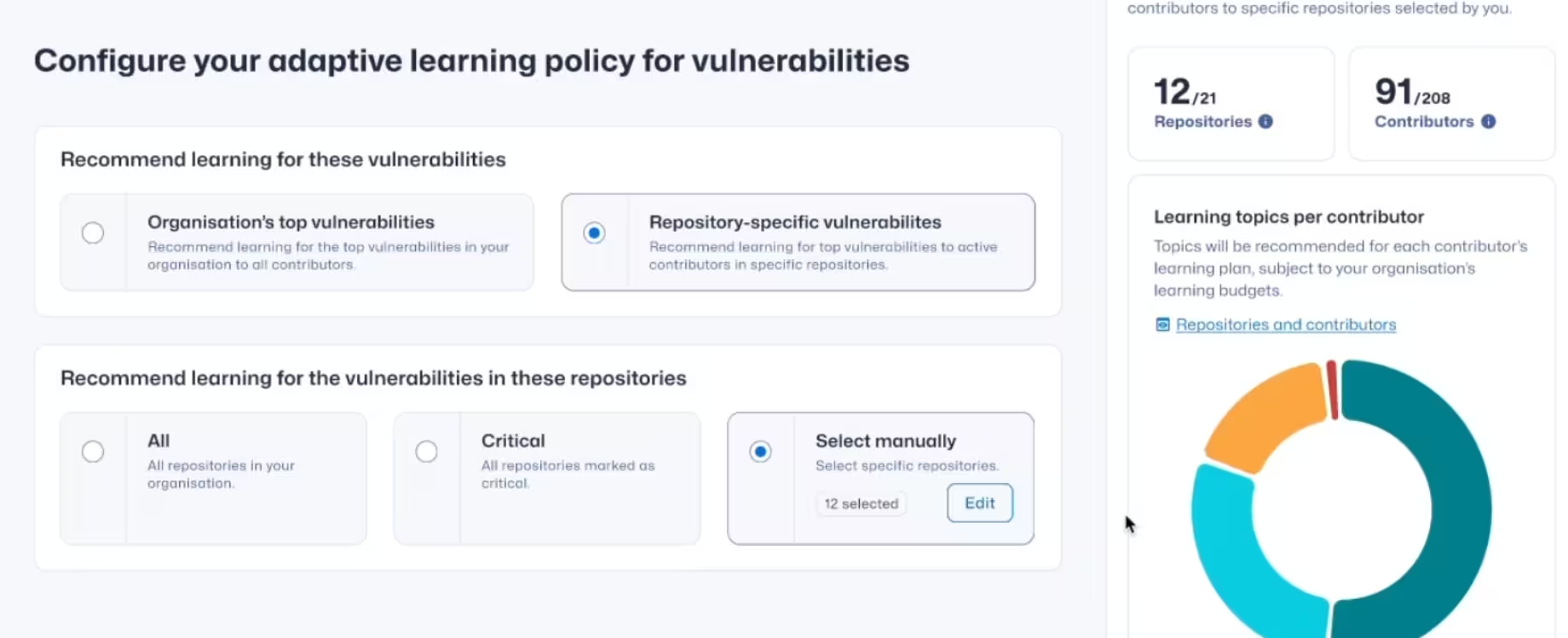
Because learning is aligned to the specific risks developers are actively contributing to, training becomes more relevant, timely, and easier to apply within day-to-day engineering workflows.

From completion metrics to real risk visibility

Adaptive Learning creates a stronger connection between secure coding learning and real engineering activity.

Once developers are assigned learning, commits to covered repositories can be scored against whether assigned vulnerability training has been completed at the time of the commit. This gives security leaders visibility into something traditional training metrics often cannot show: whether the developers actively writing code are equipped to handle the specific risks present in their environment.

That shifts the conversation from:

“Did developers complete their training?”

to:

“Are the developers contributing to high-risk repositories prepared to identify and prevent the vulnerabilities most relevant to the code they are shipping?”

Instead of relying only on generic completion reporting, organizations can begin measuring developer capability alongside real software risk and commit activity over time.

This helps move secure coding programs closer to preventative capability building at the source — reinforcing secure development practices before vulnerabilities reach production rather than relying entirely on downstream remediation workflows.

Building more preventative secure development practices

Adaptive Learning with Vulnerability Signals helps connect vulnerability findings, commit activity, developer attribution, secure coding learning, and commit scoring within a single workflow.

By aligning targeted learning to real software risk, organizations can reduce recurring vulnerabilities, strengthen developer capability, and reinforce more preventative secure development practices across engineering teams.

Learn More
Secure Code Warrior blog banner with a blue overlay over a developer working at a multi-monitor desk displaying code, alongside the headline 'Train developers on the real risks in their code.'
View Resource
View Resource

Adaptive Learning auto-assigns targeted secure coding training to the developers introducing real vulnerabilities, reducing recurring risks at the source.Secure Code Warrior blog banner with a blue overlay over a developer working at a multi-monitor desk displaying code, alongside the headline 'Train developers on the real risks in their code.'l

Interested in more?

Shannon Holt is a cybersecurity product marketer with a background in application security, cloud security services, and compliance standards like PCI-DSS and HITRUST.

learn more

Secure Code Warrior is here for your organization to help you secure code across the entire software development lifecycle and create a culture in which cybersecurity is top of mind. Whether you’re an AppSec Manager, Developer, CISO, or anyone involved in security, we can help your organization reduce risks associated with insecure code.

Book a demo
Share on:
linkedin brandsSocialx logo
Author
Smiling woman with long wavy hair wearing a black top in a softly lit modern office.
Shannon Holt
Published Jun 01, 2026

Shannon Holt is a cybersecurity product marketer with a background in application security, cloud security services, and compliance standards like PCI-DSS and HITRUST.

Shannon Holt is a cybersecurity product marketer with a background in application security, cloud security services, and compliance standards like PCI-DSS and HITRUST. She’s passionate about making secure development and compliance more practical and approachable for technical teams, bridging the gap between security expectations and the realities of modern software development.

Share on:
linkedin brandsSocialx logo
Secure Code Warrior blog banner with a blue overlay over a developer working at a multi-monitor desk displaying code, alongside the headline 'Train developers on the real risks in their code.'

Adaptive Learning helps reduce recurring vulnerabilities through hyper-targeted training aligned to actual software risk.

Development teams are shipping code faster than ever, but many organizations still struggle to prevent  the same vulnerabilities from being introduced repeatedly over time.

Most security training programs remain disconnected from the risks developers actually create day to day. Learning is assigned broadly, vulnerabilities continue recurring, and organizations are often left addressing the same issues downstream after insecure code has already moved further through development workflows.

Adaptive Learning helps organizations align secure coding learning to real software development activity and risk signals, including AI-assisted development activity, vulnerability findings, and evolving developer behavior.

In this post, we’re focusing specifically on Adaptive Learning with Vulnerability Signals — automatically assigning targeted vulnerability training to the developers introducing those risks.

Adaptive Learning in practice

Adaptive Learning with Vulnerability Signals connects vulnerability findings with Trust Agent: Commits activity to identify which developers are actively contributing to repositories associated with elevated software risk. Targeted training is then automatically assigned based on the vulnerability patterns developers are actually introducing, helping align learning to the languages they use, the repositories they contribute to, and the real software risks tied to their day-to-day work.

Because learning is aligned to the specific risks developers are actively contributing to, training becomes more relevant, timely, and easier to apply within day-to-day engineering workflows.

From completion metrics to real risk visibility

Adaptive Learning creates a stronger connection between secure coding learning and real engineering activity.

Once developers are assigned learning, commits to covered repositories can be scored against whether assigned vulnerability training has been completed at the time of the commit. This gives security leaders visibility into something traditional training metrics often cannot show: whether the developers actively writing code are equipped to handle the specific risks present in their environment.

That shifts the conversation from:

“Did developers complete their training?”

to:

“Are the developers contributing to high-risk repositories prepared to identify and prevent the vulnerabilities most relevant to the code they are shipping?”

Instead of relying only on generic completion reporting, organizations can begin measuring developer capability alongside real software risk and commit activity over time.

This helps move secure coding programs closer to preventative capability building at the source — reinforcing secure development practices before vulnerabilities reach production rather than relying entirely on downstream remediation workflows.

Building more preventative secure development practices

Adaptive Learning with Vulnerability Signals helps connect vulnerability findings, commit activity, developer attribution, secure coding learning, and commit scoring within a single workflow.

By aligning targeted learning to real software risk, organizations can reduce recurring vulnerabilities, strengthen developer capability, and reinforce more preventative secure development practices across engineering teams.

Learn More
View Resource
View Resource

Fill out the form below to download the report

We would like your permission to send you information on our products and/or related secure coding topics. We’ll always treat your personal details with the utmost care and will never sell them to other companies for marketing purposes.

Submit
SCW Icons
scw error icon
To submit the form, please enable 'Analytics' cookies. Feel free to disable them again once you're done.
Secure Code Warrior blog banner with a blue overlay over a developer working at a multi-monitor desk displaying code, alongside the headline 'Train developers on the real risks in their code.'

Adaptive Learning helps reduce recurring vulnerabilities through hyper-targeted training aligned to actual software risk.

Development teams are shipping code faster than ever, but many organizations still struggle to prevent  the same vulnerabilities from being introduced repeatedly over time.

Most security training programs remain disconnected from the risks developers actually create day to day. Learning is assigned broadly, vulnerabilities continue recurring, and organizations are often left addressing the same issues downstream after insecure code has already moved further through development workflows.

Adaptive Learning helps organizations align secure coding learning to real software development activity and risk signals, including AI-assisted development activity, vulnerability findings, and evolving developer behavior.

In this post, we’re focusing specifically on Adaptive Learning with Vulnerability Signals — automatically assigning targeted vulnerability training to the developers introducing those risks.

Adaptive Learning in practice

Adaptive Learning with Vulnerability Signals connects vulnerability findings with Trust Agent: Commits activity to identify which developers are actively contributing to repositories associated with elevated software risk. Targeted training is then automatically assigned based on the vulnerability patterns developers are actually introducing, helping align learning to the languages they use, the repositories they contribute to, and the real software risks tied to their day-to-day work.

Because learning is aligned to the specific risks developers are actively contributing to, training becomes more relevant, timely, and easier to apply within day-to-day engineering workflows.

From completion metrics to real risk visibility

Adaptive Learning creates a stronger connection between secure coding learning and real engineering activity.

Once developers are assigned learning, commits to covered repositories can be scored against whether assigned vulnerability training has been completed at the time of the commit. This gives security leaders visibility into something traditional training metrics often cannot show: whether the developers actively writing code are equipped to handle the specific risks present in their environment.

That shifts the conversation from:

“Did developers complete their training?”

to:

“Are the developers contributing to high-risk repositories prepared to identify and prevent the vulnerabilities most relevant to the code they are shipping?”

Instead of relying only on generic completion reporting, organizations can begin measuring developer capability alongside real software risk and commit activity over time.

This helps move secure coding programs closer to preventative capability building at the source — reinforcing secure development practices before vulnerabilities reach production rather than relying entirely on downstream remediation workflows.

Building more preventative secure development practices

Adaptive Learning with Vulnerability Signals helps connect vulnerability findings, commit activity, developer attribution, secure coding learning, and commit scoring within a single workflow.

By aligning targeted learning to real software risk, organizations can reduce recurring vulnerabilities, strengthen developer capability, and reinforce more preventative secure development practices across engineering teams.

Learn More
View webinar
Get Started
learn more

Click on the link below and download the PDF of this resource.

Secure Code Warrior is here for your organization to help you secure code across the entire software development lifecycle and create a culture in which cybersecurity is top of mind. Whether you’re an AppSec Manager, Developer, CISO, or anyone involved in security, we can help your organization reduce risks associated with insecure code.

View reportBook a demo
View Resource
Share on:
linkedin brandsSocialx logo
Interested in more?

Share on:
linkedin brandsSocialx logo
Author
Smiling woman with long wavy hair wearing a black top in a softly lit modern office.
Shannon Holt
Published Jun 01, 2026

Shannon Holt is a cybersecurity product marketer with a background in application security, cloud security services, and compliance standards like PCI-DSS and HITRUST.

Shannon Holt is a cybersecurity product marketer with a background in application security, cloud security services, and compliance standards like PCI-DSS and HITRUST. She’s passionate about making secure development and compliance more practical and approachable for technical teams, bridging the gap between security expectations and the realities of modern software development.

Share on:
linkedin brandsSocialx logo

Adaptive Learning helps reduce recurring vulnerabilities through hyper-targeted training aligned to actual software risk.

Development teams are shipping code faster than ever, but many organizations still struggle to prevent  the same vulnerabilities from being introduced repeatedly over time.

Most security training programs remain disconnected from the risks developers actually create day to day. Learning is assigned broadly, vulnerabilities continue recurring, and organizations are often left addressing the same issues downstream after insecure code has already moved further through development workflows.

Adaptive Learning helps organizations align secure coding learning to real software development activity and risk signals, including AI-assisted development activity, vulnerability findings, and evolving developer behavior.

In this post, we’re focusing specifically on Adaptive Learning with Vulnerability Signals — automatically assigning targeted vulnerability training to the developers introducing those risks.

Adaptive Learning in practice

Adaptive Learning with Vulnerability Signals connects vulnerability findings with Trust Agent: Commits activity to identify which developers are actively contributing to repositories associated with elevated software risk. Targeted training is then automatically assigned based on the vulnerability patterns developers are actually introducing, helping align learning to the languages they use, the repositories they contribute to, and the real software risks tied to their day-to-day work.

Because learning is aligned to the specific risks developers are actively contributing to, training becomes more relevant, timely, and easier to apply within day-to-day engineering workflows.

From completion metrics to real risk visibility

Adaptive Learning creates a stronger connection between secure coding learning and real engineering activity.

Once developers are assigned learning, commits to covered repositories can be scored against whether assigned vulnerability training has been completed at the time of the commit. This gives security leaders visibility into something traditional training metrics often cannot show: whether the developers actively writing code are equipped to handle the specific risks present in their environment.

That shifts the conversation from:

“Did developers complete their training?”

to:

“Are the developers contributing to high-risk repositories prepared to identify and prevent the vulnerabilities most relevant to the code they are shipping?”

Instead of relying only on generic completion reporting, organizations can begin measuring developer capability alongside real software risk and commit activity over time.

This helps move secure coding programs closer to preventative capability building at the source — reinforcing secure development practices before vulnerabilities reach production rather than relying entirely on downstream remediation workflows.

Building more preventative secure development practices

Adaptive Learning with Vulnerability Signals helps connect vulnerability findings, commit activity, developer attribution, secure coding learning, and commit scoring within a single workflow.

By aligning targeted learning to real software risk, organizations can reduce recurring vulnerabilities, strengthen developer capability, and reinforce more preventative secure development practices across engineering teams.

Learn More

Table of contents

View Resource
Interested in more?

Shannon Holt is a cybersecurity product marketer with a background in application security, cloud security services, and compliance standards like PCI-DSS and HITRUST.

learn more

Secure Code Warrior is here for your organization to help you secure code across the entire software development lifecycle and create a culture in which cybersecurity is top of mind. Whether you’re an AppSec Manager, Developer, CISO, or anyone involved in security, we can help your organization reduce risks associated with insecure code.

Book a demoDownload
Share on:
linkedin brandsSocialx logo
Resource hub

Resources to get you started

More posts
Resource hub

Resources to get you started

More posts