A successful secure coding program doesn't just happen in a vacuum; it requires continuous executive sponsorship and support which can only be achieved by keeping leadership in the loop. Reporting to leadership should be proactive, regularly sharing progress updates and celebrating wins in order to maintain executive buy-in.
Blog
Enabler 6: Regular Reporting to Leadership
July 16, 2026
Katelynd Trinidad

We are half way through our series on the 10 Enablers of Success. At this point, hopefully you have defined what a successful program looks like based on success criteria; secured executive buy-in; built a developer communications plan; ensured their easy access to our chosen training platform; and established structured, progressive learning with certification programs.
But regardless of where you are in the process, know that each of these enablers plays its own role in refining the maturity of your secure coding program. With Enabler 6: Regular Reporting to Leadership, we’ll continue establishing processes that validate and support your program from the top down, in order to drive adoption and ensure long term success.
Regular and Proactive Reporting

Consistent reporting is essential to maintain executive visibility. The frequency of this reporting should be adapted based on where you are in the program's lifecycle. For instance, higher intensity periods, such as before and during the program launch, may require weekly or biweekly updates. Subsequently, the reporting cadence can transition to a regular schedule, such as monthly or quarterly, for the remainder of the year.
Reported figures should ideally connect back to Enabler 1: Defined and Measurable Success Criteria, providing progress as well as issues executive leadership may be able to help with.
What Data Should You Share?
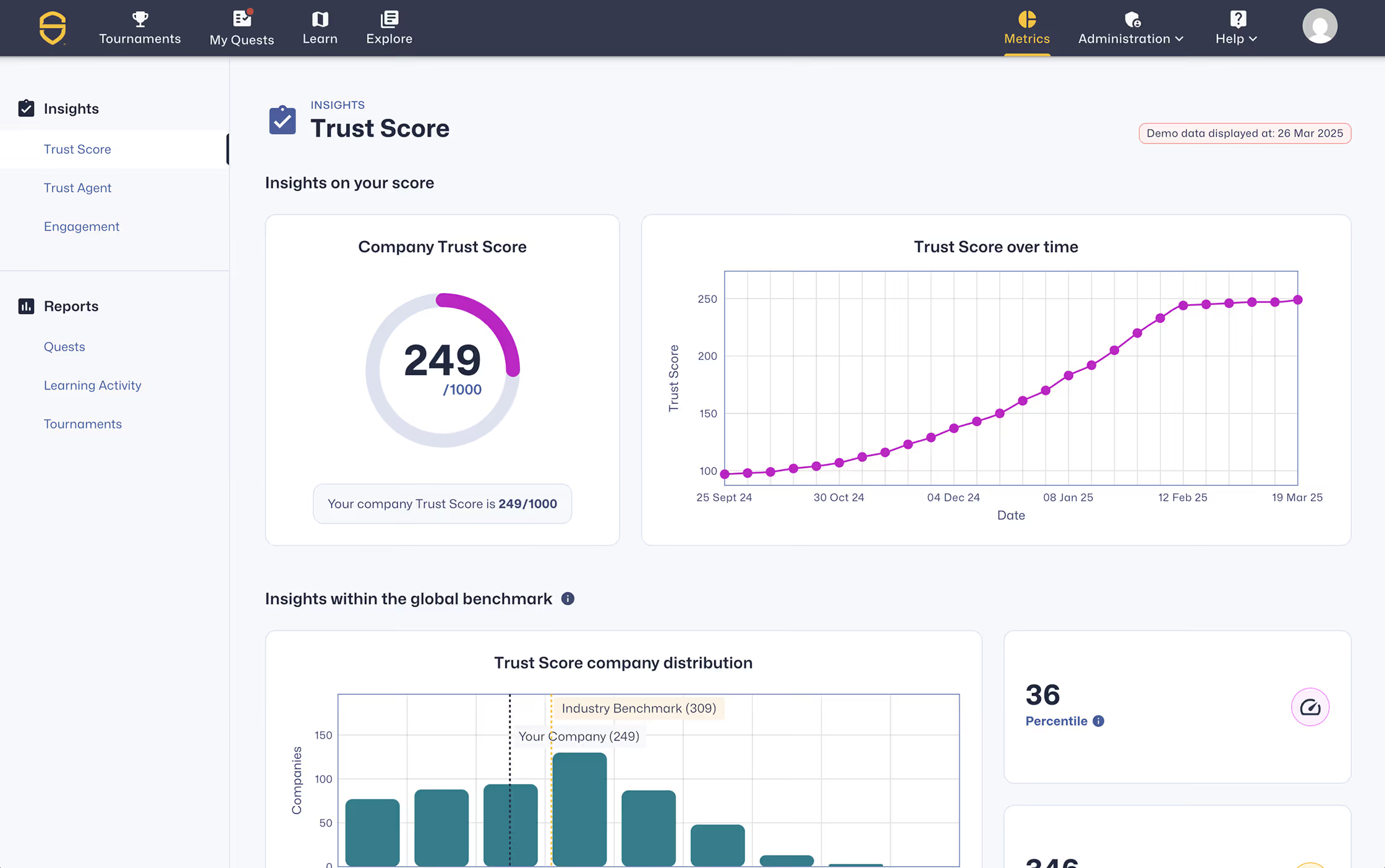
Reporting to the C-suite should clearly illustrate who has done what and how over time. These usage and adoption metrics should be available within your chosen training platform.
Examples you should include in your reports are:
-
Impact Measurements - This data quantifies impact by measuring items such as communications effectiveness, developer engagement, and return on investment.
- Developer Communications Effectiveness (Enabler 3) - This will be an important metric to track and report on, especially at your program's launch. The effectiveness of your communications will help drive initial logins to your training platform and notify developers of training assigned to them.
- Training Engagement and Completion Rates - These metrics help indicate program adoption and developer engagement with the assigned training materials. This can also help show whether the developer organization is on track with compliance training to meet auditing requirements.

For organizations focused on ensuring regulatory compliance, regular reporting to leadership is considered essential by most risk & controls organizations.
- Return on Investment Measurements - ROI metrics often include measurements such as reductions in introduced vulnerabilities, increased developer productivity, and the overall mastery and accuracy of training materials. These values will likely tie back directly to your Success Criteria established in Enabler 1.
-
Developer Response Gauging: This data shows the user's response (or lack thereof) to your program.
- Feedback Surveys - In addition to engagement metrics, surveys are vital for understanding developer sentiment, providing key information on developer responses to assigned training, including perceived relevance, difficulty, and topics for expansion.
-
Program Adaptations: This data highlights where changes in curriculum or communications strategy may need to be implemented for the future state of your program.
- Adjustments in Training Topics / Materials - Depending on developer sentiment and engagement, as well as factors such as changes in regulatory needs, you may determine that future iterations of your program require adjusting the key curriculum.
- Revamped Communications Strategy - If your program has not gained the initial traction you were hoping for, this is an opportunity to rethink your communications strategy and involve leadership in delivering key messages to developers in order to incentivize their participation.
Celebration and Recognition
A major function of regular reporting is to showcase early wins and call out successes. In essence, regular reporting to leadership acts like a radar system for your secure coding program. It doesn't just confirm you're moving forward, but tells you how fast you’re going, who is contributing the most power, and whether you need to adjust your course, ensuring that executive visibility and developer motivation remain high.
Enabler 6 works hand in hand with Enabler 7: Developer Recognition, which explicitly calls for sharing early wins loudly. In our next post, we’ll dive deeper into celebrating wins, keeping developers informed, and rewarding them for going above and beyond in your program.
You can also check out last month's blog on Enabler 5: Certification Programs here.
Have additional questions?
Customers can contact the account team or support@securecodewarrior.com. Prospective customers can speak with a member of our sales team by contacting us here.
Govern AI-driven development before it ships
Measure AI-assisted risk, enforce secure coding policy at commit, and accelerate secure delivery across your SDLC.
Resource library
Explore more blogs
Access expert content on secure coding, AI governance, and software risk management.
Blog
Filter Label
This is some text inside of a div block.
Cybersecurity Awareness Month 2026: Understanding AI Security Is Critical to Enterprise Defense
We’ve reached a point where most top AI companies have publicly called for a global slowdown in AI development so safety guardrails can catch up, but the truth is, serious security issues have already come to fruition. This leaves countless security leaders and executive teams in an urgent position, as the monetary and risk costs of AI implementation keep piling up.
.avif)
Blog
Filter Label
This is some text inside of a div block.
Every Employee is Now on the Frontline of AI Cybersecurity
The enterprise technology landscape is shifting with a velocity few predicted until it was too late. We have officially crossed the threshold from human-written code and basic copilot assistance, into the era of the Agentic Development Lifecycle (ADLC). While autonomous AI agents promise unprecedented efficiency across multiple functions, they also bring an entirely new class of security and regulatory risks.
Secure AI-driven development before it ships
See developer risk, enforce policy, and prevent vulnerabilities across your software development lifecycle.
No items found.