

Coder Conquer Security OWASP Top 10 API-Serie — Fehlerhafte Authentifizierung


It's no wonder that broken authentication made the OWASP list for API problems - authentication mechanisms are notoriously difficult to implement correctly. Also, attackers have a little bit of an advantage because by their very nature most authentication challenges must be exposed to users, giving attackers a chance to study them and look for patterns or vulnerabilities that they can exploit.
Finally, because authentication often acts as a gateway to both an application and potentially to the rest of a network, they are tempting targets for attackers. If an authentication process is broken or vulnerable, there is a good chance that attackers will discover that weakness and exploit it.
So, in this chapter, we're going to learn how to shut the bad guys out when it comes to authentication issues. If you want to test your skills first, head over and play our gamified challenge:
Want to improve your score? Stay with me while we break it down.
What are some examples of broken or misconfigured authentication?
One example where the problem might not be so obvious is when an authentication method is vulnerable to credential stuffing, or using lists of known usernames and passwords to break security. Even a normally very secure authorization method, like multifactor authentication, might be vulnerable if requests are not limited, throttled, or otherwise monitored.
For example, an attacker could trigger a password recovery request by sending a POST request to /api/system/verification-codes and providing a username in the request body. If an app is using an SMS text message challenge where a six-digit code is sent to a user's phone, but the input field is not limited, the application can be broken into in just a few minutes. An attacker simply needs to send every possible six-digit combination into the application until they hit the correct one.
In that scenario, on the surface, it looks like having two-factor authentication will keep an application safe. But because the user input isn't rate limited, the authentication is broken and vulnerable.
In another example, an application might use encoded user objects as authentication cookies. But if an attacker with low-level user access decodes that cookie using Base64, they could discover how the cookie defines sessions and users to the application. For example, they may see the following JSON once decoded:
{
"username" : "ShadyGuy",
"role" : "user"
{
At that point, the malicious user could change their username, role, or both. They could become another user with a higher privilege level by changing a couple of values:
{
"username" : "GoodGuy",
"role" : "admin"
{
At that point, if the attacker recodes the information and sets it as the cookie value, they essentially become the new user with a higher permission level. Unless methods are in place to prevent a change like that, there is a good chance the application will accept the transformation.
Eliminating Broken or Misconfigured Authentication
If authentication fails, there is a good chance that security across the board will be compromised. But following a few important guidelines while coding applications can help to keep everything secure.
First off, be sure to include authentication checks everywhere that allow users to access program functionality. If the authentication check doesn't exist at all, then the battle is lost from the start.
In terms of best practices, one good thing to keep in mind is to avoid exposing session IDs in the URL that is accessible to users. In the second example above regarding broken authentication, keeping an attacker from trying to decode the session cookie is a lot easier if it's never exposed to them.
It's also a good idea to implement multifactor authentication. This can be done securely using hardware tokens that algorithmically generate passwords on tight schedules. If you aren't able to provide your users with devices like that, SMS text messages can also work. But you need to make sure that user requests are limited to something reasonable like three or four tries in a 30 second period, and that the codes expire all together after only a few minutes. Using an alphanumeric code can also improve security by adding letters and numbers to potential passwords.
Finally, if possible, avoid depending on user names or predictable sequential values as session IDs. Instead, use a secure server-side session manager that generates a random session ID each time.
Implementing secure authentication methods is a little more tricky than combatting the average vulnerability. But because authorization is so important to every application, program, and API, it's worth taking extra time to make sure that you get it right.
Check out the Secure Code Warrior blog pages for more insight about this vulnerability and how to protect your organization and customers from the ravages of other security flaws. You can also try a demo of the Secure Code Warrior training platform to keep all your cybersecurity skills honed and up-to-date.

Die Authentifizierung dient oft als Gateway sowohl zu einer Anwendung als auch potenziell zum Rest eines Netzwerks, sodass sie ein verlockendes Ziel für Angreifer sind. Wenn ein Authentifizierungsprozess defekt oder anfällig ist, besteht eine gute Chance, dass Angreifer diese Schwachstelle entdecken und ausnutzen.
Matias Madou, Ph.D. ist Sicherheitsexperte, Forscher, CTO und Mitbegründer von Secure Code Warrior. Matias promovierte an der Universität Gent in Anwendungssicherheit mit Schwerpunkt auf statischen Analyselösungen. Später kam er zu Fortify in den USA, wo er feststellte, dass es nicht ausreichte, ausschließlich Codeprobleme zu erkennen, ohne Entwicklern beim Schreiben von sicherem Code zu helfen. Dies inspirierte ihn dazu, Produkte zu entwickeln, die Entwickler unterstützen, die Sicherheitslast verringern und die Erwartungen der Kunden übertreffen. Wenn er nicht als Teil von Team Awesome an seinem Schreibtisch sitzt, steht er gerne auf der Bühne und präsentiert auf Konferenzen wie der RSA Conference, BlackHat und DefCon.
Secure Code Warrior ist für Ihr Unternehmen da, um Ihnen zu helfen, Code während des gesamten Softwareentwicklungszyklus zu sichern und eine Kultur zu schaffen, in der Cybersicherheit an erster Stelle steht. Ganz gleich, ob Sie AppSec-Manager, Entwickler, CISO oder jemand anderes sind, der sich mit Sicherheit befasst, wir können Ihrem Unternehmen helfen, die mit unsicherem Code verbundenen Risiken zu reduzieren.
Eine Demo buchen


Matias Madou, Ph.D. ist Sicherheitsexperte, Forscher, CTO und Mitbegründer von Secure Code Warrior. Matias promovierte an der Universität Gent in Anwendungssicherheit mit Schwerpunkt auf statischen Analyselösungen. Später kam er zu Fortify in den USA, wo er feststellte, dass es nicht ausreichte, ausschließlich Codeprobleme zu erkennen, ohne Entwicklern beim Schreiben von sicherem Code zu helfen. Dies inspirierte ihn dazu, Produkte zu entwickeln, die Entwickler unterstützen, die Sicherheitslast verringern und die Erwartungen der Kunden übertreffen. Wenn er nicht als Teil von Team Awesome an seinem Schreibtisch sitzt, steht er gerne auf der Bühne und präsentiert auf Konferenzen wie der RSA Conference, BlackHat und DefCon.
Matias ist Forscher und Entwickler mit mehr als 15 Jahren praktischer Erfahrung in der Softwaresicherheit. Er hat Lösungen für Unternehmen wie Fortify Software und sein eigenes Unternehmen Sensei Security entwickelt. Im Laufe seiner Karriere hat Matias mehrere Forschungsprojekte zur Anwendungssicherheit geleitet, die zu kommerziellen Produkten geführt haben, und verfügt über mehr als 10 Patente. Wenn er nicht an seinem Schreibtisch ist, war Matias als Ausbilder für fortgeschrittene Schulungen zur Anwendungssicherheit tätig und hält regelmäßig Vorträge auf globalen Konferenzen wie RSA Conference, Black Hat, DefCon, BSIMM, OWASP AppSec und BruCon.
Matias hat an der Universität Gent in Computertechnik promoviert, wo er Anwendungssicherheit durch Programmverschleierung studierte, um das Innenleben einer Anwendung zu verbergen.
It's no wonder that broken authentication made the OWASP list for API problems - authentication mechanisms are notoriously difficult to implement correctly. Also, attackers have a little bit of an advantage because by their very nature most authentication challenges must be exposed to users, giving attackers a chance to study them and look for patterns or vulnerabilities that they can exploit.
Finally, because authentication often acts as a gateway to both an application and potentially to the rest of a network, they are tempting targets for attackers. If an authentication process is broken or vulnerable, there is a good chance that attackers will discover that weakness and exploit it.
So, in this chapter, we're going to learn how to shut the bad guys out when it comes to authentication issues. If you want to test your skills first, head over and play our gamified challenge:
Want to improve your score? Stay with me while we break it down.
What are some examples of broken or misconfigured authentication?
One example where the problem might not be so obvious is when an authentication method is vulnerable to credential stuffing, or using lists of known usernames and passwords to break security. Even a normally very secure authorization method, like multifactor authentication, might be vulnerable if requests are not limited, throttled, or otherwise monitored.
For example, an attacker could trigger a password recovery request by sending a POST request to /api/system/verification-codes and providing a username in the request body. If an app is using an SMS text message challenge where a six-digit code is sent to a user's phone, but the input field is not limited, the application can be broken into in just a few minutes. An attacker simply needs to send every possible six-digit combination into the application until they hit the correct one.
In that scenario, on the surface, it looks like having two-factor authentication will keep an application safe. But because the user input isn't rate limited, the authentication is broken and vulnerable.
In another example, an application might use encoded user objects as authentication cookies. But if an attacker with low-level user access decodes that cookie using Base64, they could discover how the cookie defines sessions and users to the application. For example, they may see the following JSON once decoded:
{
"username" : "ShadyGuy",
"role" : "user"
{
At that point, the malicious user could change their username, role, or both. They could become another user with a higher privilege level by changing a couple of values:
{
"username" : "GoodGuy",
"role" : "admin"
{
At that point, if the attacker recodes the information and sets it as the cookie value, they essentially become the new user with a higher permission level. Unless methods are in place to prevent a change like that, there is a good chance the application will accept the transformation.
Eliminating Broken or Misconfigured Authentication
If authentication fails, there is a good chance that security across the board will be compromised. But following a few important guidelines while coding applications can help to keep everything secure.
First off, be sure to include authentication checks everywhere that allow users to access program functionality. If the authentication check doesn't exist at all, then the battle is lost from the start.
In terms of best practices, one good thing to keep in mind is to avoid exposing session IDs in the URL that is accessible to users. In the second example above regarding broken authentication, keeping an attacker from trying to decode the session cookie is a lot easier if it's never exposed to them.
It's also a good idea to implement multifactor authentication. This can be done securely using hardware tokens that algorithmically generate passwords on tight schedules. If you aren't able to provide your users with devices like that, SMS text messages can also work. But you need to make sure that user requests are limited to something reasonable like three or four tries in a 30 second period, and that the codes expire all together after only a few minutes. Using an alphanumeric code can also improve security by adding letters and numbers to potential passwords.
Finally, if possible, avoid depending on user names or predictable sequential values as session IDs. Instead, use a secure server-side session manager that generates a random session ID each time.
Implementing secure authentication methods is a little more tricky than combatting the average vulnerability. But because authorization is so important to every application, program, and API, it's worth taking extra time to make sure that you get it right.
Check out the Secure Code Warrior blog pages for more insight about this vulnerability and how to protect your organization and customers from the ravages of other security flaws. You can also try a demo of the Secure Code Warrior training platform to keep all your cybersecurity skills honed and up-to-date.


It's no wonder that broken authentication made the OWASP list for API problems - authentication mechanisms are notoriously difficult to implement correctly. Also, attackers have a little bit of an advantage because by their very nature most authentication challenges must be exposed to users, giving attackers a chance to study them and look for patterns or vulnerabilities that they can exploit.
Finally, because authentication often acts as a gateway to both an application and potentially to the rest of a network, they are tempting targets for attackers. If an authentication process is broken or vulnerable, there is a good chance that attackers will discover that weakness and exploit it.
So, in this chapter, we're going to learn how to shut the bad guys out when it comes to authentication issues. If you want to test your skills first, head over and play our gamified challenge:
Want to improve your score? Stay with me while we break it down.
What are some examples of broken or misconfigured authentication?
One example where the problem might not be so obvious is when an authentication method is vulnerable to credential stuffing, or using lists of known usernames and passwords to break security. Even a normally very secure authorization method, like multifactor authentication, might be vulnerable if requests are not limited, throttled, or otherwise monitored.
For example, an attacker could trigger a password recovery request by sending a POST request to /api/system/verification-codes and providing a username in the request body. If an app is using an SMS text message challenge where a six-digit code is sent to a user's phone, but the input field is not limited, the application can be broken into in just a few minutes. An attacker simply needs to send every possible six-digit combination into the application until they hit the correct one.
In that scenario, on the surface, it looks like having two-factor authentication will keep an application safe. But because the user input isn't rate limited, the authentication is broken and vulnerable.
In another example, an application might use encoded user objects as authentication cookies. But if an attacker with low-level user access decodes that cookie using Base64, they could discover how the cookie defines sessions and users to the application. For example, they may see the following JSON once decoded:
{
"username" : "ShadyGuy",
"role" : "user"
{
At that point, the malicious user could change their username, role, or both. They could become another user with a higher privilege level by changing a couple of values:
{
"username" : "GoodGuy",
"role" : "admin"
{
At that point, if the attacker recodes the information and sets it as the cookie value, they essentially become the new user with a higher permission level. Unless methods are in place to prevent a change like that, there is a good chance the application will accept the transformation.
Eliminating Broken or Misconfigured Authentication
If authentication fails, there is a good chance that security across the board will be compromised. But following a few important guidelines while coding applications can help to keep everything secure.
First off, be sure to include authentication checks everywhere that allow users to access program functionality. If the authentication check doesn't exist at all, then the battle is lost from the start.
In terms of best practices, one good thing to keep in mind is to avoid exposing session IDs in the URL that is accessible to users. In the second example above regarding broken authentication, keeping an attacker from trying to decode the session cookie is a lot easier if it's never exposed to them.
It's also a good idea to implement multifactor authentication. This can be done securely using hardware tokens that algorithmically generate passwords on tight schedules. If you aren't able to provide your users with devices like that, SMS text messages can also work. But you need to make sure that user requests are limited to something reasonable like three or four tries in a 30 second period, and that the codes expire all together after only a few minutes. Using an alphanumeric code can also improve security by adding letters and numbers to potential passwords.
Finally, if possible, avoid depending on user names or predictable sequential values as session IDs. Instead, use a secure server-side session manager that generates a random session ID each time.
Implementing secure authentication methods is a little more tricky than combatting the average vulnerability. But because authorization is so important to every application, program, and API, it's worth taking extra time to make sure that you get it right.
Check out the Secure Code Warrior blog pages for more insight about this vulnerability and how to protect your organization and customers from the ravages of other security flaws. You can also try a demo of the Secure Code Warrior training platform to keep all your cybersecurity skills honed and up-to-date.
Klicken Sie auf den Link unten und laden Sie das PDF dieser Ressource herunter.
Secure Code Warrior ist für Ihr Unternehmen da, um Ihnen zu helfen, Code während des gesamten Softwareentwicklungszyklus zu sichern und eine Kultur zu schaffen, in der Cybersicherheit an erster Stelle steht. Ganz gleich, ob Sie AppSec-Manager, Entwickler, CISO oder jemand anderes sind, der sich mit Sicherheit befasst, wir können Ihrem Unternehmen helfen, die mit unsicherem Code verbundenen Risiken zu reduzieren.
Bericht ansehenEine Demo buchen
Matias Madou, Ph.D. ist Sicherheitsexperte, Forscher, CTO und Mitbegründer von Secure Code Warrior. Matias promovierte an der Universität Gent in Anwendungssicherheit mit Schwerpunkt auf statischen Analyselösungen. Später kam er zu Fortify in den USA, wo er feststellte, dass es nicht ausreichte, ausschließlich Codeprobleme zu erkennen, ohne Entwicklern beim Schreiben von sicherem Code zu helfen. Dies inspirierte ihn dazu, Produkte zu entwickeln, die Entwickler unterstützen, die Sicherheitslast verringern und die Erwartungen der Kunden übertreffen. Wenn er nicht als Teil von Team Awesome an seinem Schreibtisch sitzt, steht er gerne auf der Bühne und präsentiert auf Konferenzen wie der RSA Conference, BlackHat und DefCon.
Matias ist Forscher und Entwickler mit mehr als 15 Jahren praktischer Erfahrung in der Softwaresicherheit. Er hat Lösungen für Unternehmen wie Fortify Software und sein eigenes Unternehmen Sensei Security entwickelt. Im Laufe seiner Karriere hat Matias mehrere Forschungsprojekte zur Anwendungssicherheit geleitet, die zu kommerziellen Produkten geführt haben, und verfügt über mehr als 10 Patente. Wenn er nicht an seinem Schreibtisch ist, war Matias als Ausbilder für fortgeschrittene Schulungen zur Anwendungssicherheit tätig und hält regelmäßig Vorträge auf globalen Konferenzen wie RSA Conference, Black Hat, DefCon, BSIMM, OWASP AppSec und BruCon.
Matias hat an der Universität Gent in Computertechnik promoviert, wo er Anwendungssicherheit durch Programmverschleierung studierte, um das Innenleben einer Anwendung zu verbergen.
It's no wonder that broken authentication made the OWASP list for API problems - authentication mechanisms are notoriously difficult to implement correctly. Also, attackers have a little bit of an advantage because by their very nature most authentication challenges must be exposed to users, giving attackers a chance to study them and look for patterns or vulnerabilities that they can exploit.
Finally, because authentication often acts as a gateway to both an application and potentially to the rest of a network, they are tempting targets for attackers. If an authentication process is broken or vulnerable, there is a good chance that attackers will discover that weakness and exploit it.
So, in this chapter, we're going to learn how to shut the bad guys out when it comes to authentication issues. If you want to test your skills first, head over and play our gamified challenge:
Want to improve your score? Stay with me while we break it down.
What are some examples of broken or misconfigured authentication?
One example where the problem might not be so obvious is when an authentication method is vulnerable to credential stuffing, or using lists of known usernames and passwords to break security. Even a normally very secure authorization method, like multifactor authentication, might be vulnerable if requests are not limited, throttled, or otherwise monitored.
For example, an attacker could trigger a password recovery request by sending a POST request to /api/system/verification-codes and providing a username in the request body. If an app is using an SMS text message challenge where a six-digit code is sent to a user's phone, but the input field is not limited, the application can be broken into in just a few minutes. An attacker simply needs to send every possible six-digit combination into the application until they hit the correct one.
In that scenario, on the surface, it looks like having two-factor authentication will keep an application safe. But because the user input isn't rate limited, the authentication is broken and vulnerable.
In another example, an application might use encoded user objects as authentication cookies. But if an attacker with low-level user access decodes that cookie using Base64, they could discover how the cookie defines sessions and users to the application. For example, they may see the following JSON once decoded:
{
"username" : "ShadyGuy",
"role" : "user"
{
At that point, the malicious user could change their username, role, or both. They could become another user with a higher privilege level by changing a couple of values:
{
"username" : "GoodGuy",
"role" : "admin"
{
At that point, if the attacker recodes the information and sets it as the cookie value, they essentially become the new user with a higher permission level. Unless methods are in place to prevent a change like that, there is a good chance the application will accept the transformation.
Eliminating Broken or Misconfigured Authentication
If authentication fails, there is a good chance that security across the board will be compromised. But following a few important guidelines while coding applications can help to keep everything secure.
First off, be sure to include authentication checks everywhere that allow users to access program functionality. If the authentication check doesn't exist at all, then the battle is lost from the start.
In terms of best practices, one good thing to keep in mind is to avoid exposing session IDs in the URL that is accessible to users. In the second example above regarding broken authentication, keeping an attacker from trying to decode the session cookie is a lot easier if it's never exposed to them.
It's also a good idea to implement multifactor authentication. This can be done securely using hardware tokens that algorithmically generate passwords on tight schedules. If you aren't able to provide your users with devices like that, SMS text messages can also work. But you need to make sure that user requests are limited to something reasonable like three or four tries in a 30 second period, and that the codes expire all together after only a few minutes. Using an alphanumeric code can also improve security by adding letters and numbers to potential passwords.
Finally, if possible, avoid depending on user names or predictable sequential values as session IDs. Instead, use a secure server-side session manager that generates a random session ID each time.
Implementing secure authentication methods is a little more tricky than combatting the average vulnerability. But because authorization is so important to every application, program, and API, it's worth taking extra time to make sure that you get it right.
Check out the Secure Code Warrior blog pages for more insight about this vulnerability and how to protect your organization and customers from the ravages of other security flaws. You can also try a demo of the Secure Code Warrior training platform to keep all your cybersecurity skills honed and up-to-date.
Inhaltsverzeichniss
Matias Madou, Ph.D. ist Sicherheitsexperte, Forscher, CTO und Mitbegründer von Secure Code Warrior. Matias promovierte an der Universität Gent in Anwendungssicherheit mit Schwerpunkt auf statischen Analyselösungen. Später kam er zu Fortify in den USA, wo er feststellte, dass es nicht ausreichte, ausschließlich Codeprobleme zu erkennen, ohne Entwicklern beim Schreiben von sicherem Code zu helfen. Dies inspirierte ihn dazu, Produkte zu entwickeln, die Entwickler unterstützen, die Sicherheitslast verringern und die Erwartungen der Kunden übertreffen. Wenn er nicht als Teil von Team Awesome an seinem Schreibtisch sitzt, steht er gerne auf der Bühne und präsentiert auf Konferenzen wie der RSA Conference, BlackHat und DefCon.
Secure Code Warrior ist für Ihr Unternehmen da, um Ihnen zu helfen, Code während des gesamten Softwareentwicklungszyklus zu sichern und eine Kultur zu schaffen, in der Cybersicherheit an erster Stelle steht. Ganz gleich, ob Sie AppSec-Manager, Entwickler, CISO oder jemand anderes sind, der sich mit Sicherheit befasst, wir können Ihrem Unternehmen helfen, die mit unsicherem Code verbundenen Risiken zu reduzieren.
Eine Demo buchenHerunterladenRessourcen für den Einstieg



Ressourcen für den Einstieg



Secure coding learning that reflects real AI usage
Align secure coding training to real AI development activity — automatically assigning guidance to developers using AI tools, without manual intervention.Align secure coding training to real AI development activity — automatically assigning guidance to developers using AI tools, without manual intervention.

Train developers on the real risks in their code, whether human-written or AI-generated
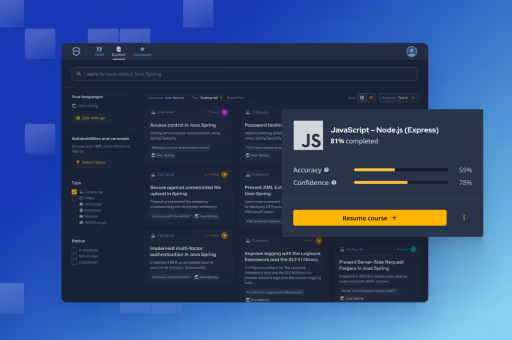
Adaptive Learning auto-assigns targeted secure coding training to the developers introducing real vulnerabilities, reducing recurring risks at the source.Secure Code Warrior blog banner with a blue overlay over a developer working at a multi-monitor desk displaying code, alongside the headline 'Train developers on the real risks in their code.'l