How DigitalOcean Reduced Software Security Debt and Pushed the Boundaries of Productivity

Reducing security debt is something that all companies strive to achieve. How does one minimize the amount of security vulnerabilities? How does one speed up time to market while ensuring that the code being generated is top notch?
Like many companies, DigitalOcean chose Secure Code Warrior to drive digital innovation and modernization by building and releasing quality code from the start with security-aware developers.
DigitalOcean, which offers scalable computing resources and a suite of cloud solutions that enable developers to deploy, manage, and scale applications effortlessly, turned to Secure Code Warrior as the company expanded and grew its engineering teams. In the fast-paced technology industry, the company needed to ensure their developers could identify common poor coding patterns that arose in design reviews so that they could proactively prevent them from recurring.
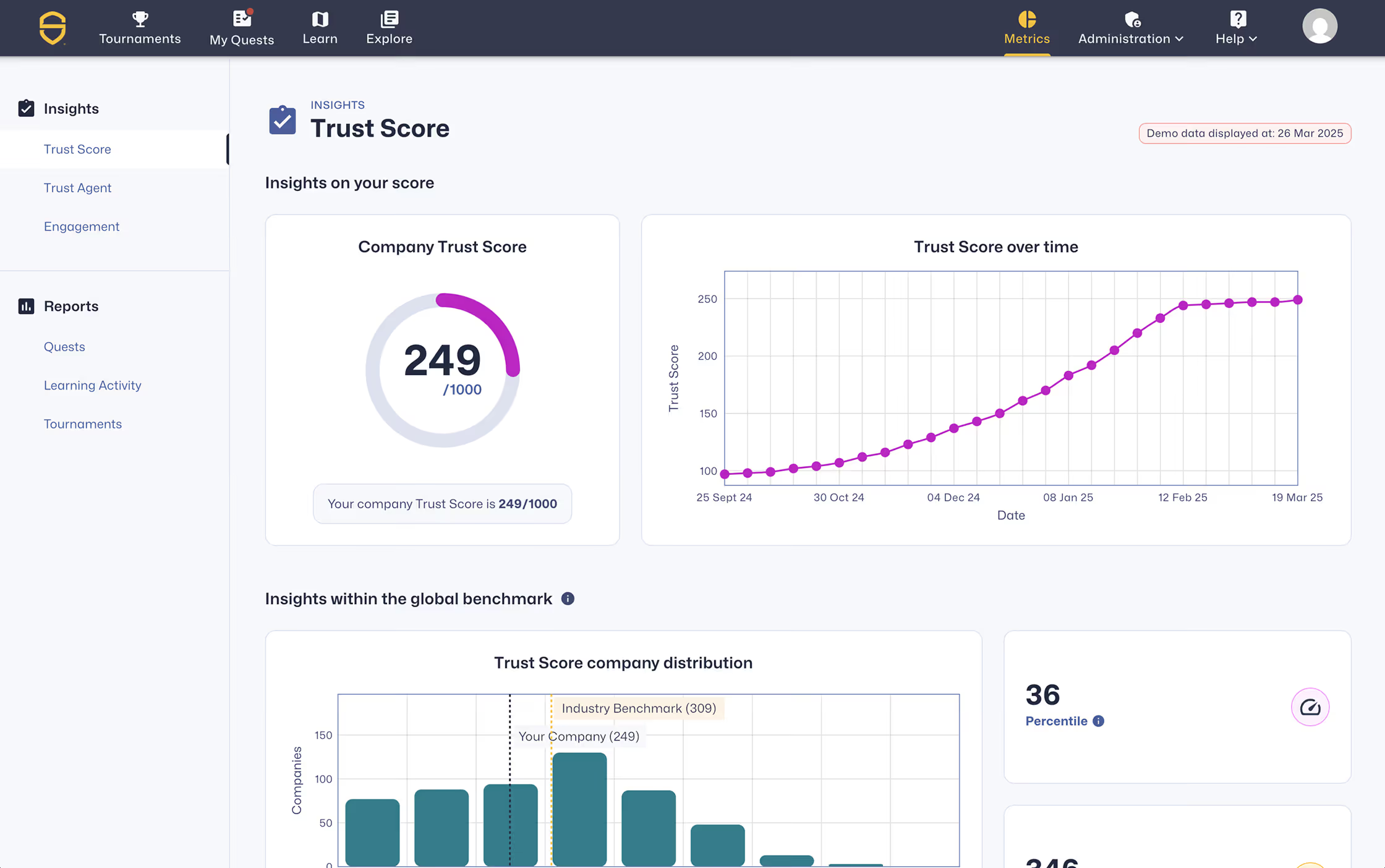
As Ari Kalfus, senior manager of product security noted, “We needed a solution that was developer-specific, hands-on, and focused on the risks that our organization was facing.” Secure Code Warrior delivered on this, with one of the most notable outcomes being the ability to quickly and regularly reinforce secure coding practices. This led to a marked decrease in security debt across teams. Overall, DigitalOcean has found that teams trained with SCW were not only more adept at identifying and mitigating security issues, but they also now have the confidence to push the boundaries of innovation without compromising security.
Read more here about how DigitalOcean reduced its overall security debt… and is now using its security surplus to further push the boundaries of productivity and innovation.
Govern AI-driven development before it ships
Measure AI-assisted risk, enforce secure coding policy at commit, and accelerate secure delivery across your SDLC.
Explore more blogs
Access expert content on secure coding, AI governance, and software risk management.


If the model is the smallest security lever, what actually makes AI-generated code safer?
Earlier this year, we released the SCW AI Trust Index, and, in conjunction with RMIT University, assessed 16 leading AI models from OpenAI, Anthropic, Google, and others, generating 1760 codebases and finding 15 vulnerabilities on average in each one. This data, using our original methodology, allowed us to ultimately identify that security risk is predictable by model and framework.

Secure AI-driven development before it ships
See developer risk, enforce policy, and prevent vulnerabilities across your software development lifecycle.