Secure Code Warrior to Host Expert Panel on ‘Security as a Shared Responsibility and How to Make it Work in Your Organization’ At the Upcoming Leaders In AppSec Virtual One-Day Event
Leaders from Motorola Solutions, Delve Risk, DRW, and CyberProof to Address Security Myths that Surround the Development Community and How to Effectively Share the Security Responsibility.
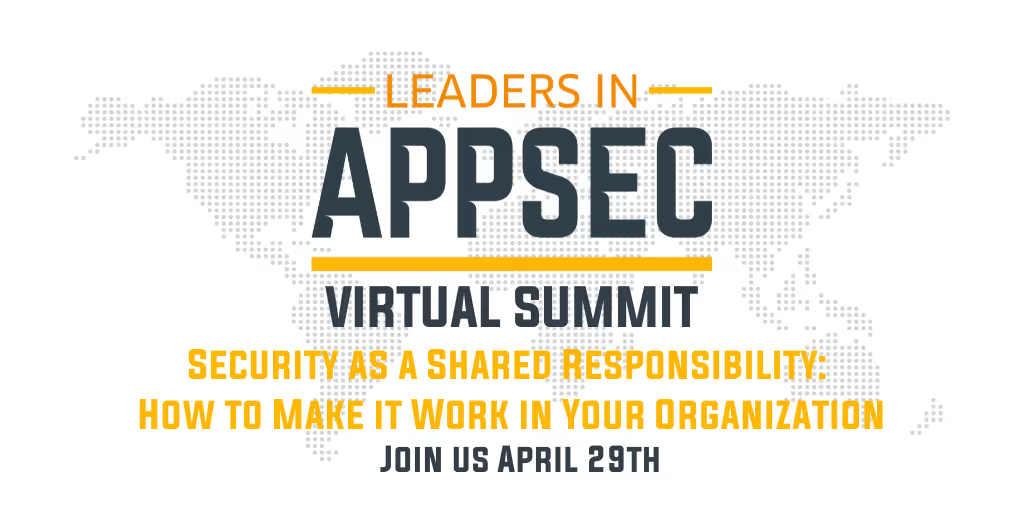
SYDNEY, LONDON, BOSTON – April 17, 2020 -- Secure coding company, Secure Code Warrior (SCW) today announced that co-founder and CEO Pieter Danhieux will serve as a co-host at the upcoming How to Make Security Work in Your Organization, a free virtual, global one-day event being held as part of the company’s Leaders in AppSec conference series, scheduled to take place on April 29 from 11:00 am AEST, 10:00 am BST, and 8:00 am PDT.
In a time where a company's growth can be measured by the size of their digital footprint, the success of an organization’s development team is often measured by their productivity and the speed in which code is shipped. However, with zero-day breaches on the rapid increase, this mentality needs a serious update.
"Common vulnerabilities are still tripping us up, and developers need the right tools and knowledge to play their role and stop recurring vulnerabilities as code is written, by never introducing them in the first place,” said Danhieux. He added, shipping secure code should be the number one priority for an organization, and in a thriving DevSecOps environment, every single person in the project team must do their part in taking responsibility for software security.”
Joining Danhieux will be Marilyn Barrios, Global Cybersecurity Services Manager, Motorola Solutions; Anthony Johnson, Managing Partner, Delve Risk; Aaron Bedra, Senior Software Engineer, DRW; and Colin Domoney, Security Architect, CyberProof. The panelists will discuss the AppSec error loop, the security myths that surround the development community and how to effectively share the security responsibility. Specifically, the event will feature seven different sessions including Avoiding the Security Iceberg, How to Utilize Your Own Developers, From Dev to DevSec, and The Evolution of Security Champions.
WHAT: Security as a Shared Responsibility Global Virtual Event
WHEN: Wednesday 29th 11:00 am AEST, 10:00 am BST, and 8:00 am PDT
WHO: Leaders in AppSec
WHERE: Virtual Event. Link to be provided upon registration.
COST: Free
REGISTRATION: Main registration page for the Asia Pacific, Europe, and North America is here.
Participants will need to register for each session individually.
Leaders in AppSec is a global initiative bringing together like-minded security enthusiasts to share experiences, talk solutions and grow new ideas, all while fostering valuable connections in the application security industry. Leaders in AppSec is powered by Secure Code Warrior.
Govern AI-driven development before it ships
Measure AI-assisted risk, enforce secure coding policy at commit, and accelerate secure delivery across your SDLC.
Explore more articles
Access expert content on secure coding, AI governance, and software risk management.

Security Brief UK: Secure Code Warrior launches Citizen AI training programme
Secure Code Warrior has launched Citizen AI, an AI literacy training programme for non-developer employees intended to support responsible AI adoption across business functions.

ITWire: Secure Code Warrior Launches Citizen AI Cybersecurity Training to Build AI-Ready and Responsible Use Skills Across Business Functions
New AI literacy program equips non-developer employees with the judgment, risk awareness and responsible-use habits needed to safely adopt AI-powered workflows.

VMBlog: Secure Code Warrior Launches Citizen AI Cybersecurity Training to Build AI-Ready and Responsible Use Skills Across Business Functions
Secure Code Warrior announced Citizen AI by Secure Code Warrior, a new AI literacy program designed specifically for non-developer employees to help organizations build a workforce ready for responsible AI adoption. Citizen AI helps organizationsreduce AI-related human risk, support broader enterprise AI governance initiatives, increase employee confidence when using AI and accelerate the safe adoption of AI-powered workflows.
Secure AI-driven development before it ships
See developer risk, enforce policy, and prevent vulnerabilities across your software development lifecycle.