

人間主導の安全なコーディングによる事後対応型から事前対応型への焦点の移行


The same 10 software vulnerabilities have caused more security breaches in the last 20+ years than any others. And yet, many businesses still opt for post-breach, post-event remediation; muddling through the human and business ramifications of it all. But now a new research study points to a new, human-led direction.
The following discusses insights derived from a study conducted by Secure Code Warrior with Evans Data Corp titled ‘Shifting from reaction to prevention: The changing face of application security’ (2021) exploring developers attitudes towards secure coding, secure code practices, and security operations. Download the whitepaper here.
In the soon-to-be-released study, developers and development managers were asked about the activities they associate with secure coding. The top three responses were:
- Using scanning tools on deployed applications.
- Manually reviewing code for vulnerabilities.
- The active and ongoing practice of writing software that is protected from vulnerabilities.
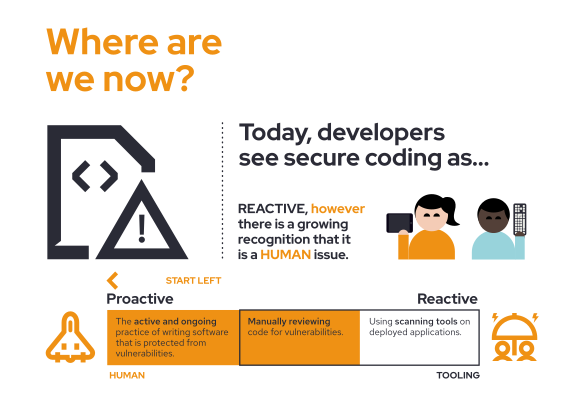
So what is this telling us? Two of the top three responses are still focused on reactive approaches, the first dependent on tooling (scanners), and second on the developer (i.e. human) performing manual checks – in both cases after the code is written. Vulnerabilities detected using these methods have to be kicked back to the development team for rework with knock-on effects on project timelines and project costs.
At the same time, two of the three activities nominated rely on the human element – a pointer to growing perceptions of security as a human issue. But of all the activities nominated, the most telling is No. 3, which identifies the human factor in writing software that is protected from vulnerabilities in the first place. This highlights a shift to starting left – a proactive and preventive approach that bakes security into software right from the start of the software development lifecycle.
Reactive can equal EXPENSIVE
According to an IBM study*, it is thirty times more expensive to fix vulnerabilities in post-release code than if they were found and remediated at the beginning. That’s a powerful incentive for a new proactive and a more human approach to defense of software security that equips developers to code more securely, right from the start.
This is what you could call a human-led defense. But to get developers to start caring about security, it has to become part of the way they think and code every day. This is a call for new approaches to training that are hyper-relevant to developers’ everyday work and inspire them to want to learn – neither of which can be said of current training models.
To create a proactive security culture, new training is needed that:
- makes secure coding a positive and engaging experience for developers as they increase their software security skills
- encourages developers to view their daily coding tasks through a security mindset
- makes secure coding intrinsic to their daily workflow
When these threads come together, vulnerabilities are prevented from occurring in the first place, allowing teams to ship quality code faster, with confidence. The good news is that a Learning Platform already exists that 'starts left' in the software development process – one that is already empowering developers with the skills and tools to create quality code from the very start.
*IBM Software Group; Minimizing Code Defects to Improve Software Quality and Lower Development Costs
https://docplayer.net/11413245-Minimizing-code-defects-to-improve-software-quality-and-lower-development-costs.html
.avif)
.avif)
過去20年以上にわたり、同じ10件のソフトウェアの脆弱性が、他のどの脆弱性よりも多くのセキュリティ侵害を引き起こしています。それでも、多くの企業はいまだに侵害後や事後からの修復を選択しており、そのすべてがもたらす人的影響とビジネス上の影響に悩まされています。しかし今、新しい調査研究により、人間が主導する新しい方向性が示されました。
Secure Code Warriorは、開発者がスキルを向上させるにつれて、セキュアコーディングを前向きで魅力的な体験にします。セキュリティスキルのある開発者が、接続された世界で日常的にスーパーヒーローになれるよう、コーダー一人ひとりが希望する学習経路に導きます。
Secure Code Warriorは、ソフトウェア開発ライフサイクル全体にわたってコードを保護し、サイバーセキュリティを最優先とする文化を築くお手伝いをします。アプリケーションセキュリティマネージャ、開発者、CISO、またはセキュリティ関係者のいずれであっても、安全でないコードに関連するリスクを軽減するお手伝いをします。
デモを予約


Secure Code Warriorは、開発者がスキルを向上させるにつれて、セキュアコーディングを前向きで魅力的な体験にします。セキュリティスキルのある開発者が、接続された世界で日常的にスーパーヒーローになれるよう、コーダー一人ひとりが希望する学習経路に導きます。
この記事は、Secure Code Warriorの業界専門家チームによって執筆されました。開発者が最初から安全なソフトウェアを構築するための知識とスキルを身に付けることを目指しています。セキュア・コーディングの実践に関する深い専門知識、業界動向、現実世界の洞察を活用しています。
The same 10 software vulnerabilities have caused more security breaches in the last 20+ years than any others. And yet, many businesses still opt for post-breach, post-event remediation; muddling through the human and business ramifications of it all. But now a new research study points to a new, human-led direction.
The following discusses insights derived from a study conducted by Secure Code Warrior with Evans Data Corp titled ‘Shifting from reaction to prevention: The changing face of application security’ (2021) exploring developers attitudes towards secure coding, secure code practices, and security operations. Download the whitepaper here.
In the soon-to-be-released study, developers and development managers were asked about the activities they associate with secure coding. The top three responses were:
- Using scanning tools on deployed applications.
- Manually reviewing code for vulnerabilities.
- The active and ongoing practice of writing software that is protected from vulnerabilities.
So what is this telling us? Two of the top three responses are still focused on reactive approaches, the first dependent on tooling (scanners), and second on the developer (i.e. human) performing manual checks – in both cases after the code is written. Vulnerabilities detected using these methods have to be kicked back to the development team for rework with knock-on effects on project timelines and project costs.
At the same time, two of the three activities nominated rely on the human element – a pointer to growing perceptions of security as a human issue. But of all the activities nominated, the most telling is No. 3, which identifies the human factor in writing software that is protected from vulnerabilities in the first place. This highlights a shift to starting left – a proactive and preventive approach that bakes security into software right from the start of the software development lifecycle.
Reactive can equal EXPENSIVE
According to an IBM study*, it is thirty times more expensive to fix vulnerabilities in post-release code than if they were found and remediated at the beginning. That’s a powerful incentive for a new proactive and a more human approach to defense of software security that equips developers to code more securely, right from the start.
This is what you could call a human-led defense. But to get developers to start caring about security, it has to become part of the way they think and code every day. This is a call for new approaches to training that are hyper-relevant to developers’ everyday work and inspire them to want to learn – neither of which can be said of current training models.
To create a proactive security culture, new training is needed that:
- makes secure coding a positive and engaging experience for developers as they increase their software security skills
- encourages developers to view their daily coding tasks through a security mindset
- makes secure coding intrinsic to their daily workflow
When these threads come together, vulnerabilities are prevented from occurring in the first place, allowing teams to ship quality code faster, with confidence. The good news is that a Learning Platform already exists that 'starts left' in the software development process – one that is already empowering developers with the skills and tools to create quality code from the very start.
*IBM Software Group; Minimizing Code Defects to Improve Software Quality and Lower Development Costs
https://docplayer.net/11413245-Minimizing-code-defects-to-improve-software-quality-and-lower-development-costs.html


The same 10 software vulnerabilities have caused more security breaches in the last 20+ years than any others. And yet, many businesses still opt for post-breach, post-event remediation; muddling through the human and business ramifications of it all. But now a new research study points to a new, human-led direction.
The following discusses insights derived from a study conducted by Secure Code Warrior with Evans Data Corp titled ‘Shifting from reaction to prevention: The changing face of application security’ (2021) exploring developers attitudes towards secure coding, secure code practices, and security operations. Download the whitepaper here.
In the soon-to-be-released study, developers and development managers were asked about the activities they associate with secure coding. The top three responses were:
- Using scanning tools on deployed applications.
- Manually reviewing code for vulnerabilities.
- The active and ongoing practice of writing software that is protected from vulnerabilities.
So what is this telling us? Two of the top three responses are still focused on reactive approaches, the first dependent on tooling (scanners), and second on the developer (i.e. human) performing manual checks – in both cases after the code is written. Vulnerabilities detected using these methods have to be kicked back to the development team for rework with knock-on effects on project timelines and project costs.
At the same time, two of the three activities nominated rely on the human element – a pointer to growing perceptions of security as a human issue. But of all the activities nominated, the most telling is No. 3, which identifies the human factor in writing software that is protected from vulnerabilities in the first place. This highlights a shift to starting left – a proactive and preventive approach that bakes security into software right from the start of the software development lifecycle.
Reactive can equal EXPENSIVE
According to an IBM study*, it is thirty times more expensive to fix vulnerabilities in post-release code than if they were found and remediated at the beginning. That’s a powerful incentive for a new proactive and a more human approach to defense of software security that equips developers to code more securely, right from the start.
This is what you could call a human-led defense. But to get developers to start caring about security, it has to become part of the way they think and code every day. This is a call for new approaches to training that are hyper-relevant to developers’ everyday work and inspire them to want to learn – neither of which can be said of current training models.
To create a proactive security culture, new training is needed that:
- makes secure coding a positive and engaging experience for developers as they increase their software security skills
- encourages developers to view their daily coding tasks through a security mindset
- makes secure coding intrinsic to their daily workflow
When these threads come together, vulnerabilities are prevented from occurring in the first place, allowing teams to ship quality code faster, with confidence. The good news is that a Learning Platform already exists that 'starts left' in the software development process – one that is already empowering developers with the skills and tools to create quality code from the very start.
*IBM Software Group; Minimizing Code Defects to Improve Software Quality and Lower Development Costs
https://docplayer.net/11413245-Minimizing-code-defects-to-improve-software-quality-and-lower-development-costs.html
以下のリンクをクリックして、このリソースのPDFをダウンロードしてください。
Secure Code Warriorは、ソフトウェア開発ライフサイクル全体にわたってコードを保護し、サイバーセキュリティを最優先とする文化を築くお手伝いをします。アプリケーションセキュリティマネージャ、開発者、CISO、またはセキュリティ関係者のいずれであっても、安全でないコードに関連するリスクを軽減するお手伝いをします。
レポートを表示デモを予約
Secure Code Warriorは、開発者がスキルを向上させるにつれて、セキュアコーディングを前向きで魅力的な体験にします。セキュリティスキルのある開発者が、接続された世界で日常的にスーパーヒーローになれるよう、コーダー一人ひとりが希望する学習経路に導きます。
この記事は、Secure Code Warriorの業界専門家チームによって執筆されました。開発者が最初から安全なソフトウェアを構築するための知識とスキルを身に付けることを目指しています。セキュア・コーディングの実践に関する深い専門知識、業界動向、現実世界の洞察を活用しています。
The same 10 software vulnerabilities have caused more security breaches in the last 20+ years than any others. And yet, many businesses still opt for post-breach, post-event remediation; muddling through the human and business ramifications of it all. But now a new research study points to a new, human-led direction.
The following discusses insights derived from a study conducted by Secure Code Warrior with Evans Data Corp titled ‘Shifting from reaction to prevention: The changing face of application security’ (2021) exploring developers attitudes towards secure coding, secure code practices, and security operations. Download the whitepaper here.
In the soon-to-be-released study, developers and development managers were asked about the activities they associate with secure coding. The top three responses were:
- Using scanning tools on deployed applications.
- Manually reviewing code for vulnerabilities.
- The active and ongoing practice of writing software that is protected from vulnerabilities.
So what is this telling us? Two of the top three responses are still focused on reactive approaches, the first dependent on tooling (scanners), and second on the developer (i.e. human) performing manual checks – in both cases after the code is written. Vulnerabilities detected using these methods have to be kicked back to the development team for rework with knock-on effects on project timelines and project costs.
At the same time, two of the three activities nominated rely on the human element – a pointer to growing perceptions of security as a human issue. But of all the activities nominated, the most telling is No. 3, which identifies the human factor in writing software that is protected from vulnerabilities in the first place. This highlights a shift to starting left – a proactive and preventive approach that bakes security into software right from the start of the software development lifecycle.
Reactive can equal EXPENSIVE
According to an IBM study*, it is thirty times more expensive to fix vulnerabilities in post-release code than if they were found and remediated at the beginning. That’s a powerful incentive for a new proactive and a more human approach to defense of software security that equips developers to code more securely, right from the start.
This is what you could call a human-led defense. But to get developers to start caring about security, it has to become part of the way they think and code every day. This is a call for new approaches to training that are hyper-relevant to developers’ everyday work and inspire them to want to learn – neither of which can be said of current training models.
To create a proactive security culture, new training is needed that:
- makes secure coding a positive and engaging experience for developers as they increase their software security skills
- encourages developers to view their daily coding tasks through a security mindset
- makes secure coding intrinsic to their daily workflow
When these threads come together, vulnerabilities are prevented from occurring in the first place, allowing teams to ship quality code faster, with confidence. The good news is that a Learning Platform already exists that 'starts left' in the software development process – one that is already empowering developers with the skills and tools to create quality code from the very start.
*IBM Software Group; Minimizing Code Defects to Improve Software Quality and Lower Development Costs
https://docplayer.net/11413245-Minimizing-code-defects-to-improve-software-quality-and-lower-development-costs.html
目次
Secure Code Warriorは、開発者がスキルを向上させるにつれて、セキュアコーディングを前向きで魅力的な体験にします。セキュリティスキルのある開発者が、接続された世界で日常的にスーパーヒーローになれるよう、コーダー一人ひとりが希望する学習経路に導きます。
Secure Code Warriorは、ソフトウェア開発ライフサイクル全体にわたってコードを保護し、サイバーセキュリティを最優先とする文化を築くお手伝いをします。アプリケーションセキュリティマネージャ、開発者、CISO、またはセキュリティ関係者のいずれであっても、安全でないコードに関連するリスクを軽減するお手伝いをします。
デモを予約[ダウンロード]始めるためのリソース




始めるためのリソース



Secure coding learning that reflects real AI usage
Align secure coding training to real AI development activity — automatically assigning guidance to developers using AI tools, without manual intervention.Align secure coding training to real AI development activity — automatically assigning guidance to developers using AI tools, without manual intervention.

Train developers on the real risks in their code, whether human-written or AI-generated
Adaptive Learning auto-assigns targeted secure coding training to the developers introducing real vulnerabilities, reducing recurring risks at the source.Secure Code Warrior blog banner with a blue overlay over a developer working at a multi-monitor desk displaying code, alongside the headline 'Train developers on the real risks in their code.'l