

Mit der richtigen Unterstützung können Entwickler Ihr Unternehmen zu einer überlegenen PCI DSS 4.0-Konformität führen


A version of this article originally appeared in DZone. It has been updated and syndicated here.
The Payment Card Industry Data Security Standard (PCI DSS) version 4.0 will change almost everything about security for any business or organization that accepts electronic payments, which is a vast majority of them. And make no mistake, this update will be transformative for most businesses, requiring them to upgrade many of their security processes and potentially roll out new protections regarding encryption, authentication, access control, key management, and other areas that they may have been slow to embrace before now.
Due to the complexity of the new requirements, organizations have been given until March 2025 to become fully compliant. But that deadline will arrive sooner than most people realize. In fact, many forward-thinking companies are taking steps right now to enable their developers to navigate the pending compliance landscape.
Going beyond check-the-box training
An organization’s developers write the code that much of their infrastructure relies on, so it makes sense that they are a good place to start when it comes to implementing the new PCI DSS 4.0 requirements. However, most developers will need strategic support to upskill as part of an updated security awareness program. This is to ensure that they have the experience needed to implement and maintain the higher levels of security required by the new standard.
In fact, requirement 12.6.2 of PCI DSS 4.0 directs organizations to implement a formal security program, and to keep it updated with the latest threat information and defensive techniques. With the older standard, basic security programs or even “check-the-box”-style annual compliance training met the objective. This new standard mandates so much more, even requiring that security training programs address specific threats and vulnerabilities within a company’s environment. For example, if stolen identities are a big problem for an organization, then the training needs to address that.
It's clear that minimal training will no longer be adequate from either a practical standpoint or for complying with the new standard. Instead, organizations need to provide developers with comprehensive, agile learning pathways that teach them how to apply security best practices to their real, everyday work. By going beyond minimum compliance efforts and providing developers with the resources they need to truly understand security, organizations can empower their developers to make better security decisions overall while also complying with PCI DSS 4.0.
The good news is that many of the new requirements in PCI DSS 4.0 are targeted toward areas that most developers are already familiar with like authentication, encryption, access control, key management, and others. When developers are given right-fit, relevant and familiar resources to grow their skills, organizations can more easily prepare them for the new standards and increased responsibilities that PCI DSS 4.0 will require.
Using PCI DSS 4.0 as a runway to better security overall
While addressing developer needs with good security education will be key to successfully complying with the new PCI DSS 4.0 standard, the effort of moving an organization towards better cybersecurity does not need to end there. Yes, the requirements are rigorous, but since most organizations will need to work to comply with them, there is no reason not to use that effort as a springboard for launching better security awareness and training overall. This will not only help an organization meet compliance requirements, but also start to foster a culture of positive security that prioritizes best practices and ensures that everyone in the organization is working towards the same, security-first goal.
There is a learning curve, sure, but developers will likely be on board with such an effort. In an Evans Data survey of over 1,200 professional developers actively working around the world, the overwhelming majority said they were supportive of the concept of creating secure code and establishing a better security culture at their organizations. It’s clear that most developers welcome a strategic, supported shift to secure coding and a reprioritizing of security as part of the development process.
The security upgrades mandated by PCI DSS 4.0 provide a perfect excuse for companies to invest in improved security best practices and training, and to embrace a better overall security culture within their organization.
Developers can more easily achieve higher levels of security maturity if their companies invest in a program that lets them integrate their skills in secure coding with relevant tools and training. This can, in turn, help to create a culture of security where developers are further empowered to make better decisions that improve their organization’s overall security posture well beyond even the rigorous new PCI DSS 4.0 standards.

Matias Madou, Ph.D. ist Sicherheitsexperte, Forscher, CTO und Mitbegründer von Secure Code Warrior. Matias promovierte an der Universität Gent in Anwendungssicherheit mit Schwerpunkt auf statischen Analyselösungen. Später kam er zu Fortify in den USA, wo er feststellte, dass es nicht ausreichte, ausschließlich Codeprobleme zu erkennen, ohne Entwicklern beim Schreiben von sicherem Code zu helfen. Dies inspirierte ihn dazu, Produkte zu entwickeln, die Entwickler unterstützen, die Sicherheitslast verringern und die Erwartungen der Kunden übertreffen. Wenn er nicht als Teil von Team Awesome an seinem Schreibtisch sitzt, steht er gerne auf der Bühne und präsentiert auf Konferenzen wie der RSA Conference, BlackHat und DefCon.
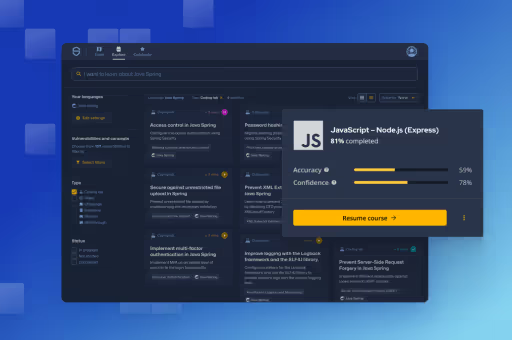
Secure Code Warrior ist für Ihr Unternehmen da, um Ihnen zu helfen, Code während des gesamten Softwareentwicklungszyklus zu sichern und eine Kultur zu schaffen, in der Cybersicherheit an erster Stelle steht. Ganz gleich, ob Sie AppSec-Manager, Entwickler, CISO oder jemand anderes sind, der sich mit Sicherheit befasst, wir können Ihrem Unternehmen helfen, die mit unsicherem Code verbundenen Risiken zu reduzieren.
Eine Demo buchen


Matias Madou, Ph.D. ist Sicherheitsexperte, Forscher, CTO und Mitbegründer von Secure Code Warrior. Matias promovierte an der Universität Gent in Anwendungssicherheit mit Schwerpunkt auf statischen Analyselösungen. Später kam er zu Fortify in den USA, wo er feststellte, dass es nicht ausreichte, ausschließlich Codeprobleme zu erkennen, ohne Entwicklern beim Schreiben von sicherem Code zu helfen. Dies inspirierte ihn dazu, Produkte zu entwickeln, die Entwickler unterstützen, die Sicherheitslast verringern und die Erwartungen der Kunden übertreffen. Wenn er nicht als Teil von Team Awesome an seinem Schreibtisch sitzt, steht er gerne auf der Bühne und präsentiert auf Konferenzen wie der RSA Conference, BlackHat und DefCon.
Matias ist Forscher und Entwickler mit mehr als 15 Jahren praktischer Erfahrung in der Softwaresicherheit. Er hat Lösungen für Unternehmen wie Fortify Software und sein eigenes Unternehmen Sensei Security entwickelt. Im Laufe seiner Karriere hat Matias mehrere Forschungsprojekte zur Anwendungssicherheit geleitet, die zu kommerziellen Produkten geführt haben, und verfügt über mehr als 10 Patente. Wenn er nicht an seinem Schreibtisch ist, war Matias als Ausbilder für fortgeschrittene Schulungen zur Anwendungssicherheit tätig und hält regelmäßig Vorträge auf globalen Konferenzen wie RSA Conference, Black Hat, DefCon, BSIMM, OWASP AppSec und BruCon.
Matias hat an der Universität Gent in Computertechnik promoviert, wo er Anwendungssicherheit durch Programmverschleierung studierte, um das Innenleben einer Anwendung zu verbergen.

A version of this article originally appeared in DZone. It has been updated and syndicated here.
The Payment Card Industry Data Security Standard (PCI DSS) version 4.0 will change almost everything about security for any business or organization that accepts electronic payments, which is a vast majority of them. And make no mistake, this update will be transformative for most businesses, requiring them to upgrade many of their security processes and potentially roll out new protections regarding encryption, authentication, access control, key management, and other areas that they may have been slow to embrace before now.
Due to the complexity of the new requirements, organizations have been given until March 2025 to become fully compliant. But that deadline will arrive sooner than most people realize. In fact, many forward-thinking companies are taking steps right now to enable their developers to navigate the pending compliance landscape.
Going beyond check-the-box training
An organization’s developers write the code that much of their infrastructure relies on, so it makes sense that they are a good place to start when it comes to implementing the new PCI DSS 4.0 requirements. However, most developers will need strategic support to upskill as part of an updated security awareness program. This is to ensure that they have the experience needed to implement and maintain the higher levels of security required by the new standard.
In fact, requirement 12.6.2 of PCI DSS 4.0 directs organizations to implement a formal security program, and to keep it updated with the latest threat information and defensive techniques. With the older standard, basic security programs or even “check-the-box”-style annual compliance training met the objective. This new standard mandates so much more, even requiring that security training programs address specific threats and vulnerabilities within a company’s environment. For example, if stolen identities are a big problem for an organization, then the training needs to address that.
It's clear that minimal training will no longer be adequate from either a practical standpoint or for complying with the new standard. Instead, organizations need to provide developers with comprehensive, agile learning pathways that teach them how to apply security best practices to their real, everyday work. By going beyond minimum compliance efforts and providing developers with the resources they need to truly understand security, organizations can empower their developers to make better security decisions overall while also complying with PCI DSS 4.0.
The good news is that many of the new requirements in PCI DSS 4.0 are targeted toward areas that most developers are already familiar with like authentication, encryption, access control, key management, and others. When developers are given right-fit, relevant and familiar resources to grow their skills, organizations can more easily prepare them for the new standards and increased responsibilities that PCI DSS 4.0 will require.
Using PCI DSS 4.0 as a runway to better security overall
While addressing developer needs with good security education will be key to successfully complying with the new PCI DSS 4.0 standard, the effort of moving an organization towards better cybersecurity does not need to end there. Yes, the requirements are rigorous, but since most organizations will need to work to comply with them, there is no reason not to use that effort as a springboard for launching better security awareness and training overall. This will not only help an organization meet compliance requirements, but also start to foster a culture of positive security that prioritizes best practices and ensures that everyone in the organization is working towards the same, security-first goal.
There is a learning curve, sure, but developers will likely be on board with such an effort. In an Evans Data survey of over 1,200 professional developers actively working around the world, the overwhelming majority said they were supportive of the concept of creating secure code and establishing a better security culture at their organizations. It’s clear that most developers welcome a strategic, supported shift to secure coding and a reprioritizing of security as part of the development process.
The security upgrades mandated by PCI DSS 4.0 provide a perfect excuse for companies to invest in improved security best practices and training, and to embrace a better overall security culture within their organization.
Developers can more easily achieve higher levels of security maturity if their companies invest in a program that lets them integrate their skills in secure coding with relevant tools and training. This can, in turn, help to create a culture of security where developers are further empowered to make better decisions that improve their organization’s overall security posture well beyond even the rigorous new PCI DSS 4.0 standards.


A version of this article originally appeared in DZone. It has been updated and syndicated here.
The Payment Card Industry Data Security Standard (PCI DSS) version 4.0 will change almost everything about security for any business or organization that accepts electronic payments, which is a vast majority of them. And make no mistake, this update will be transformative for most businesses, requiring them to upgrade many of their security processes and potentially roll out new protections regarding encryption, authentication, access control, key management, and other areas that they may have been slow to embrace before now.
Due to the complexity of the new requirements, organizations have been given until March 2025 to become fully compliant. But that deadline will arrive sooner than most people realize. In fact, many forward-thinking companies are taking steps right now to enable their developers to navigate the pending compliance landscape.
Going beyond check-the-box training
An organization’s developers write the code that much of their infrastructure relies on, so it makes sense that they are a good place to start when it comes to implementing the new PCI DSS 4.0 requirements. However, most developers will need strategic support to upskill as part of an updated security awareness program. This is to ensure that they have the experience needed to implement and maintain the higher levels of security required by the new standard.
In fact, requirement 12.6.2 of PCI DSS 4.0 directs organizations to implement a formal security program, and to keep it updated with the latest threat information and defensive techniques. With the older standard, basic security programs or even “check-the-box”-style annual compliance training met the objective. This new standard mandates so much more, even requiring that security training programs address specific threats and vulnerabilities within a company’s environment. For example, if stolen identities are a big problem for an organization, then the training needs to address that.
It's clear that minimal training will no longer be adequate from either a practical standpoint or for complying with the new standard. Instead, organizations need to provide developers with comprehensive, agile learning pathways that teach them how to apply security best practices to their real, everyday work. By going beyond minimum compliance efforts and providing developers with the resources they need to truly understand security, organizations can empower their developers to make better security decisions overall while also complying with PCI DSS 4.0.
The good news is that many of the new requirements in PCI DSS 4.0 are targeted toward areas that most developers are already familiar with like authentication, encryption, access control, key management, and others. When developers are given right-fit, relevant and familiar resources to grow their skills, organizations can more easily prepare them for the new standards and increased responsibilities that PCI DSS 4.0 will require.
Using PCI DSS 4.0 as a runway to better security overall
While addressing developer needs with good security education will be key to successfully complying with the new PCI DSS 4.0 standard, the effort of moving an organization towards better cybersecurity does not need to end there. Yes, the requirements are rigorous, but since most organizations will need to work to comply with them, there is no reason not to use that effort as a springboard for launching better security awareness and training overall. This will not only help an organization meet compliance requirements, but also start to foster a culture of positive security that prioritizes best practices and ensures that everyone in the organization is working towards the same, security-first goal.
There is a learning curve, sure, but developers will likely be on board with such an effort. In an Evans Data survey of over 1,200 professional developers actively working around the world, the overwhelming majority said they were supportive of the concept of creating secure code and establishing a better security culture at their organizations. It’s clear that most developers welcome a strategic, supported shift to secure coding and a reprioritizing of security as part of the development process.
The security upgrades mandated by PCI DSS 4.0 provide a perfect excuse for companies to invest in improved security best practices and training, and to embrace a better overall security culture within their organization.
Developers can more easily achieve higher levels of security maturity if their companies invest in a program that lets them integrate their skills in secure coding with relevant tools and training. This can, in turn, help to create a culture of security where developers are further empowered to make better decisions that improve their organization’s overall security posture well beyond even the rigorous new PCI DSS 4.0 standards.
Klicken Sie auf den Link unten und laden Sie das PDF dieser Ressource herunter.
Secure Code Warrior ist für Ihr Unternehmen da, um Ihnen zu helfen, Code während des gesamten Softwareentwicklungszyklus zu sichern und eine Kultur zu schaffen, in der Cybersicherheit an erster Stelle steht. Ganz gleich, ob Sie AppSec-Manager, Entwickler, CISO oder jemand anderes sind, der sich mit Sicherheit befasst, wir können Ihrem Unternehmen helfen, die mit unsicherem Code verbundenen Risiken zu reduzieren.
Bericht ansehenEine Demo buchen
Matias Madou, Ph.D. ist Sicherheitsexperte, Forscher, CTO und Mitbegründer von Secure Code Warrior. Matias promovierte an der Universität Gent in Anwendungssicherheit mit Schwerpunkt auf statischen Analyselösungen. Später kam er zu Fortify in den USA, wo er feststellte, dass es nicht ausreichte, ausschließlich Codeprobleme zu erkennen, ohne Entwicklern beim Schreiben von sicherem Code zu helfen. Dies inspirierte ihn dazu, Produkte zu entwickeln, die Entwickler unterstützen, die Sicherheitslast verringern und die Erwartungen der Kunden übertreffen. Wenn er nicht als Teil von Team Awesome an seinem Schreibtisch sitzt, steht er gerne auf der Bühne und präsentiert auf Konferenzen wie der RSA Conference, BlackHat und DefCon.
Matias ist Forscher und Entwickler mit mehr als 15 Jahren praktischer Erfahrung in der Softwaresicherheit. Er hat Lösungen für Unternehmen wie Fortify Software und sein eigenes Unternehmen Sensei Security entwickelt. Im Laufe seiner Karriere hat Matias mehrere Forschungsprojekte zur Anwendungssicherheit geleitet, die zu kommerziellen Produkten geführt haben, und verfügt über mehr als 10 Patente. Wenn er nicht an seinem Schreibtisch ist, war Matias als Ausbilder für fortgeschrittene Schulungen zur Anwendungssicherheit tätig und hält regelmäßig Vorträge auf globalen Konferenzen wie RSA Conference, Black Hat, DefCon, BSIMM, OWASP AppSec und BruCon.
Matias hat an der Universität Gent in Computertechnik promoviert, wo er Anwendungssicherheit durch Programmverschleierung studierte, um das Innenleben einer Anwendung zu verbergen.
A version of this article originally appeared in DZone. It has been updated and syndicated here.
The Payment Card Industry Data Security Standard (PCI DSS) version 4.0 will change almost everything about security for any business or organization that accepts electronic payments, which is a vast majority of them. And make no mistake, this update will be transformative for most businesses, requiring them to upgrade many of their security processes and potentially roll out new protections regarding encryption, authentication, access control, key management, and other areas that they may have been slow to embrace before now.
Due to the complexity of the new requirements, organizations have been given until March 2025 to become fully compliant. But that deadline will arrive sooner than most people realize. In fact, many forward-thinking companies are taking steps right now to enable their developers to navigate the pending compliance landscape.
Going beyond check-the-box training
An organization’s developers write the code that much of their infrastructure relies on, so it makes sense that they are a good place to start when it comes to implementing the new PCI DSS 4.0 requirements. However, most developers will need strategic support to upskill as part of an updated security awareness program. This is to ensure that they have the experience needed to implement and maintain the higher levels of security required by the new standard.
In fact, requirement 12.6.2 of PCI DSS 4.0 directs organizations to implement a formal security program, and to keep it updated with the latest threat information and defensive techniques. With the older standard, basic security programs or even “check-the-box”-style annual compliance training met the objective. This new standard mandates so much more, even requiring that security training programs address specific threats and vulnerabilities within a company’s environment. For example, if stolen identities are a big problem for an organization, then the training needs to address that.
It's clear that minimal training will no longer be adequate from either a practical standpoint or for complying with the new standard. Instead, organizations need to provide developers with comprehensive, agile learning pathways that teach them how to apply security best practices to their real, everyday work. By going beyond minimum compliance efforts and providing developers with the resources they need to truly understand security, organizations can empower their developers to make better security decisions overall while also complying with PCI DSS 4.0.
The good news is that many of the new requirements in PCI DSS 4.0 are targeted toward areas that most developers are already familiar with like authentication, encryption, access control, key management, and others. When developers are given right-fit, relevant and familiar resources to grow their skills, organizations can more easily prepare them for the new standards and increased responsibilities that PCI DSS 4.0 will require.
Using PCI DSS 4.0 as a runway to better security overall
While addressing developer needs with good security education will be key to successfully complying with the new PCI DSS 4.0 standard, the effort of moving an organization towards better cybersecurity does not need to end there. Yes, the requirements are rigorous, but since most organizations will need to work to comply with them, there is no reason not to use that effort as a springboard for launching better security awareness and training overall. This will not only help an organization meet compliance requirements, but also start to foster a culture of positive security that prioritizes best practices and ensures that everyone in the organization is working towards the same, security-first goal.
There is a learning curve, sure, but developers will likely be on board with such an effort. In an Evans Data survey of over 1,200 professional developers actively working around the world, the overwhelming majority said they were supportive of the concept of creating secure code and establishing a better security culture at their organizations. It’s clear that most developers welcome a strategic, supported shift to secure coding and a reprioritizing of security as part of the development process.
The security upgrades mandated by PCI DSS 4.0 provide a perfect excuse for companies to invest in improved security best practices and training, and to embrace a better overall security culture within their organization.
Developers can more easily achieve higher levels of security maturity if their companies invest in a program that lets them integrate their skills in secure coding with relevant tools and training. This can, in turn, help to create a culture of security where developers are further empowered to make better decisions that improve their organization’s overall security posture well beyond even the rigorous new PCI DSS 4.0 standards.
Inhaltsverzeichniss
Matias Madou, Ph.D. ist Sicherheitsexperte, Forscher, CTO und Mitbegründer von Secure Code Warrior. Matias promovierte an der Universität Gent in Anwendungssicherheit mit Schwerpunkt auf statischen Analyselösungen. Später kam er zu Fortify in den USA, wo er feststellte, dass es nicht ausreichte, ausschließlich Codeprobleme zu erkennen, ohne Entwicklern beim Schreiben von sicherem Code zu helfen. Dies inspirierte ihn dazu, Produkte zu entwickeln, die Entwickler unterstützen, die Sicherheitslast verringern und die Erwartungen der Kunden übertreffen. Wenn er nicht als Teil von Team Awesome an seinem Schreibtisch sitzt, steht er gerne auf der Bühne und präsentiert auf Konferenzen wie der RSA Conference, BlackHat und DefCon.
Secure Code Warrior ist für Ihr Unternehmen da, um Ihnen zu helfen, Code während des gesamten Softwareentwicklungszyklus zu sichern und eine Kultur zu schaffen, in der Cybersicherheit an erster Stelle steht. Ganz gleich, ob Sie AppSec-Manager, Entwickler, CISO oder jemand anderes sind, der sich mit Sicherheit befasst, wir können Ihrem Unternehmen helfen, die mit unsicherem Code verbundenen Risiken zu reduzieren.
Eine Demo buchenHerunterladenRessourcen für den Einstieg


Ressourcen für den Einstieg

Secure coding learning that reflects real AI usage
Align secure coding training to real AI development activity — automatically assigning guidance to developers using AI tools, without manual intervention.Align secure coding training to real AI development activity — automatically assigning guidance to developers using AI tools, without manual intervention.
Train developers on the real risks in their code, whether human-written or AI-generated
Adaptive Learning auto-assigns targeted secure coding training to the developers introducing real vulnerabilities, reducing recurring risks at the source.Secure Code Warrior blog banner with a blue overlay over a developer working at a multi-monitor desk displaying code, alongside the headline 'Train developers on the real risks in their code.'l