

Wie erstklassige CISOs 2023 mehr Budget und Vertrauen in den Vorstand gewinnen


This article first appeared in SC Magazine. It has been updated and synidcated here.
CISOs are finding themselves in an increasingly fraught position: Protect more assets, ship more code, reduce a bigger attack surface, and do it with rapidly diminishing financial resources. It’s an inescapable fact that cybersecurity is viewed as a cost center, and despite an organization’s security program being what stands in the way of a threat actor making them tomorrow’s disastrous headline, security leaders must do more to sell in and prove the overall business value of the department, in language that makes sense to the executive body.
World-class CISOs are rising to the occasion, leading holistic security programs that enhance customer trust, brand reputation, and utilize all the tools available to them to create undeniable value. It starts with a strategic, preventative approach to common security pitfalls, and leaving behind the mentality that there is never enough time, resources, or personnel to maintain security excellence.
Change the discussion in the board room.
In the current economic climate, few companies and departments are escaping scrutiny for the money they spend, the hires they make, and their strategic impact on business objectives. Although it may seem a no-brainer that the modern enterprise requires an expansive cybersecurity program, it represents a significant cost to the organization that isn’t straightforward to justify in terms of return on investment.
C-Suite leaders and board stakeholders will need to clearly understand the projected outcomes from the investment cybersecurity initiatives, in terms that make sense outside of numbers in a spreadsheet. They will have different levels of technical knowledge and understanding, and CISOs must make an effort to present their case with accessible messaging. Explain the magnitude of the program, what needs protecting, and who needs to be enabled in order to provide a best-in-class example. Attacks are on the rise, yet budgets are not keeping up, and fighting the good fight starts with a verbal campaign to justify its merit.
It has long been said that, regardless of vertical, every company is fast becoming a technology company. With a digital-first approach the norm in most organizations, this represents an enormous attack surface that needs the best protection that can be afforded at the time. Security leaders wear many hats, but one that is overlooked (until it is too late) is that they are essentially the custodians of customer trust. This cannot be overstated as a value proposition, and is just as vital as sales and marketing goals.
Prove the value of a preventative approach to security.
Current cybersecurity statistics are hair-raising, but playing into FUD and scaremongering is usually a futile tactic when it comes to winning more budget. Few members of a company’s leadership team would argue that cybersecurity isn’t a priority, but they are far more likely to be receptive to budget increases if an enterprising strategy is put forward that utilizes existing resources for better outcomes.
According to recent research by the Neustar International Security Council, just 50% of companies feel they have an adequate budget to tackle their known cybersecurity issues. And with global cyberattacks increasing by 38% between 2021 and 2022, this is likely to represent an even more difficult road ahead for the average CISO. However, truly world-class security leaders are capable of rising above these pain points and innovating through adversity.
In many scenarios, prevention is easier and more straightforward than a cure, and cybersecurity is no different. A holistic security program must extend well beyond reactive measures, and with vulnerability management among the top three concerns for many CISOs, it makes sense that developers are an integral part of that movement. They need hands-on education to tackle common security bugs head-on, helping them eliminate these issues at the source and ensure they never make it to production in the first place. We’re now at the point where we cannot keep excusing low-quality, insecure code, and upskilling the development cohort is by far the most cost-effective, potent remedy for code-level vulnerabilities.
It is vital that CISOs fight to retain existing budget, and detailing the benefits of role-based security upskilling, especially for developers, is a quicker win than adding the next “silver bullet” to an unwieldy security tech stack.
Security should be part of the brand fundamentals.
Most CISOs didn’t get into their role to exercise a passion for marketing, but this is one area you could stand to work on, at least when presenting your case to those who hold the purse strings.
The impact of a cybersecurity program on customer trust and brand loyalty cannot be overstated, and a large-scale breach can cause an exodus of biblical proportions. In contrast, by aligning your stringent security practices with core brand values, you send a clear message that data privacy and protection is not just front of mind, but something on which customers can rely.
It is critical that the modern CISO takes the time to highlight the competitive advantages of security strategy and policy as it relates to ongoing positive customer sentiment and trust; reactive security alone won’t have the same impact, and a balanced approach that focuses on protecting privileged assets with every available resource can be the ultimate differentiator.
There’s no more room for excuses, but there are plenty of compelling reasons CISOs can highlight in their quest for adequate funding for a truly transformative security strategy.

CISOs befinden sich in einer zunehmend angespannten Lage: Schützen Sie mehr Ressourcen, versenden mehr Code, reduzieren eine größere Angriffsfläche und das mit schnell abnehmenden finanziellen Ressourcen. Es ist eine unausweichliche Tatsache, dass Cybersicherheit als Kostenstelle angesehen wird, und obwohl das Sicherheitsprogramm eines Unternehmens das ist, was einem Bedrohungsakteur im Weg steht, ihn zur katastrophalen Schlagzeile von morgen zu machen, müssen Sicherheitsverantwortliche mehr tun, um den allgemeinen Geschäftswert der Abteilung zu verkaufen und zu beweisen, und zwar in einer Sprache, die für die Exekutive sinnvoll ist.
Matias Madou, Ph.D. ist Sicherheitsexperte, Forscher, CTO und Mitbegründer von Secure Code Warrior. Matias promovierte an der Universität Gent in Anwendungssicherheit mit Schwerpunkt auf statischen Analyselösungen. Später kam er zu Fortify in den USA, wo er feststellte, dass es nicht ausreichte, ausschließlich Codeprobleme zu erkennen, ohne Entwicklern beim Schreiben von sicherem Code zu helfen. Dies inspirierte ihn dazu, Produkte zu entwickeln, die Entwickler unterstützen, die Sicherheitslast verringern und die Erwartungen der Kunden übertreffen. Wenn er nicht als Teil von Team Awesome an seinem Schreibtisch sitzt, steht er gerne auf der Bühne und präsentiert auf Konferenzen wie der RSA Conference, BlackHat und DefCon.
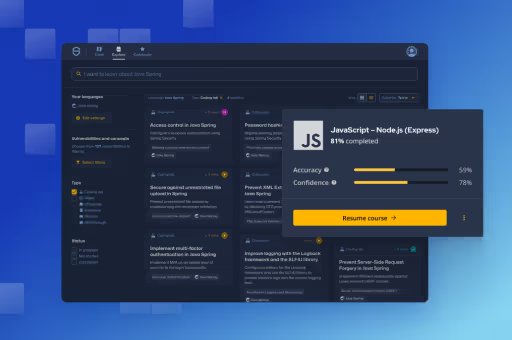
Secure Code Warrior ist für Ihr Unternehmen da, um Ihnen zu helfen, Code während des gesamten Softwareentwicklungszyklus zu sichern und eine Kultur zu schaffen, in der Cybersicherheit an erster Stelle steht. Ganz gleich, ob Sie AppSec-Manager, Entwickler, CISO oder jemand anderes sind, der sich mit Sicherheit befasst, wir können Ihrem Unternehmen helfen, die mit unsicherem Code verbundenen Risiken zu reduzieren.
Eine Demo buchen


Matias Madou, Ph.D. ist Sicherheitsexperte, Forscher, CTO und Mitbegründer von Secure Code Warrior. Matias promovierte an der Universität Gent in Anwendungssicherheit mit Schwerpunkt auf statischen Analyselösungen. Später kam er zu Fortify in den USA, wo er feststellte, dass es nicht ausreichte, ausschließlich Codeprobleme zu erkennen, ohne Entwicklern beim Schreiben von sicherem Code zu helfen. Dies inspirierte ihn dazu, Produkte zu entwickeln, die Entwickler unterstützen, die Sicherheitslast verringern und die Erwartungen der Kunden übertreffen. Wenn er nicht als Teil von Team Awesome an seinem Schreibtisch sitzt, steht er gerne auf der Bühne und präsentiert auf Konferenzen wie der RSA Conference, BlackHat und DefCon.
Matias ist Forscher und Entwickler mit mehr als 15 Jahren praktischer Erfahrung in der Softwaresicherheit. Er hat Lösungen für Unternehmen wie Fortify Software und sein eigenes Unternehmen Sensei Security entwickelt. Im Laufe seiner Karriere hat Matias mehrere Forschungsprojekte zur Anwendungssicherheit geleitet, die zu kommerziellen Produkten geführt haben, und verfügt über mehr als 10 Patente. Wenn er nicht an seinem Schreibtisch ist, war Matias als Ausbilder für fortgeschrittene Schulungen zur Anwendungssicherheit tätig und hält regelmäßig Vorträge auf globalen Konferenzen wie RSA Conference, Black Hat, DefCon, BSIMM, OWASP AppSec und BruCon.
Matias hat an der Universität Gent in Computertechnik promoviert, wo er Anwendungssicherheit durch Programmverschleierung studierte, um das Innenleben einer Anwendung zu verbergen.
This article first appeared in SC Magazine. It has been updated and synidcated here.
CISOs are finding themselves in an increasingly fraught position: Protect more assets, ship more code, reduce a bigger attack surface, and do it with rapidly diminishing financial resources. It’s an inescapable fact that cybersecurity is viewed as a cost center, and despite an organization’s security program being what stands in the way of a threat actor making them tomorrow’s disastrous headline, security leaders must do more to sell in and prove the overall business value of the department, in language that makes sense to the executive body.
World-class CISOs are rising to the occasion, leading holistic security programs that enhance customer trust, brand reputation, and utilize all the tools available to them to create undeniable value. It starts with a strategic, preventative approach to common security pitfalls, and leaving behind the mentality that there is never enough time, resources, or personnel to maintain security excellence.
Change the discussion in the board room.
In the current economic climate, few companies and departments are escaping scrutiny for the money they spend, the hires they make, and their strategic impact on business objectives. Although it may seem a no-brainer that the modern enterprise requires an expansive cybersecurity program, it represents a significant cost to the organization that isn’t straightforward to justify in terms of return on investment.
C-Suite leaders and board stakeholders will need to clearly understand the projected outcomes from the investment cybersecurity initiatives, in terms that make sense outside of numbers in a spreadsheet. They will have different levels of technical knowledge and understanding, and CISOs must make an effort to present their case with accessible messaging. Explain the magnitude of the program, what needs protecting, and who needs to be enabled in order to provide a best-in-class example. Attacks are on the rise, yet budgets are not keeping up, and fighting the good fight starts with a verbal campaign to justify its merit.
It has long been said that, regardless of vertical, every company is fast becoming a technology company. With a digital-first approach the norm in most organizations, this represents an enormous attack surface that needs the best protection that can be afforded at the time. Security leaders wear many hats, but one that is overlooked (until it is too late) is that they are essentially the custodians of customer trust. This cannot be overstated as a value proposition, and is just as vital as sales and marketing goals.
Prove the value of a preventative approach to security.
Current cybersecurity statistics are hair-raising, but playing into FUD and scaremongering is usually a futile tactic when it comes to winning more budget. Few members of a company’s leadership team would argue that cybersecurity isn’t a priority, but they are far more likely to be receptive to budget increases if an enterprising strategy is put forward that utilizes existing resources for better outcomes.
According to recent research by the Neustar International Security Council, just 50% of companies feel they have an adequate budget to tackle their known cybersecurity issues. And with global cyberattacks increasing by 38% between 2021 and 2022, this is likely to represent an even more difficult road ahead for the average CISO. However, truly world-class security leaders are capable of rising above these pain points and innovating through adversity.
In many scenarios, prevention is easier and more straightforward than a cure, and cybersecurity is no different. A holistic security program must extend well beyond reactive measures, and with vulnerability management among the top three concerns for many CISOs, it makes sense that developers are an integral part of that movement. They need hands-on education to tackle common security bugs head-on, helping them eliminate these issues at the source and ensure they never make it to production in the first place. We’re now at the point where we cannot keep excusing low-quality, insecure code, and upskilling the development cohort is by far the most cost-effective, potent remedy for code-level vulnerabilities.
It is vital that CISOs fight to retain existing budget, and detailing the benefits of role-based security upskilling, especially for developers, is a quicker win than adding the next “silver bullet” to an unwieldy security tech stack.
Security should be part of the brand fundamentals.
Most CISOs didn’t get into their role to exercise a passion for marketing, but this is one area you could stand to work on, at least when presenting your case to those who hold the purse strings.
The impact of a cybersecurity program on customer trust and brand loyalty cannot be overstated, and a large-scale breach can cause an exodus of biblical proportions. In contrast, by aligning your stringent security practices with core brand values, you send a clear message that data privacy and protection is not just front of mind, but something on which customers can rely.
It is critical that the modern CISO takes the time to highlight the competitive advantages of security strategy and policy as it relates to ongoing positive customer sentiment and trust; reactive security alone won’t have the same impact, and a balanced approach that focuses on protecting privileged assets with every available resource can be the ultimate differentiator.
There’s no more room for excuses, but there are plenty of compelling reasons CISOs can highlight in their quest for adequate funding for a truly transformative security strategy.


This article first appeared in SC Magazine. It has been updated and synidcated here.
CISOs are finding themselves in an increasingly fraught position: Protect more assets, ship more code, reduce a bigger attack surface, and do it with rapidly diminishing financial resources. It’s an inescapable fact that cybersecurity is viewed as a cost center, and despite an organization’s security program being what stands in the way of a threat actor making them tomorrow’s disastrous headline, security leaders must do more to sell in and prove the overall business value of the department, in language that makes sense to the executive body.
World-class CISOs are rising to the occasion, leading holistic security programs that enhance customer trust, brand reputation, and utilize all the tools available to them to create undeniable value. It starts with a strategic, preventative approach to common security pitfalls, and leaving behind the mentality that there is never enough time, resources, or personnel to maintain security excellence.
Change the discussion in the board room.
In the current economic climate, few companies and departments are escaping scrutiny for the money they spend, the hires they make, and their strategic impact on business objectives. Although it may seem a no-brainer that the modern enterprise requires an expansive cybersecurity program, it represents a significant cost to the organization that isn’t straightforward to justify in terms of return on investment.
C-Suite leaders and board stakeholders will need to clearly understand the projected outcomes from the investment cybersecurity initiatives, in terms that make sense outside of numbers in a spreadsheet. They will have different levels of technical knowledge and understanding, and CISOs must make an effort to present their case with accessible messaging. Explain the magnitude of the program, what needs protecting, and who needs to be enabled in order to provide a best-in-class example. Attacks are on the rise, yet budgets are not keeping up, and fighting the good fight starts with a verbal campaign to justify its merit.
It has long been said that, regardless of vertical, every company is fast becoming a technology company. With a digital-first approach the norm in most organizations, this represents an enormous attack surface that needs the best protection that can be afforded at the time. Security leaders wear many hats, but one that is overlooked (until it is too late) is that they are essentially the custodians of customer trust. This cannot be overstated as a value proposition, and is just as vital as sales and marketing goals.
Prove the value of a preventative approach to security.
Current cybersecurity statistics are hair-raising, but playing into FUD and scaremongering is usually a futile tactic when it comes to winning more budget. Few members of a company’s leadership team would argue that cybersecurity isn’t a priority, but they are far more likely to be receptive to budget increases if an enterprising strategy is put forward that utilizes existing resources for better outcomes.
According to recent research by the Neustar International Security Council, just 50% of companies feel they have an adequate budget to tackle their known cybersecurity issues. And with global cyberattacks increasing by 38% between 2021 and 2022, this is likely to represent an even more difficult road ahead for the average CISO. However, truly world-class security leaders are capable of rising above these pain points and innovating through adversity.
In many scenarios, prevention is easier and more straightforward than a cure, and cybersecurity is no different. A holistic security program must extend well beyond reactive measures, and with vulnerability management among the top three concerns for many CISOs, it makes sense that developers are an integral part of that movement. They need hands-on education to tackle common security bugs head-on, helping them eliminate these issues at the source and ensure they never make it to production in the first place. We’re now at the point where we cannot keep excusing low-quality, insecure code, and upskilling the development cohort is by far the most cost-effective, potent remedy for code-level vulnerabilities.
It is vital that CISOs fight to retain existing budget, and detailing the benefits of role-based security upskilling, especially for developers, is a quicker win than adding the next “silver bullet” to an unwieldy security tech stack.
Security should be part of the brand fundamentals.
Most CISOs didn’t get into their role to exercise a passion for marketing, but this is one area you could stand to work on, at least when presenting your case to those who hold the purse strings.
The impact of a cybersecurity program on customer trust and brand loyalty cannot be overstated, and a large-scale breach can cause an exodus of biblical proportions. In contrast, by aligning your stringent security practices with core brand values, you send a clear message that data privacy and protection is not just front of mind, but something on which customers can rely.
It is critical that the modern CISO takes the time to highlight the competitive advantages of security strategy and policy as it relates to ongoing positive customer sentiment and trust; reactive security alone won’t have the same impact, and a balanced approach that focuses on protecting privileged assets with every available resource can be the ultimate differentiator.
There’s no more room for excuses, but there are plenty of compelling reasons CISOs can highlight in their quest for adequate funding for a truly transformative security strategy.
Klicken Sie auf den Link unten und laden Sie das PDF dieser Ressource herunter.
Secure Code Warrior ist für Ihr Unternehmen da, um Ihnen zu helfen, Code während des gesamten Softwareentwicklungszyklus zu sichern und eine Kultur zu schaffen, in der Cybersicherheit an erster Stelle steht. Ganz gleich, ob Sie AppSec-Manager, Entwickler, CISO oder jemand anderes sind, der sich mit Sicherheit befasst, wir können Ihrem Unternehmen helfen, die mit unsicherem Code verbundenen Risiken zu reduzieren.
Bericht ansehenEine Demo buchen
Matias Madou, Ph.D. ist Sicherheitsexperte, Forscher, CTO und Mitbegründer von Secure Code Warrior. Matias promovierte an der Universität Gent in Anwendungssicherheit mit Schwerpunkt auf statischen Analyselösungen. Später kam er zu Fortify in den USA, wo er feststellte, dass es nicht ausreichte, ausschließlich Codeprobleme zu erkennen, ohne Entwicklern beim Schreiben von sicherem Code zu helfen. Dies inspirierte ihn dazu, Produkte zu entwickeln, die Entwickler unterstützen, die Sicherheitslast verringern und die Erwartungen der Kunden übertreffen. Wenn er nicht als Teil von Team Awesome an seinem Schreibtisch sitzt, steht er gerne auf der Bühne und präsentiert auf Konferenzen wie der RSA Conference, BlackHat und DefCon.
Matias ist Forscher und Entwickler mit mehr als 15 Jahren praktischer Erfahrung in der Softwaresicherheit. Er hat Lösungen für Unternehmen wie Fortify Software und sein eigenes Unternehmen Sensei Security entwickelt. Im Laufe seiner Karriere hat Matias mehrere Forschungsprojekte zur Anwendungssicherheit geleitet, die zu kommerziellen Produkten geführt haben, und verfügt über mehr als 10 Patente. Wenn er nicht an seinem Schreibtisch ist, war Matias als Ausbilder für fortgeschrittene Schulungen zur Anwendungssicherheit tätig und hält regelmäßig Vorträge auf globalen Konferenzen wie RSA Conference, Black Hat, DefCon, BSIMM, OWASP AppSec und BruCon.
Matias hat an der Universität Gent in Computertechnik promoviert, wo er Anwendungssicherheit durch Programmverschleierung studierte, um das Innenleben einer Anwendung zu verbergen.
This article first appeared in SC Magazine. It has been updated and synidcated here.
CISOs are finding themselves in an increasingly fraught position: Protect more assets, ship more code, reduce a bigger attack surface, and do it with rapidly diminishing financial resources. It’s an inescapable fact that cybersecurity is viewed as a cost center, and despite an organization’s security program being what stands in the way of a threat actor making them tomorrow’s disastrous headline, security leaders must do more to sell in and prove the overall business value of the department, in language that makes sense to the executive body.
World-class CISOs are rising to the occasion, leading holistic security programs that enhance customer trust, brand reputation, and utilize all the tools available to them to create undeniable value. It starts with a strategic, preventative approach to common security pitfalls, and leaving behind the mentality that there is never enough time, resources, or personnel to maintain security excellence.
Change the discussion in the board room.
In the current economic climate, few companies and departments are escaping scrutiny for the money they spend, the hires they make, and their strategic impact on business objectives. Although it may seem a no-brainer that the modern enterprise requires an expansive cybersecurity program, it represents a significant cost to the organization that isn’t straightforward to justify in terms of return on investment.
C-Suite leaders and board stakeholders will need to clearly understand the projected outcomes from the investment cybersecurity initiatives, in terms that make sense outside of numbers in a spreadsheet. They will have different levels of technical knowledge and understanding, and CISOs must make an effort to present their case with accessible messaging. Explain the magnitude of the program, what needs protecting, and who needs to be enabled in order to provide a best-in-class example. Attacks are on the rise, yet budgets are not keeping up, and fighting the good fight starts with a verbal campaign to justify its merit.
It has long been said that, regardless of vertical, every company is fast becoming a technology company. With a digital-first approach the norm in most organizations, this represents an enormous attack surface that needs the best protection that can be afforded at the time. Security leaders wear many hats, but one that is overlooked (until it is too late) is that they are essentially the custodians of customer trust. This cannot be overstated as a value proposition, and is just as vital as sales and marketing goals.
Prove the value of a preventative approach to security.
Current cybersecurity statistics are hair-raising, but playing into FUD and scaremongering is usually a futile tactic when it comes to winning more budget. Few members of a company’s leadership team would argue that cybersecurity isn’t a priority, but they are far more likely to be receptive to budget increases if an enterprising strategy is put forward that utilizes existing resources for better outcomes.
According to recent research by the Neustar International Security Council, just 50% of companies feel they have an adequate budget to tackle their known cybersecurity issues. And with global cyberattacks increasing by 38% between 2021 and 2022, this is likely to represent an even more difficult road ahead for the average CISO. However, truly world-class security leaders are capable of rising above these pain points and innovating through adversity.
In many scenarios, prevention is easier and more straightforward than a cure, and cybersecurity is no different. A holistic security program must extend well beyond reactive measures, and with vulnerability management among the top three concerns for many CISOs, it makes sense that developers are an integral part of that movement. They need hands-on education to tackle common security bugs head-on, helping them eliminate these issues at the source and ensure they never make it to production in the first place. We’re now at the point where we cannot keep excusing low-quality, insecure code, and upskilling the development cohort is by far the most cost-effective, potent remedy for code-level vulnerabilities.
It is vital that CISOs fight to retain existing budget, and detailing the benefits of role-based security upskilling, especially for developers, is a quicker win than adding the next “silver bullet” to an unwieldy security tech stack.
Security should be part of the brand fundamentals.
Most CISOs didn’t get into their role to exercise a passion for marketing, but this is one area you could stand to work on, at least when presenting your case to those who hold the purse strings.
The impact of a cybersecurity program on customer trust and brand loyalty cannot be overstated, and a large-scale breach can cause an exodus of biblical proportions. In contrast, by aligning your stringent security practices with core brand values, you send a clear message that data privacy and protection is not just front of mind, but something on which customers can rely.
It is critical that the modern CISO takes the time to highlight the competitive advantages of security strategy and policy as it relates to ongoing positive customer sentiment and trust; reactive security alone won’t have the same impact, and a balanced approach that focuses on protecting privileged assets with every available resource can be the ultimate differentiator.
There’s no more room for excuses, but there are plenty of compelling reasons CISOs can highlight in their quest for adequate funding for a truly transformative security strategy.
Inhaltsverzeichniss
Matias Madou, Ph.D. ist Sicherheitsexperte, Forscher, CTO und Mitbegründer von Secure Code Warrior. Matias promovierte an der Universität Gent in Anwendungssicherheit mit Schwerpunkt auf statischen Analyselösungen. Später kam er zu Fortify in den USA, wo er feststellte, dass es nicht ausreichte, ausschließlich Codeprobleme zu erkennen, ohne Entwicklern beim Schreiben von sicherem Code zu helfen. Dies inspirierte ihn dazu, Produkte zu entwickeln, die Entwickler unterstützen, die Sicherheitslast verringern und die Erwartungen der Kunden übertreffen. Wenn er nicht als Teil von Team Awesome an seinem Schreibtisch sitzt, steht er gerne auf der Bühne und präsentiert auf Konferenzen wie der RSA Conference, BlackHat und DefCon.
Secure Code Warrior ist für Ihr Unternehmen da, um Ihnen zu helfen, Code während des gesamten Softwareentwicklungszyklus zu sichern und eine Kultur zu schaffen, in der Cybersicherheit an erster Stelle steht. Ganz gleich, ob Sie AppSec-Manager, Entwickler, CISO oder jemand anderes sind, der sich mit Sicherheit befasst, wir können Ihrem Unternehmen helfen, die mit unsicherem Code verbundenen Risiken zu reduzieren.
Eine Demo buchenHerunterladenRessourcen für den Einstieg


Ressourcen für den Einstieg

Secure coding learning that reflects real AI usage
Align secure coding training to real AI development activity — automatically assigning guidance to developers using AI tools, without manual intervention.Align secure coding training to real AI development activity — automatically assigning guidance to developers using AI tools, without manual intervention.
Train developers on the real risks in their code, whether human-written or AI-generated
Adaptive Learning auto-assigns targeted secure coding training to the developers introducing real vulnerabilities, reducing recurring risks at the source.Secure Code Warrior blog banner with a blue overlay over a developer working at a multi-monitor desk displaying code, alongside the headline 'Train developers on the real risks in their code.'l