




Insights from experts shaping secure development
Access expert content on secure coding, AI governance, and software risk management.


PCI-DSS 4.0 will be here sooner than you think, and it’s an opportunity to elevate your organization’s cyber resilience
Earlier this year, the PCI Security Standards Council revealed version 4.0 of their Payment Card Industry Data Security Standard (PCI DSS). While organizations won’t need to be fully compliant with 4.0 until March 2025, this update is their most transformative to date, and will require most businesses to assess (and likely upgrade) complex security processes, and elements of their tech stack. This is in addition to implementing role-based security awareness training and regular secure coding education for developers.

From training to agile learning: How an agile learning platform for secure code revolutionizes your approach to secure software
Learn how an agile learning platform for secure code upskills developers, reduces risk, and lowers technical debt over time by starting left in the SDLC.

Rethinking Software in the Organizational Hierarchy
By helping define the responsibilities of our apps and software within a tight hierarchy, and enforcing those policies with least privilege, we can make sure that our apps and software also survive and thrive despite the threat landscape arrayed against them.
Kamer van Koophandel Sets the Standard for Developer-Driven Security at Scale
Kamer van Koophandel shares how it embedded secure coding into everyday development through role-based certifications, Trust Score benchmarking, and a culture of shared security ownership.
Going for Gold: Soaring Secure Code Standards at Paysafe
See how Paysafe's partnership with Secure Code Warrior led to a 45% boost in developer productivity and a major reduction in code vulnerabilities.
DigitalOcean Decreases Security Debt with Secure Code Warrior
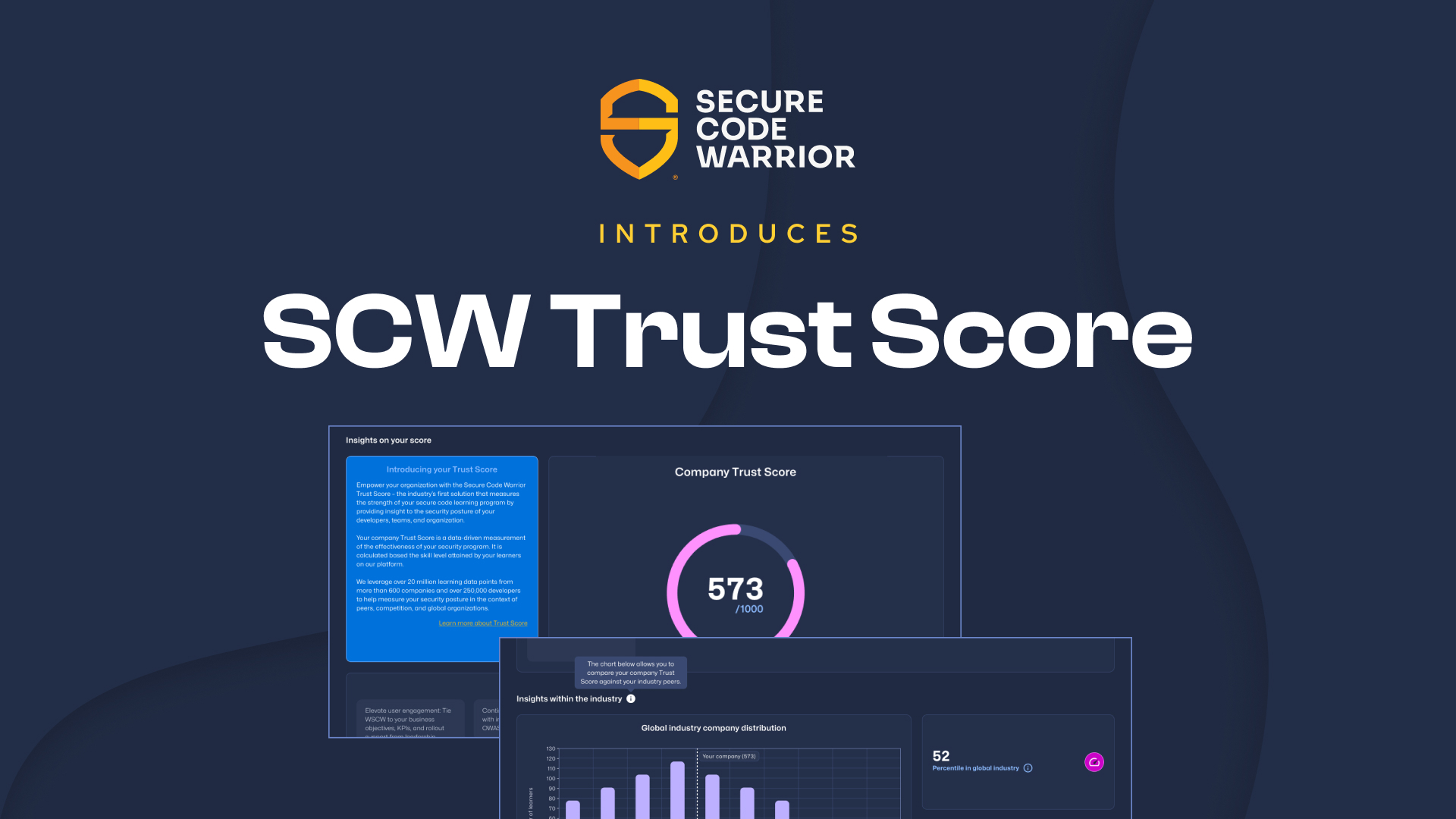
DigitalOcean's use of Secure Code Warrior training has significantly reduced security debt, allowing teams to focus more on innovation and productivity. The improved security has strengthened their product quality and competitive edge. Looking ahead, the SCW Trust Score will help them further enhance security practices and continue driving innovation.
Cyber Defense Magazine: Global InfoSec Awards 2026 Secure Code Warrior Wins Outstanding Achievement in Cybersecurity Risk Management and Compliance Excellence
Global InfoSec Awards 2026 Secure Code Warrior Wins Outstanding Achievement in Cybersecurity Risk Management and Compliance Excellence

ITWire: Secure Code Warrior Launches Trust Agent: AI to Enable Safe, Scalable AI-Driven Development
New AI Software Governance solution makes AI-generated code visible at commit, enforces policy before production, and connects real development behavior to measurable risk reduction.

DevOps.com: Secure Code Warrior AI Agent Applies Policies to AI Generated Code
Secure Code Warrior (SCW) this week added an artificial intelligence (AI) agent that both identifies code generated by an AI coding tool and automatically applies the appropriate governance policies.

Trust Agent:AI - Secure and scale AI-Drive development
AI is writing code. Who’s governing it? With up to 50% of AI-generated code containing security weaknesses, managing AI risk is critical. Discover how SCW's Trust Agent: AI provides the real-time visibility, proactive governance, and targeted upskilling needed to scale AI-driven development securely.
The Power of OpenText Application Security + Secure Code Warrior
OpenText Application Security and Secure Code Warrior combine vulnerability detection with AI Software Governance and developer capability. Together, they help organizations reduce risk, strengthen secure coding practices, and confidently adopt AI-driven development.

Secure Code Warrior corporate overview
Secure Code Warrior is an AI Software Governance platform designed to enable organizations to safely adopt AI-driven development by bridging the gap between development velocity and enterprise security. The platform addresses the "Visibility Gap," where security teams often lack insights into shadow AI coding tools and the origins of production code.