Blog

Cyber Resilience Act Explained: What It Means for Secure by Design Software Development

Shannon Holt
Published Feb 24, 2026
Last updated on Feb 24, 2026

The Cyber Resilience Act is rapidly becoming a strategic priority – not just for EU-based companies, but for any business selling digital products into the European market. While compliance deadlines extend into 2027, engineering and security teams are already asking hard questions about secure by design practices, vulnerability handling, and development capability.

Unlike many regulations that focus on documentation and audits, the CRA places secure software design and development at the heart of compliance. Organizations that invest early in secure by design capabilities will move into compliance faster – and stand out in a market where product security is becoming a purchasing decision.

What the Cyber Resilience Act Requires

The Cyber Resilience Act (CRA) introduces baseline cybersecurity requirements for most products with a digital component placed on the EU market – including software, operating systems, connected devices, and embedded systems.

More importantly, it shifts where responsibility sits.

Security is no longer only a runtime or operational concern. Under the CRA, it becomes a design and development obligation spanning architecture, implementation, maintenance, and vulnerability handling.

For engineering and security leaders, this means:

  • Products must be built according to secure by design principles
  • Known vulnerabilities must be prevented where possible and handled effectively
  • Organizations must demonstrate that secure development practices are in place

In short: compliance is inseparable from how developers write and maintain code.

Who the CRA Applies To

Although introduced by the EU, the CRA applies to any organization worldwide that places in-scope digital products on the EU market, including:

  • Software vendors and SaaS providers whose services function as remote data processing components of covered products
  • Manufacturers of digital or connected products
  • Importers, distributors, and retailers
  • Organizations embedding third-party digital components

For global enterprises, CRA readiness is a cross-border development requirement, not a regional compliance exercise.

Why Organizations Are Starting Now

Key milestones:

  • September 2026 – Vulnerability reporting obligations begin
  • December 2027 – Full compliance required

On paper, that timeline can look comfortable. In reality, development transformation does not happen in quarters – it happens over years.

Secure by design is not a policy update. It requires:

  • Upskilling thousands of development across languages and teams
  • Embedding secure by design expectations into day-to-day workflows
  • Shifting from reactive vulnerability remediation to prevention
  • Creating measurable evidence that secure development practices are consistently applied

These changes affect hiring, onboarding, architecture decisions, SDLC processes, and engineering culture. Organizations that delay until late 2026 will be attempting to retrofit capability under regulatory pressure – a far more expensive and disruptive path.

Enforcement also carries significant financial risk. Under Article 64 of the CRA, penalties can reach €15 million or 2.5% of global annual turnover for violations of essential cybersecurity requirements.

Waiting until late 2026 is simply too late.

CRA Is Ultimately a Developer Capability Challenge

Many regulations focus on policies and documentation. The CRA goes further by linking compliance to the actual practices used to design and build software. It raises expectations around secure development as an operational discipline, not just a governance requirement.

For engineering leaders, this means compliance depends on whether development teams consistently apply secure practices, including:

  • Understanding common vulnerability classes
  • Applying secure design and architecture principles
  • Avoiding insecure implementation patterns
  • Handling third-party and open-source components responsibly

Security tooling plays an important role in detecting issues. But tools surface weaknesses after code is written. Secure by design requires developers to prevent vulnerabilities in the first place – and to do so consistently across teams, languages, and products.

Tools alone cannot achieve this. Secure by design outcomes depend on human capability.
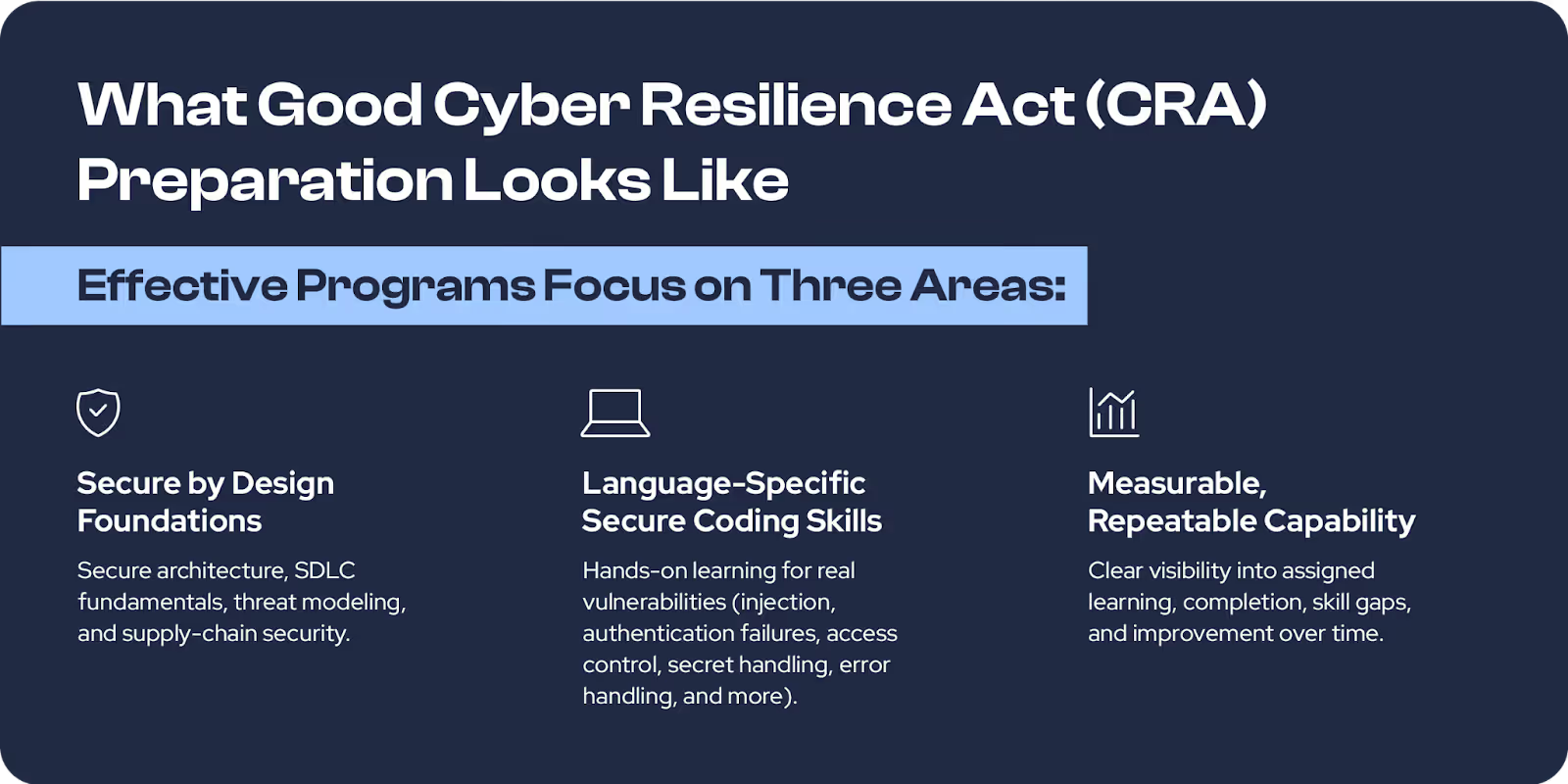
How Secure Code Warrior Supports CRA Readiness

Secure Code Warrior provides CRA-aligned learning pathways that combine:

  • A CRA Standard Quest mapped to Annex I, Part I technical vulnerability requirements
  • A Secure by Design Conceptual Collection
  • Hands-on, language-specific vulnerability learning

Check out our onesheet guide on all of the CRA-Aligned learning content in SCW. SCW does not certify compliance. We support CRA readiness through structured learning and measurable capability improvement aligned to the regulation’s secure development principles. 

Start Building CRA Readiness Now

The CRA reflects where the industry is headed: secure by design engineering as the default expectation. Organizations that invest in developer capability now will be better positioned for compliance – and for building more resilient, lower-risk software long term.

For additional details on how Secure Code Warrior can assist you in achieving compliance, check out our knowledge base: How Secure Code Warrior can assist you in achieving compliance

A digital promotional banner for Secure Code Warrior titled "Cyber Resilience Act Explained: What it Means for Secure by Design Software Development." The background features blue holographic data patterns, a glowing padlock icon inside a shield, and binary code, symbolizing cybersecurity and software protection.
View Resource
View Resource

Learn what the EU Cyber Resilience Act (CRA) requires, who it applies to, and how engineering teams can prepare with secure by design practices, vulnerability prevention, and developer capability building.

Interested in more?

Shannon Holt is a cybersecurity product marketer with a background in application security, cloud security services, and compliance standards like PCI-DSS and HITRUST.

Secure Code Warrior is here for your organization to help you secure code across the entire software development lifecycle and create a culture in which cybersecurity is top of mind. Whether you’re an AppSec Manager, Developer, CISO, or anyone involved in security, we can help your organization reduce risks associated with insecure code.

Book a demo
Share on:
Author
Shannon Holt
Published Feb 24, 2026

Shannon Holt is a cybersecurity product marketer with a background in application security, cloud security services, and compliance standards like PCI-DSS and HITRUST.

Shannon Holt is a cybersecurity product marketer with a background in application security, cloud security services, and compliance standards like PCI-DSS and HITRUST. She’s passionate about making secure development and compliance more practical and approachable for technical teams, bridging the gap between security expectations and the realities of modern software development.

Share on:
A digital promotional banner for Secure Code Warrior titled "Cyber Resilience Act Explained: What it Means for Secure by Design Software Development." The background features blue holographic data patterns, a glowing padlock icon inside a shield, and binary code, symbolizing cybersecurity and software protection.

The Cyber Resilience Act is rapidly becoming a strategic priority – not just for EU-based companies, but for any business selling digital products into the European market. While compliance deadlines extend into 2027, engineering and security teams are already asking hard questions about secure by design practices, vulnerability handling, and development capability.

Unlike many regulations that focus on documentation and audits, the CRA places secure software design and development at the heart of compliance. Organizations that invest early in secure by design capabilities will move into compliance faster – and stand out in a market where product security is becoming a purchasing decision.

What the Cyber Resilience Act Requires

The Cyber Resilience Act (CRA) introduces baseline cybersecurity requirements for most products with a digital component placed on the EU market – including software, operating systems, connected devices, and embedded systems.

More importantly, it shifts where responsibility sits.

Security is no longer only a runtime or operational concern. Under the CRA, it becomes a design and development obligation spanning architecture, implementation, maintenance, and vulnerability handling.

For engineering and security leaders, this means:

  • Products must be built according to secure by design principles
  • Known vulnerabilities must be prevented where possible and handled effectively
  • Organizations must demonstrate that secure development practices are in place

In short: compliance is inseparable from how developers write and maintain code.

Who the CRA Applies To

Although introduced by the EU, the CRA applies to any organization worldwide that places in-scope digital products on the EU market, including:

  • Software vendors and SaaS providers whose services function as remote data processing components of covered products
  • Manufacturers of digital or connected products
  • Importers, distributors, and retailers
  • Organizations embedding third-party digital components

For global enterprises, CRA readiness is a cross-border development requirement, not a regional compliance exercise.

Why Organizations Are Starting Now

Key milestones:

  • September 2026 – Vulnerability reporting obligations begin
  • December 2027 – Full compliance required

On paper, that timeline can look comfortable. In reality, development transformation does not happen in quarters – it happens over years.

Secure by design is not a policy update. It requires:

  • Upskilling thousands of development across languages and teams
  • Embedding secure by design expectations into day-to-day workflows
  • Shifting from reactive vulnerability remediation to prevention
  • Creating measurable evidence that secure development practices are consistently applied

These changes affect hiring, onboarding, architecture decisions, SDLC processes, and engineering culture. Organizations that delay until late 2026 will be attempting to retrofit capability under regulatory pressure – a far more expensive and disruptive path.

Enforcement also carries significant financial risk. Under Article 64 of the CRA, penalties can reach €15 million or 2.5% of global annual turnover for violations of essential cybersecurity requirements.

Waiting until late 2026 is simply too late.

CRA Is Ultimately a Developer Capability Challenge

Many regulations focus on policies and documentation. The CRA goes further by linking compliance to the actual practices used to design and build software. It raises expectations around secure development as an operational discipline, not just a governance requirement.

For engineering leaders, this means compliance depends on whether development teams consistently apply secure practices, including:

  • Understanding common vulnerability classes
  • Applying secure design and architecture principles
  • Avoiding insecure implementation patterns
  • Handling third-party and open-source components responsibly

Security tooling plays an important role in detecting issues. But tools surface weaknesses after code is written. Secure by design requires developers to prevent vulnerabilities in the first place – and to do so consistently across teams, languages, and products.

Tools alone cannot achieve this. Secure by design outcomes depend on human capability.

How Secure Code Warrior Supports CRA Readiness

Secure Code Warrior provides CRA-aligned learning pathways that combine:

  • A CRA Standard Quest mapped to Annex I, Part I technical vulnerability requirements
  • A Secure by Design Conceptual Collection
  • Hands-on, language-specific vulnerability learning

Check out our onesheet guide on all of the CRA-Aligned learning content in SCW. SCW does not certify compliance. We support CRA readiness through structured learning and measurable capability improvement aligned to the regulation’s secure development principles. 

Start Building CRA Readiness Now

The CRA reflects where the industry is headed: secure by design engineering as the default expectation. Organizations that invest in developer capability now will be better positioned for compliance – and for building more resilient, lower-risk software long term.

For additional details on how Secure Code Warrior can assist you in achieving compliance, check out our knowledge base: How Secure Code Warrior can assist you in achieving compliance

View Resource
View Resource

Fill out the form below to download the report

We would like your permission to send you information on our products and/or related secure coding topics. We’ll always treat your personal details with the utmost care and will never sell them to other companies for marketing purposes.

Submit
To submit the form, please enable 'Analytics' cookies. Feel free to disable them again once you're done.
A digital promotional banner for Secure Code Warrior titled "Cyber Resilience Act Explained: What it Means for Secure by Design Software Development." The background features blue holographic data patterns, a glowing padlock icon inside a shield, and binary code, symbolizing cybersecurity and software protection.

The Cyber Resilience Act is rapidly becoming a strategic priority – not just for EU-based companies, but for any business selling digital products into the European market. While compliance deadlines extend into 2027, engineering and security teams are already asking hard questions about secure by design practices, vulnerability handling, and development capability.

Unlike many regulations that focus on documentation and audits, the CRA places secure software design and development at the heart of compliance. Organizations that invest early in secure by design capabilities will move into compliance faster – and stand out in a market where product security is becoming a purchasing decision.

What the Cyber Resilience Act Requires

The Cyber Resilience Act (CRA) introduces baseline cybersecurity requirements for most products with a digital component placed on the EU market – including software, operating systems, connected devices, and embedded systems.

More importantly, it shifts where responsibility sits.

Security is no longer only a runtime or operational concern. Under the CRA, it becomes a design and development obligation spanning architecture, implementation, maintenance, and vulnerability handling.

For engineering and security leaders, this means:

  • Products must be built according to secure by design principles
  • Known vulnerabilities must be prevented where possible and handled effectively
  • Organizations must demonstrate that secure development practices are in place

In short: compliance is inseparable from how developers write and maintain code.

Who the CRA Applies To

Although introduced by the EU, the CRA applies to any organization worldwide that places in-scope digital products on the EU market, including:

  • Software vendors and SaaS providers whose services function as remote data processing components of covered products
  • Manufacturers of digital or connected products
  • Importers, distributors, and retailers
  • Organizations embedding third-party digital components

For global enterprises, CRA readiness is a cross-border development requirement, not a regional compliance exercise.

Why Organizations Are Starting Now

Key milestones:

  • September 2026 – Vulnerability reporting obligations begin
  • December 2027 – Full compliance required

On paper, that timeline can look comfortable. In reality, development transformation does not happen in quarters – it happens over years.

Secure by design is not a policy update. It requires:

  • Upskilling thousands of development across languages and teams
  • Embedding secure by design expectations into day-to-day workflows
  • Shifting from reactive vulnerability remediation to prevention
  • Creating measurable evidence that secure development practices are consistently applied

These changes affect hiring, onboarding, architecture decisions, SDLC processes, and engineering culture. Organizations that delay until late 2026 will be attempting to retrofit capability under regulatory pressure – a far more expensive and disruptive path.

Enforcement also carries significant financial risk. Under Article 64 of the CRA, penalties can reach €15 million or 2.5% of global annual turnover for violations of essential cybersecurity requirements.

Waiting until late 2026 is simply too late.

CRA Is Ultimately a Developer Capability Challenge

Many regulations focus on policies and documentation. The CRA goes further by linking compliance to the actual practices used to design and build software. It raises expectations around secure development as an operational discipline, not just a governance requirement.

For engineering leaders, this means compliance depends on whether development teams consistently apply secure practices, including:

  • Understanding common vulnerability classes
  • Applying secure design and architecture principles
  • Avoiding insecure implementation patterns
  • Handling third-party and open-source components responsibly

Security tooling plays an important role in detecting issues. But tools surface weaknesses after code is written. Secure by design requires developers to prevent vulnerabilities in the first place – and to do so consistently across teams, languages, and products.

Tools alone cannot achieve this. Secure by design outcomes depend on human capability.

How Secure Code Warrior Supports CRA Readiness

Secure Code Warrior provides CRA-aligned learning pathways that combine:

  • A CRA Standard Quest mapped to Annex I, Part I technical vulnerability requirements
  • A Secure by Design Conceptual Collection
  • Hands-on, language-specific vulnerability learning

Check out our onesheet guide on all of the CRA-Aligned learning content in SCW. SCW does not certify compliance. We support CRA readiness through structured learning and measurable capability improvement aligned to the regulation’s secure development principles. 

Start Building CRA Readiness Now

The CRA reflects where the industry is headed: secure by design engineering as the default expectation. Organizations that invest in developer capability now will be better positioned for compliance – and for building more resilient, lower-risk software long term.

For additional details on how Secure Code Warrior can assist you in achieving compliance, check out our knowledge base: How Secure Code Warrior can assist you in achieving compliance

View webinar
Get Started

Click on the link below and download the PDF of this resource.

Secure Code Warrior is here for your organization to help you secure code across the entire software development lifecycle and create a culture in which cybersecurity is top of mind. Whether you’re an AppSec Manager, Developer, CISO, or anyone involved in security, we can help your organization reduce risks associated with insecure code.

View reportBook a demo
View Resource
Share on:
Interested in more?

Check out our onesheet guide on all of the CRA-Aligned learning content in SCW.

Download PDF
Share on:
Author
Shannon Holt
Published Feb 24, 2026

Shannon Holt is a cybersecurity product marketer with a background in application security, cloud security services, and compliance standards like PCI-DSS and HITRUST.

Shannon Holt is a cybersecurity product marketer with a background in application security, cloud security services, and compliance standards like PCI-DSS and HITRUST. She’s passionate about making secure development and compliance more practical and approachable for technical teams, bridging the gap between security expectations and the realities of modern software development.

Share on:

The Cyber Resilience Act is rapidly becoming a strategic priority – not just for EU-based companies, but for any business selling digital products into the European market. While compliance deadlines extend into 2027, engineering and security teams are already asking hard questions about secure by design practices, vulnerability handling, and development capability.

Unlike many regulations that focus on documentation and audits, the CRA places secure software design and development at the heart of compliance. Organizations that invest early in secure by design capabilities will move into compliance faster – and stand out in a market where product security is becoming a purchasing decision.

What the Cyber Resilience Act Requires

The Cyber Resilience Act (CRA) introduces baseline cybersecurity requirements for most products with a digital component placed on the EU market – including software, operating systems, connected devices, and embedded systems.

More importantly, it shifts where responsibility sits.

Security is no longer only a runtime or operational concern. Under the CRA, it becomes a design and development obligation spanning architecture, implementation, maintenance, and vulnerability handling.

For engineering and security leaders, this means:

  • Products must be built according to secure by design principles
  • Known vulnerabilities must be prevented where possible and handled effectively
  • Organizations must demonstrate that secure development practices are in place

In short: compliance is inseparable from how developers write and maintain code.

Who the CRA Applies To

Although introduced by the EU, the CRA applies to any organization worldwide that places in-scope digital products on the EU market, including:

  • Software vendors and SaaS providers whose services function as remote data processing components of covered products
  • Manufacturers of digital or connected products
  • Importers, distributors, and retailers
  • Organizations embedding third-party digital components

For global enterprises, CRA readiness is a cross-border development requirement, not a regional compliance exercise.

Why Organizations Are Starting Now

Key milestones:

  • September 2026 – Vulnerability reporting obligations begin
  • December 2027 – Full compliance required

On paper, that timeline can look comfortable. In reality, development transformation does not happen in quarters – it happens over years.

Secure by design is not a policy update. It requires:

  • Upskilling thousands of development across languages and teams
  • Embedding secure by design expectations into day-to-day workflows
  • Shifting from reactive vulnerability remediation to prevention
  • Creating measurable evidence that secure development practices are consistently applied

These changes affect hiring, onboarding, architecture decisions, SDLC processes, and engineering culture. Organizations that delay until late 2026 will be attempting to retrofit capability under regulatory pressure – a far more expensive and disruptive path.

Enforcement also carries significant financial risk. Under Article 64 of the CRA, penalties can reach €15 million or 2.5% of global annual turnover for violations of essential cybersecurity requirements.

Waiting until late 2026 is simply too late.

CRA Is Ultimately a Developer Capability Challenge

Many regulations focus on policies and documentation. The CRA goes further by linking compliance to the actual practices used to design and build software. It raises expectations around secure development as an operational discipline, not just a governance requirement.

For engineering leaders, this means compliance depends on whether development teams consistently apply secure practices, including:

  • Understanding common vulnerability classes
  • Applying secure design and architecture principles
  • Avoiding insecure implementation patterns
  • Handling third-party and open-source components responsibly

Security tooling plays an important role in detecting issues. But tools surface weaknesses after code is written. Secure by design requires developers to prevent vulnerabilities in the first place – and to do so consistently across teams, languages, and products.

Tools alone cannot achieve this. Secure by design outcomes depend on human capability.

How Secure Code Warrior Supports CRA Readiness

Secure Code Warrior provides CRA-aligned learning pathways that combine:

  • A CRA Standard Quest mapped to Annex I, Part I technical vulnerability requirements
  • A Secure by Design Conceptual Collection
  • Hands-on, language-specific vulnerability learning

Check out our onesheet guide on all of the CRA-Aligned learning content in SCW. SCW does not certify compliance. We support CRA readiness through structured learning and measurable capability improvement aligned to the regulation’s secure development principles. 

Start Building CRA Readiness Now

The CRA reflects where the industry is headed: secure by design engineering as the default expectation. Organizations that invest in developer capability now will be better positioned for compliance – and for building more resilient, lower-risk software long term.

For additional details on how Secure Code Warrior can assist you in achieving compliance, check out our knowledge base: How Secure Code Warrior can assist you in achieving compliance

Table of contents

Download PDF
View Resource
Interested in more?

Shannon Holt is a cybersecurity product marketer with a background in application security, cloud security services, and compliance standards like PCI-DSS and HITRUST.

Secure Code Warrior is here for your organization to help you secure code across the entire software development lifecycle and create a culture in which cybersecurity is top of mind. Whether you’re an AppSec Manager, Developer, CISO, or anyone involved in security, we can help your organization reduce risks associated with insecure code.

Book a demoDownload
Share on:
Resource hub

Resources to get you started

More posts
Resource hub

Resources to get you started

More posts