







Insights from experts shaping secure development
Access expert content on secure coding, AI governance, and software risk management.


Post-Quantum Cryptography: Quantum Computers Will Break Today’s Encryption – Are You Ready?
Post-quantum cryptography (PQC) is critical for protecting data from quantum computing threats. Learn how “harvest now, decrypt later” exposes risk and how developers can prepare for quantum-safe security.

Enabler 2: Senior Leadership Sponsorship
Explore Enabler 2: Senior Leadership Sponsorship. Learn why active buy-in from the CIO, CTO, and CISO is vital to drive developer adoption and program credibility.
Observe and Secure the ADLC: A Four-Point Framework for CISOs and Development Teams Using AI
While development teams look to make the most of GenAI’s undeniable benefits, we’d like to propose a four-point foundational framework that will allow security leaders to deploy AI coding tools and agents with a higher, more relevant standard of security best practices. It details exactly what enterprises can do to ensure safe, secure code development right now, and as agentic AI becomes an even bigger factor in the future.
Kamer van Koophandel Sets the Standard for Developer-Driven Security at Scale
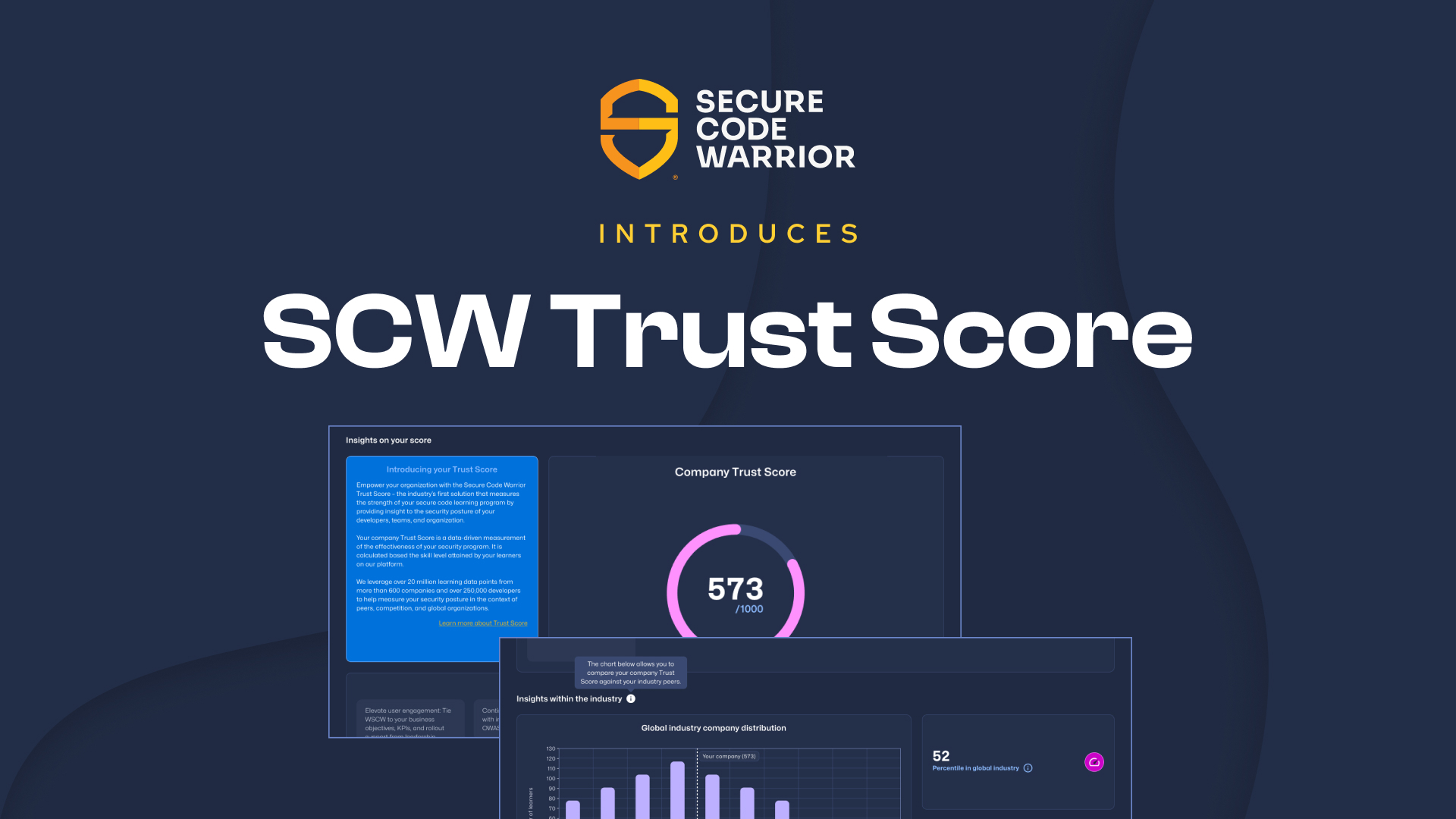
Kamer van Koophandel shares how it embedded secure coding into everyday development through role-based certifications, Trust Score benchmarking, and a culture of shared security ownership.
Going for Gold: Soaring Secure Code Standards at Paysafe
See how Paysafe's partnership with Secure Code Warrior led to a 45% boost in developer productivity and a major reduction in code vulnerabilities.
DigitalOcean Decreases Security Debt with Secure Code Warrior
DigitalOcean's use of Secure Code Warrior training has significantly reduced security debt, allowing teams to focus more on innovation and productivity. The improved security has strengthened their product quality and competitive edge. Looking ahead, the SCW Trust Score will help them further enhance security practices and continue driving innovation.

SC Magazine UK: Why Firms Can’t Ignore Agentic AI
How big a threat does agentic AI pose to businesses currently? And what should security leaders be doing to address the risk?

VMBlog: Cybersecurity Predictions: What AI will (and won't) do for us in 2026
My co-founder and CTO, Matias Madou, Ph.D., and I consulted our crystal ball (or should that be our NVIDIA GPUs?), and this is what we believe 2026 has in store for us from an AI security perspective.

SD Times: Pumping the Brakes on Agentic AI Adoption in Software Development
An alleged nation-state attacker used Claude Code and a range of tools in the developer ecosystem, namely Model Context Protocol (MCP) systems, to almost autonomously target specific companies with benign open-source hacking tools at scale. Of the over thirty attacks, several were successful, and proved that AI agents could indeed execute large-scale, malicious tasks with little to no human intervention. Maybe it’s time we went a little slower, stopped to reflect on what is at stake here, and how best to defend ourselves.

The ultimate guide to security trends in financial services
Financial services institutions face an array of challenges that hinge on their ability to make efficient, effective use of technology in a fast-evolving financial world. Organizations are operating in a time of rapid changes—both internally and across the industry—in a highly competitive, cloud-based business environment. In pursuing their ongoing digital transformations, for example, organizations are working to get around the organizational friction that hinders investments into new technologies, such as artificial intelligence, that could accelerate payment processes and other procedures.

Predicts 2024: Generative AI is reshaping software engineering
Explore how generative AI is revolutionizing software development across the SDLC, as highlighted in Gartner's report, advising Application Security leaders on the importance of scrutinizing AI-generated software.

PCI DSS 4.0 Unraveled
This guide offers practical strategies to engage development teams in PCI DSS 4.0 compliance. It outlines the modern developer's requirements for compliance, strategies for security professionals and development managers to collaborate on developer-focused security programs, and step-by-step advice on effective training initiatives to mitigate vulnerabilities permanently.