Secure Coding Technique: Processing XML data, part 1
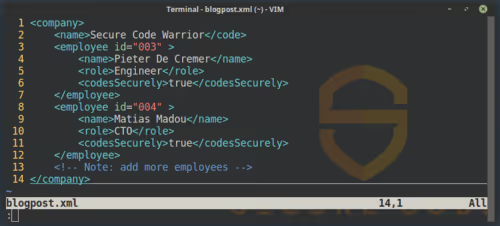
Extensible Markup Language (XML) is a markup language used for encoding documents in a format that is both easy to handle for machines and human-readable. However, this commonly used format includes multiple security flaws. In this first XML related blog post, I will explain the basics of handling XML documents securely by using a schema.
OWASP divides the different vulnerabilities related to XML and XML schemas in two categories.
Malformed XML documents
Malformed XML documents are documents that do not follow the W3C XML specifications. Some examples that result in a malformed document are the removing of an ending tag, changing the order of different elements or the use of forbidden characters. All of these errors should result in a fatal error and the document should not undergo any additional processing.
In order to avoid vulnerabilities caused by malformed documents, you should use a well-tested XML parser that follows W3C specifications and does not take significantly longer to process malformed documents.
Invalid XML documents
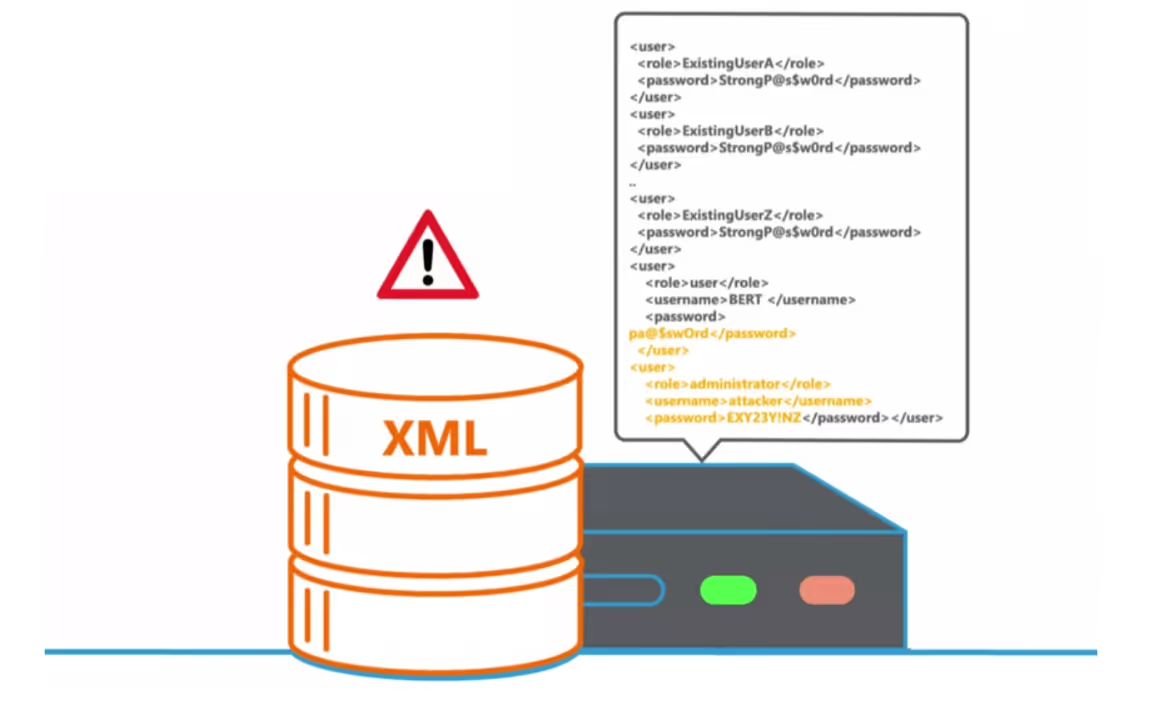
Invalid XML documents are well formed but contain unexpected values. Here an attacker may take advantage of applications that do not properly define an XML schema to identify whether documents are valid. Below you can find a simple example of a document that, if not validated correctly, might have unintended consequences.
A web store which stores its transactions in XML data:
<purchase></purchase>
<id>123</id>
<price>200</price>
And the user only has control over the <id> value. It is then possible, without the right counter measures, for an attacker to input something like this:</id>
<purchase></purchase>
<id>123</id>
<price>0</price>
<id></id>
<price>200</price>
If the parser that processes this document only reads the first instance of the <id> and <price> tags this will lead to unwanted results. </price></id>
It is also possible that the schema is not restrictive enough or that other input validation is insufficient, so that negative numbers, special decimals (like NaN or Infinity) or exceedingly big values can be entered where they are not expected, leading to similar unintended behavior.
Avoiding vulnerabilities related to invalid XML documents should be done by defining a precise and restrictive XML Schema to avoid problems of improper data validation.
Next blog post we will go into some more advanced attacks on XML documents such as Jumbo Payloads and the feared OWASP Top Ten number four, XXE.
In the meantime you can hone or challenge your skills on XML input validation on our portal.
Specifications for XML and XML schemas include multiple security flaws. At the same time, these specifications provide the tools required to protect XML applications. Even though we use XML schemas to define the security of XML documents, they can be used to perform a variety of attacks: file retrieval, server side request forgery, port scanning, or brute forcing.


Specifications for XML and XML schemas include multiple security flaws. At the same time, these specifications provide the tools required to protect XML applications. Even though we use XML schemas to define the security of XML documents, they can be used to perform a variety of attacks.
Application Security Researcher - R&D Engineer - PhD Candidate

Secure Code Warrior is here for your organization to help you secure code across the entire software development lifecycle and create a culture in which cybersecurity is top of mind. Whether you’re an AppSec Manager, Developer, CISO, or anyone involved in security, we can help your organization reduce risks associated with insecure code.
Book a demoApplication Security Researcher - R&D Engineer - PhD Candidate


Extensible Markup Language (XML) is a markup language used for encoding documents in a format that is both easy to handle for machines and human-readable. However, this commonly used format includes multiple security flaws. In this first XML related blog post, I will explain the basics of handling XML documents securely by using a schema.
OWASP divides the different vulnerabilities related to XML and XML schemas in two categories.
Malformed XML documents
Malformed XML documents are documents that do not follow the W3C XML specifications. Some examples that result in a malformed document are the removing of an ending tag, changing the order of different elements or the use of forbidden characters. All of these errors should result in a fatal error and the document should not undergo any additional processing.
In order to avoid vulnerabilities caused by malformed documents, you should use a well-tested XML parser that follows W3C specifications and does not take significantly longer to process malformed documents.
Invalid XML documents
Invalid XML documents are well formed but contain unexpected values. Here an attacker may take advantage of applications that do not properly define an XML schema to identify whether documents are valid. Below you can find a simple example of a document that, if not validated correctly, might have unintended consequences.
A web store which stores its transactions in XML data:
<purchase></purchase>
<id>123</id>
<price>200</price>
And the user only has control over the <id> value. It is then possible, without the right counter measures, for an attacker to input something like this:</id>
<purchase></purchase>
<id>123</id>
<price>0</price>
<id></id>
<price>200</price>
If the parser that processes this document only reads the first instance of the <id> and <price> tags this will lead to unwanted results. </price></id>

It is also possible that the schema is not restrictive enough or that other input validation is insufficient, so that negative numbers, special decimals (like NaN or Infinity) or exceedingly big values can be entered where they are not expected, leading to similar unintended behavior.
Avoiding vulnerabilities related to invalid XML documents should be done by defining a precise and restrictive XML Schema to avoid problems of improper data validation.
Next blog post we will go into some more advanced attacks on XML documents such as Jumbo Payloads and the feared OWASP Top Ten number four, XXE.
In the meantime you can hone or challenge your skills on XML input validation on our portal.
Specifications for XML and XML schemas include multiple security flaws. At the same time, these specifications provide the tools required to protect XML applications. Even though we use XML schemas to define the security of XML documents, they can be used to perform a variety of attacks: file retrieval, server side request forgery, port scanning, or brute forcing.

Extensible Markup Language (XML) is a markup language used for encoding documents in a format that is both easy to handle for machines and human-readable. However, this commonly used format includes multiple security flaws. In this first XML related blog post, I will explain the basics of handling XML documents securely by using a schema.
OWASP divides the different vulnerabilities related to XML and XML schemas in two categories.
Malformed XML documents
Malformed XML documents are documents that do not follow the W3C XML specifications. Some examples that result in a malformed document are the removing of an ending tag, changing the order of different elements or the use of forbidden characters. All of these errors should result in a fatal error and the document should not undergo any additional processing.
In order to avoid vulnerabilities caused by malformed documents, you should use a well-tested XML parser that follows W3C specifications and does not take significantly longer to process malformed documents.
Invalid XML documents
Invalid XML documents are well formed but contain unexpected values. Here an attacker may take advantage of applications that do not properly define an XML schema to identify whether documents are valid. Below you can find a simple example of a document that, if not validated correctly, might have unintended consequences.
A web store which stores its transactions in XML data:
<purchase></purchase>
<id>123</id>
<price>200</price>
And the user only has control over the <id> value. It is then possible, without the right counter measures, for an attacker to input something like this:</id>
<purchase></purchase>
<id>123</id>
<price>0</price>
<id></id>
<price>200</price>
If the parser that processes this document only reads the first instance of the <id> and <price> tags this will lead to unwanted results. </price></id>

It is also possible that the schema is not restrictive enough or that other input validation is insufficient, so that negative numbers, special decimals (like NaN or Infinity) or exceedingly big values can be entered where they are not expected, leading to similar unintended behavior.
Avoiding vulnerabilities related to invalid XML documents should be done by defining a precise and restrictive XML Schema to avoid problems of improper data validation.
Next blog post we will go into some more advanced attacks on XML documents such as Jumbo Payloads and the feared OWASP Top Ten number four, XXE.
In the meantime you can hone or challenge your skills on XML input validation on our portal.
Specifications for XML and XML schemas include multiple security flaws. At the same time, these specifications provide the tools required to protect XML applications. Even though we use XML schemas to define the security of XML documents, they can be used to perform a variety of attacks: file retrieval, server side request forgery, port scanning, or brute forcing.

Click on the link below and download the PDF of this resource.
Secure Code Warrior is here for your organization to help you secure code across the entire software development lifecycle and create a culture in which cybersecurity is top of mind. Whether you’re an AppSec Manager, Developer, CISO, or anyone involved in security, we can help your organization reduce risks associated with insecure code.
View reportBook a demoApplication Security Researcher - R&D Engineer - PhD Candidate
Extensible Markup Language (XML) is a markup language used for encoding documents in a format that is both easy to handle for machines and human-readable. However, this commonly used format includes multiple security flaws. In this first XML related blog post, I will explain the basics of handling XML documents securely by using a schema.
OWASP divides the different vulnerabilities related to XML and XML schemas in two categories.
Malformed XML documents
Malformed XML documents are documents that do not follow the W3C XML specifications. Some examples that result in a malformed document are the removing of an ending tag, changing the order of different elements or the use of forbidden characters. All of these errors should result in a fatal error and the document should not undergo any additional processing.
In order to avoid vulnerabilities caused by malformed documents, you should use a well-tested XML parser that follows W3C specifications and does not take significantly longer to process malformed documents.
Invalid XML documents
Invalid XML documents are well formed but contain unexpected values. Here an attacker may take advantage of applications that do not properly define an XML schema to identify whether documents are valid. Below you can find a simple example of a document that, if not validated correctly, might have unintended consequences.
A web store which stores its transactions in XML data:
<purchase></purchase>
<id>123</id>
<price>200</price>
And the user only has control over the <id> value. It is then possible, without the right counter measures, for an attacker to input something like this:</id>
<purchase></purchase>
<id>123</id>
<price>0</price>
<id></id>
<price>200</price>
If the parser that processes this document only reads the first instance of the <id> and <price> tags this will lead to unwanted results. </price></id>

It is also possible that the schema is not restrictive enough or that other input validation is insufficient, so that negative numbers, special decimals (like NaN or Infinity) or exceedingly big values can be entered where they are not expected, leading to similar unintended behavior.
Avoiding vulnerabilities related to invalid XML documents should be done by defining a precise and restrictive XML Schema to avoid problems of improper data validation.
Next blog post we will go into some more advanced attacks on XML documents such as Jumbo Payloads and the feared OWASP Top Ten number four, XXE.
In the meantime you can hone or challenge your skills on XML input validation on our portal.
Specifications for XML and XML schemas include multiple security flaws. At the same time, these specifications provide the tools required to protect XML applications. Even though we use XML schemas to define the security of XML documents, they can be used to perform a variety of attacks: file retrieval, server side request forgery, port scanning, or brute forcing.
Table of contents
Application Security Researcher - R&D Engineer - PhD Candidate

Secure Code Warrior is here for your organization to help you secure code across the entire software development lifecycle and create a culture in which cybersecurity is top of mind. Whether you’re an AppSec Manager, Developer, CISO, or anyone involved in security, we can help your organization reduce risks associated with insecure code.
Book a demoDownloadResources to get you started
Secure Code Warrior corporate overview
Secure Code Warrior is an AI Software Governance platform designed to enable organizations to safely adopt AI-driven development by bridging the gap between development velocity and enterprise security. The platform addresses the "Visibility Gap," where security teams often lack insights into shadow AI coding tools and the origins of production code.
Secure code training topics & content
Our industry-leading content is always evolving to fit the ever changing software development landscape with your role in mind. Topics covering everything from AI to XQuery Injection, offered for a variety of roles from Architects and Engineers to Product Managers and QA. Get a sneak peek of what our content catalog has to offer by topic and role.
Cyber Resilience Act (CRA) Aligned Learning Pathways
SCW supports Cyber Resilience Act (CRA) readiness with CRA-aligned Quests and conceptual learning collections that help development teams build the Secure by Design, SDLC, and secure coding skills aligned with the CRA’s secure development principles.
Resources to get you started
Observe and Secure the ADLC: A Four-Point Framework for CISOs and Development Teams Using AI
While development teams look to make the most of GenAI’s undeniable benefits, we’d like to propose a four-point foundational framework that will allow security leaders to deploy AI coding tools and agents with a higher, more relevant standard of security best practices. It details exactly what enterprises can do to ensure safe, secure code development right now, and as agentic AI becomes an even bigger factor in the future.