

Navegando por los planos de la codificación segura: una analogía de construcción


Did you know that 67% of developers admit to shipping code with vulnerabilities? Imagine a team of construction workers tasked with building a house. They have all the materials and tools they need, but they are struggling to follow the blueprints and building codes. As a result, they are making mistakes and the house is not being built to code.
This analogy can be used to illustrate the challenges that developers face when trying to practice secure coding. Just as construction workers need to follow blueprints and building codes to ensure that their houses are safe, developers need to follow secure coding practices to ensure that their software applications are secure.
There are a number of reasons why secure coding can be challenging. These include:
- A lack of awareness of secure coding practices. 86% of developers state they find it challenging to practice secure coding.
- A lack of time and resources. 24% of respondents in our survey stated ‘not enough time’ is the biggest impediment to integrating secure code.
- The complexity of secure coding. 63% of developers rate writing secure code that is free from vulnerabilities to be difficult.
- Over reliance upon tools. 57% of application security teams are utilizing six or more tools to discover vulnerabilities during the DevSecOps lifecycle. (GitLab, 2023)
However, despite the challenges, secure coding is essential. By following secure coding practices, developers can help to protect their applications from vulnerabilities that can be exploited by attackers. Just as a well-built house is less likely to collapse, a well-coded application is less likely to be hacked.
Here are a few tips for developers who want to improve their secure coding practices:
- Get training and education on secure coding. There are a number of resources available to help developers learn about secure coding practices.
- Use static analysis tools to identify vulnerabilities in code. Static analysis tools can help to identify vulnerabilities in code that may be difficult to find manually.
- Write code that is easy to review and understand. Code that is easy to review and understand is more likely to be secure code.
- Test code thoroughly. Testing code can help to identify and fix vulnerabilities before they are exploited.
Interested in learning more? Unlock the secrets to developing an agile secure coding strategy with our secure code learning blueprint.


Al seguir prácticas de codificación seguras, los desarrolladores pueden ayudar a proteger sus aplicaciones de las vulnerabilidades que los atacantes pueden aprovechar. Del mismo modo que una casa bien construida tiene menos probabilidades de derrumbarse, una aplicación bien codificada tiene menos probabilidades de ser hackeada.
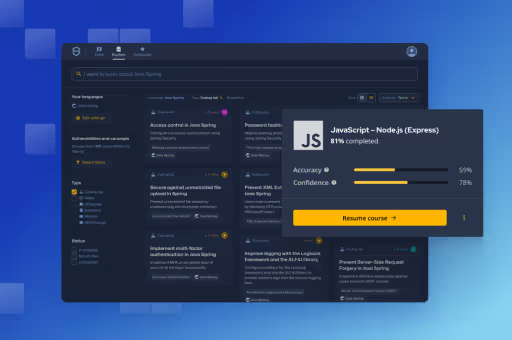
Secure Code Warrior está aquí para que su organización le ayude a proteger el código durante todo el ciclo de vida del desarrollo de software y a crear una cultura en la que la ciberseguridad sea una prioridad. Ya sea administrador de AppSec, desarrollador, CISO o cualquier persona relacionada con la seguridad, podemos ayudar a su organización a reducir los riesgos asociados con el código inseguro.
Reserva una demostración


Dave Karp is the VP of Solution Engineering and Technical Alliances at Secure Code Warrior.
Did you know that 67% of developers admit to shipping code with vulnerabilities? Imagine a team of construction workers tasked with building a house. They have all the materials and tools they need, but they are struggling to follow the blueprints and building codes. As a result, they are making mistakes and the house is not being built to code.
This analogy can be used to illustrate the challenges that developers face when trying to practice secure coding. Just as construction workers need to follow blueprints and building codes to ensure that their houses are safe, developers need to follow secure coding practices to ensure that their software applications are secure.
There are a number of reasons why secure coding can be challenging. These include:
- A lack of awareness of secure coding practices. 86% of developers state they find it challenging to practice secure coding.
- A lack of time and resources. 24% of respondents in our survey stated ‘not enough time’ is the biggest impediment to integrating secure code.
- The complexity of secure coding. 63% of developers rate writing secure code that is free from vulnerabilities to be difficult.
- Over reliance upon tools. 57% of application security teams are utilizing six or more tools to discover vulnerabilities during the DevSecOps lifecycle. (GitLab, 2023)
However, despite the challenges, secure coding is essential. By following secure coding practices, developers can help to protect their applications from vulnerabilities that can be exploited by attackers. Just as a well-built house is less likely to collapse, a well-coded application is less likely to be hacked.
Here are a few tips for developers who want to improve their secure coding practices:
- Get training and education on secure coding. There are a number of resources available to help developers learn about secure coding practices.
- Use static analysis tools to identify vulnerabilities in code. Static analysis tools can help to identify vulnerabilities in code that may be difficult to find manually.
- Write code that is easy to review and understand. Code that is easy to review and understand is more likely to be secure code.
- Test code thoroughly. Testing code can help to identify and fix vulnerabilities before they are exploited.
Interested in learning more? Unlock the secrets to developing an agile secure coding strategy with our secure code learning blueprint.


Did you know that 67% of developers admit to shipping code with vulnerabilities? Imagine a team of construction workers tasked with building a house. They have all the materials and tools they need, but they are struggling to follow the blueprints and building codes. As a result, they are making mistakes and the house is not being built to code.
This analogy can be used to illustrate the challenges that developers face when trying to practice secure coding. Just as construction workers need to follow blueprints and building codes to ensure that their houses are safe, developers need to follow secure coding practices to ensure that their software applications are secure.
There are a number of reasons why secure coding can be challenging. These include:
- A lack of awareness of secure coding practices. 86% of developers state they find it challenging to practice secure coding.
- A lack of time and resources. 24% of respondents in our survey stated ‘not enough time’ is the biggest impediment to integrating secure code.
- The complexity of secure coding. 63% of developers rate writing secure code that is free from vulnerabilities to be difficult.
- Over reliance upon tools. 57% of application security teams are utilizing six or more tools to discover vulnerabilities during the DevSecOps lifecycle. (GitLab, 2023)
However, despite the challenges, secure coding is essential. By following secure coding practices, developers can help to protect their applications from vulnerabilities that can be exploited by attackers. Just as a well-built house is less likely to collapse, a well-coded application is less likely to be hacked.
Here are a few tips for developers who want to improve their secure coding practices:
- Get training and education on secure coding. There are a number of resources available to help developers learn about secure coding practices.
- Use static analysis tools to identify vulnerabilities in code. Static analysis tools can help to identify vulnerabilities in code that may be difficult to find manually.
- Write code that is easy to review and understand. Code that is easy to review and understand is more likely to be secure code.
- Test code thoroughly. Testing code can help to identify and fix vulnerabilities before they are exploited.
Interested in learning more? Unlock the secrets to developing an agile secure coding strategy with our secure code learning blueprint.
Haga clic en el enlace de abajo y descargue el PDF de este recurso.
Secure Code Warrior está aquí para que su organización le ayude a proteger el código durante todo el ciclo de vida del desarrollo de software y a crear una cultura en la que la ciberseguridad sea una prioridad. Ya sea administrador de AppSec, desarrollador, CISO o cualquier persona relacionada con la seguridad, podemos ayudar a su organización a reducir los riesgos asociados con el código inseguro.
Ver informeReserva una demostración
Dave Karp is the VP of Solution Engineering and Technical Alliances at Secure Code Warrior.
Did you know that 67% of developers admit to shipping code with vulnerabilities? Imagine a team of construction workers tasked with building a house. They have all the materials and tools they need, but they are struggling to follow the blueprints and building codes. As a result, they are making mistakes and the house is not being built to code.
This analogy can be used to illustrate the challenges that developers face when trying to practice secure coding. Just as construction workers need to follow blueprints and building codes to ensure that their houses are safe, developers need to follow secure coding practices to ensure that their software applications are secure.
There are a number of reasons why secure coding can be challenging. These include:
- A lack of awareness of secure coding practices. 86% of developers state they find it challenging to practice secure coding.
- A lack of time and resources. 24% of respondents in our survey stated ‘not enough time’ is the biggest impediment to integrating secure code.
- The complexity of secure coding. 63% of developers rate writing secure code that is free from vulnerabilities to be difficult.
- Over reliance upon tools. 57% of application security teams are utilizing six or more tools to discover vulnerabilities during the DevSecOps lifecycle. (GitLab, 2023)
However, despite the challenges, secure coding is essential. By following secure coding practices, developers can help to protect their applications from vulnerabilities that can be exploited by attackers. Just as a well-built house is less likely to collapse, a well-coded application is less likely to be hacked.
Here are a few tips for developers who want to improve their secure coding practices:
- Get training and education on secure coding. There are a number of resources available to help developers learn about secure coding practices.
- Use static analysis tools to identify vulnerabilities in code. Static analysis tools can help to identify vulnerabilities in code that may be difficult to find manually.
- Write code that is easy to review and understand. Code that is easy to review and understand is more likely to be secure code.
- Test code thoroughly. Testing code can help to identify and fix vulnerabilities before they are exploited.
Interested in learning more? Unlock the secrets to developing an agile secure coding strategy with our secure code learning blueprint.
Tabla de contenido
Secure Code Warrior está aquí para que su organización le ayude a proteger el código durante todo el ciclo de vida del desarrollo de software y a crear una cultura en la que la ciberseguridad sea una prioridad. Ya sea administrador de AppSec, desarrollador, CISO o cualquier persona relacionada con la seguridad, podemos ayudar a su organización a reducir los riesgos asociados con el código inseguro.
Reserva una demostraciónDescargarRecursos para empezar




Recursos para empezar
%20thumbnail.png)



Secure coding learning that reflects real AI usage
Align secure coding training to real AI development activity — automatically assigning guidance to developers using AI tools, without manual intervention.Align secure coding training to real AI development activity — automatically assigning guidance to developers using AI tools, without manual intervention.