Stop AI software risk before it starts

Ship secure, high-quality code at every commit – no matter who (or what) wrote it.

Book a demo
AI Software Governance

The control plane for AI-driven development

Make AI-driven development visible, secure, and resilient—preventing vulnerabilities before production so teams can move fast with confidence.

Enterprise governance at scale, AI development with confidence.

Establish policy, gain enterprise-wide visibility, and prevent uncontrolled AI-generated risk across the development lifecycle.

Gain visibility into how much code AI creates

  • Define and enforce secure development policies across AI workflows
  • Measure software risk and governance posture at the enterprise level
  • Demonstrate control, compliance, and trust with audit-level reporting
get a demo
explore the platform

Prevent AI-introduced vulnerabilities at commit

Make AI usage visible, enforce secure coding policy at commit, and stop introduced vulnerabilities across human and AI-assisted code. Apply your existing security standards to AI-driven development — without slowing delivery.

Reduce introduced vulnerabilities by 53%+

  • Build secure coding capability across developers and AI-driven workflows
  • Deliver precise, policy-aligned guidance directly into the tools where code is written
  • Gain visibility into AI-generated code and its impact on software risk
get a demo
explore the platform

Scale AI development without slowing down

Make AI-assisted development secure, efficient, and measurable — so teams ship faster without rework or review bottlenecks.

Reduce MTTR by up to 82%

  • Drive measurable skill improvement with adaptive learning and hands-on labs
  • Integrate secure coding expertise into the IDEs, repos, pipelines, and security tools you already use
  • Access continuously updated learning content across 70+ languages, 600+ vulnerabilities, and 11,000+ activities
get a demo
explore the platform
Why we’re awesome

Secure and built for the tools you already use
Conceptual and interactive learning activities
11k+
Vulnerability topics & security concepts
600+
AI Challenges in 15 coding languages
570+
Coding languages and frameworks
75+

Our latest content

Software Security
01/01/2026
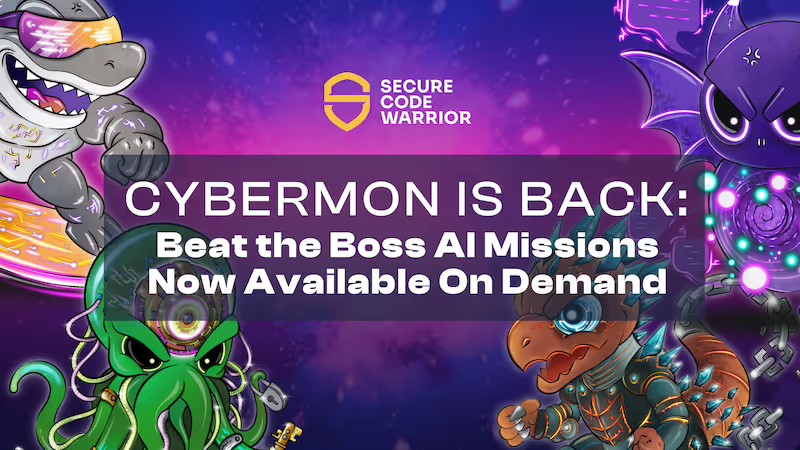
Cybermon Is Back: Beat the Boss AI Missions Now Available On Demand

Cybermon 2025 Beat the Boss is now available year-round in SCW. Deploy advanced AI/LLM security challenges to strengthen secure AI development at scale.

Software Security
01/01/2026
AI Can Write and Review Code — But Humans Still Own the Risk

Anthropic’s launch of Claude Code Security marks a defining collision point between AI-assisted software development, and the rapid augmentation of how we approach modern cybersecurity.

Compliance
01/01/2026
Cyber Resilience Act Explained: What It Means for Secure by Design Software Development

Learn what the EU Cyber Resilience Act (CRA) requires, who it applies to, and how engineering teams can prepare with secure by design practices, vulnerability prevention, and developer capability building.

Software Security
01/01/2026
Enabler 1: Defined & Measurable Success Criteria

Enabler 1 kicks off our 10-part Enablers of Success series by showing how to link secure coding to business outcomes like risk reduction and velocity for long-term program maturity.

Company
01/01/2026
SCW Turns 11: A Realtime Lesson in Adaptability and Continuous Improvement

2025 was a big year for AI, for cybersecurity, and for SCW. I’m approaching 2026 with quiet confidence, and the optimism that only hard work paying off can bring. 

Software Security
01/01/2026
Introducing the 10 Enablers of Success

Secure Code Warrior’s 10 Enablers guide organizations in building lasting secure coding programs by focusing on people, process, and program maturity stages.

01/01/2026
Cyber Resilience Act (CRA) Aligned Learning Pathways

SCW supports Cyber Resilience Act (CRA) readiness with CRA-aligned Quests and conceptual learning collections that help development teams build the Secure by Design, SDLC, and secure coding skills aligned with the CRA’s secure development principles.
Case Studies
01/01/2026
Kamer van Koophandel Sets the Standard for Developer-Driven Security at Scale

Kamer van Koophandel shares how it embedded secure coding into everyday development through role-based certifications, Trust Score benchmarking, and a culture of shared security ownership.

eBooks
01/01/2026
OWASP Top 10 2025 eBook

Want to dominate the OWASP Top 10? Download the No-BS Guide to Defending Your Applications Against the OWASP Top 10:2025

Software Security
01/01/2026
New Risk Category on the OWASP Top Ten: Expecting the Unexpected

OWASP Top 10 2025 adds Mishandling of Exceptional Conditions at #10. Mitigate risks via "fail closed" logic, global error handlers, and strict input validation.

Observability

Make AI-driven development risk visible

See how AI coding is used, the risk it creates, and the behavior behind it—so you can stop vulnerabilities before they ship.

Learn more
Read Case study

"Lorem ipsum diam quis enim lobortis scelerisque fermentum dui faucibus in ornare quam viverra orci sagittis eu volutpat odio facilisis."

Author name
Author position or subtitle

Discover shadow AI

See which AI tools, LLMs and MCPs are being used across your teams.

Learn more

Correlate true risk

Connect AI-assisted code with developer skill and introduced vulnerabilities at commit.

Learn more

Trace AI tool usage

Understand where AI-assisted development is happening—by repository, project, and contributor.

Learn more

Prioritize critical risk signals

Highlight the most urgent commit-level risk hotspots across teams and repositories.

Learn more
Learning

Reduce vulnerabilities at the source

Hands-on secure coding and AI security learning delivered in real-world developer workflows — helping organizations reduce vulnerabilities by 53%+.

Learn more
Read Case study

“Our partnership with Secure Code Warrior has been smooth and productive. They helped us implement and improve our training program, resulting in measurable risk reduction and a stronger culture of secure development.”

Sebastiaan Rijnbout
Product Owner of Development Services 
at Kamer van Koophandel (KVK)

Gamified hands-on learning

Interactive play modes – including Coding Labs, Quests, Missions, and Tournaments – build secure coding habits through real practice.

Learn more

Secure AI code development

700+ AI, LLM, and MCP activities teach developers to validate AI-generated code safely.

Learn more

Empower teams to optimize

Embed a security mindset into your development process with hands-on, relevant learning beyond developer training.

Learn more

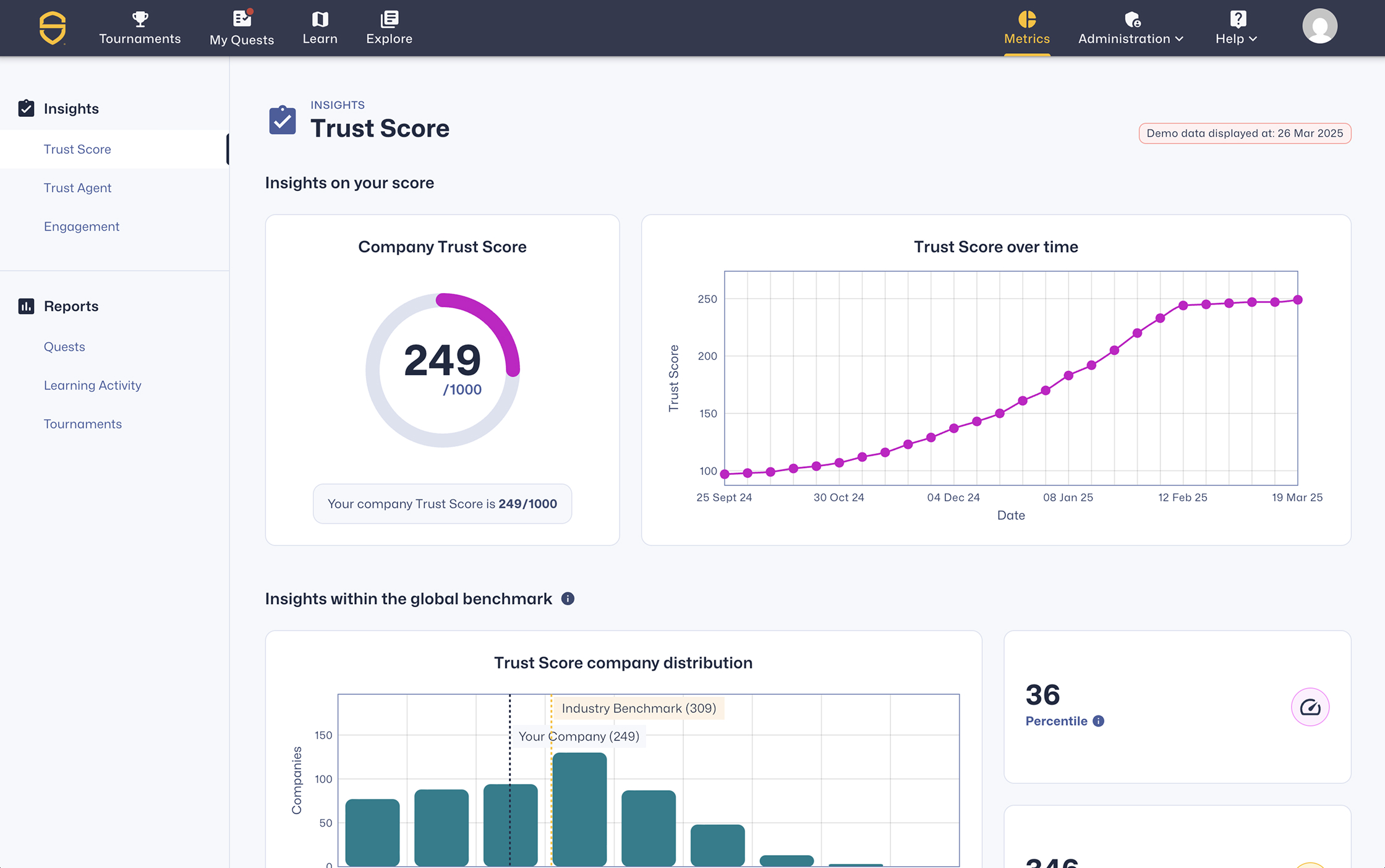
Benchmark your security program

Empower your organization to benchmark your performance against your peers. Set a standard for your security program that meets your needs and achieves your business outcomes.

Learn more
Governance

Enforce developer and AI policy control at scale

Enable and control your AI-driven software development lifecycle while preventing risk, enforcing policy, and proving trust before code reaches production.

Learn more
Read Case study

“Secure Code Warrior has helped us increase developer productivity, accelerate our ability to bring products and improvements to market, and significantly reduce costs and risk over time.”

Alan Osborne

Chief Information Security Officer at Paysafe

Enforce secure governance

Automate policy enforcement to ensure AI-enabled developers meet secure coding standards.

Learn more

Control approved AI models

Restrict usage to authorized AI tools, LLMs, and coding agents at the point of commit.

Learn more

Log, warn, or block in CI

Automatically govern pull requests in real time based on policy thresholds.

Learn more

Trigger policy-based remediation

Assign targeted adaptive learning when risky behavior or unauthorized AI use is detected.

Learn more

Secure AI-driven development before it ships

See developer risk, enforce policy, and prevent vulnerabilities across your software development lifecycle.
Book a demo
AI software governance FAQ

Understand AI software governance and how to reduce AI-driven software risk

Learn what AI software governance is, why it matters, and how Secure Code Warrior helps organizations safely adopt AI-assisted development.

What is AI software governance?

AI software governance is the ability to see, measure, control, and enforce how artificial intelligence is used in software development. It includes visibility into AI coding assistants and LLMs, commit-level risk analysis, policy enforcement, and preventing risky AI-generated code from reaching production.

Why is AI software governance important?

As organizations move from developers casually using AI chatbots to AI agents autonomously generating and modifying code, the risk surface expands dramatically. These tools can introduce vulnerabilities, insecure patterns, and compliance exposure at machine speed.

AI software governance enables organizations to adopt AI safely by making AI usage visible, enforcing policy controls, and preventing AI-introduced risk before code reaches production.

How is AI development governance different from DevSecOps?

DevSecOps integrates security testing into CI/CD pipelines to detect vulnerabilities. AI development governance goes further by making AI usage visible, correlating AI-assisted commits with developer skill, enforcing AI model policies at commit, and improving secure coding behavior. DevSecOps detects risk; AI governance prevents it.

How does Secure Code Warrior reduce AI software risk?

Secure Code Warrior combines AI observability, commit-level risk scoring, enforceable governance policies, and adaptive secure coding learning to prevent vulnerabilities at the point of commit—before testing or production.

How do you prove AI risk reduction to leadership or auditors?

Secure Code Warrior provides enterprise dashboards, AI model traceability, and governance reporting that demonstrate measurable reductions in introduced vulnerabilities, improved developer Trust Score®™ metrics, and policy compliance across teams.

The platform also maintains audit-ready traceability of who — or what — generated specific code, including developers, AI coding assistants, LLMs, and autonomous agents. This creates verifiable AI software supply chain accountability for leadership, regulators, and auditors.

Still have questions?

Support details to capture customers that might be on the fence.

Contact